

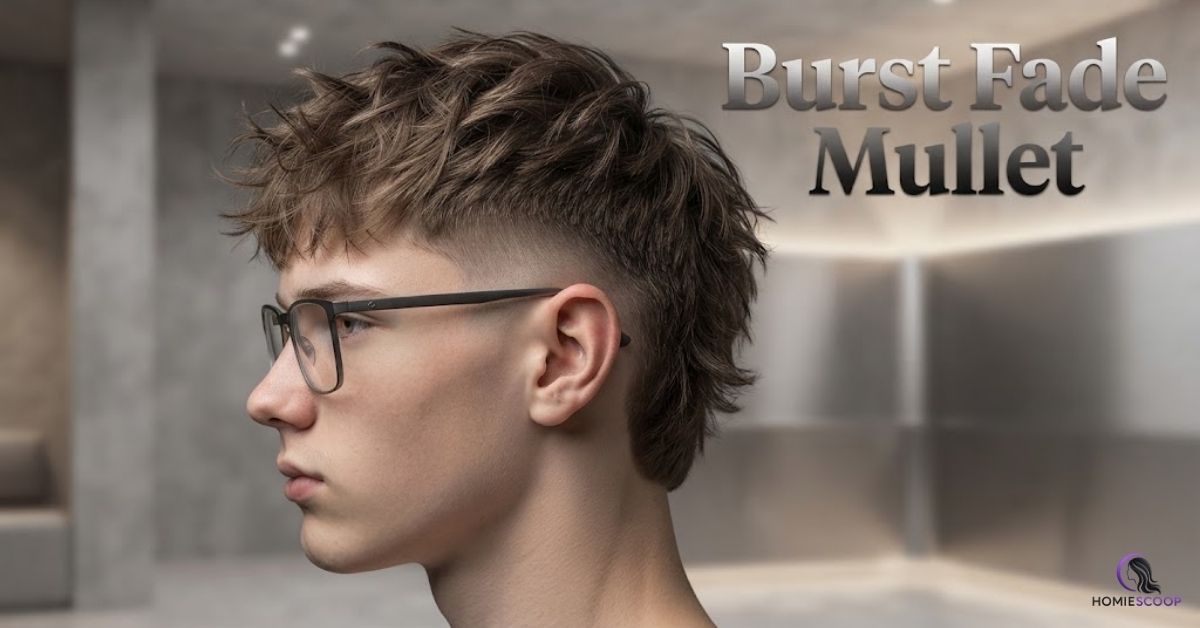
The Burst Fade Mullet is one of those haircuts that manages to look bold without being completely difficult to wear. It combines a rounded fade around the ears with longer hair at the back, creating a noticeable contrast between the sides and the rear. Depending on the length and texture, it can look clean, messy, sharp, curly, or relaxed.
What makes the Burst Fade Mullet so flexible is the number of ways you can customize it. You can choose a low, mid, or high fade, keep the back short or long, add texture, use a French crop, or let natural curls become the main feature. This guide covers 30 ideas, hair types, face shapes, styling advice, maintenance, and exactly what to tell your barber.
What Is a Burst Fade Mullet Haircut?
A burst fade mullet haircut combines two recognizable elements: the mullet shape and the rounded burst fade around the ears. Instead of fading straight down the sides, the barber creates a curved transition around the ear while preserving length toward the back.
The result is a mullet hairstyle with tapered sides, faded sides, and longer hair at the back. The top can be kept short, layered, choppy, curly, or textured depending on the desired finish.
Key features
- Rounded burst fade around the ears
- Noticeably longer hair at the back
- Tapered sides and clean transitions
- Options for short hair on top
- Natural or deliberately styled textured hair
- Different fade heights
- Works with straight, wavy, curly, and thick hair
- Can be paired with facial hair
- Can have a clean neckline and sharp edges
- Easy to customize into a modern mullet
The Burst Fade Mullet can also be adapted into a skin fade mullet, tapered mullet, or textured burst fade mullet. Your barber can control the amount of contrast according to your face shape and preferred maintenance level.
Who Should Try a Burst Fade Mullet?
The Burst Fade Mullet is a strong choice for someone who wants something more distinctive than a standard taper. It works particularly well when you have natural movement, waves, curls, or enough thickness to create volume at the top and back.
It can also become a relatively low-maintenance style if you keep the top natural. However, the fade still needs regular attention if you want sharp edges and a clean neckline. People working in conservative environments may prefer a shorter back and a lower fade.
30 Burst Fade Mullet Styles for 2026
1. Low Burst Fade Mullet
A low burst fade mullet keeps the fade close to the ear and creates a softer transition into the back. It is one of the easiest ways to try a Burst Fade Mullet without immediately choosing an extremely dramatic look.
This version suits an oval face and round face particularly well. It also works nicely with straight hair and thick hair because the low fade preserves plenty of fullness.
| Feature | Recommendation |
| Best for | First-time wearers |
| Face shape | Oval, round |
| Hair type | Straight, thick |
| Maintenance | Low to moderate |
| Finish | Subtle and clean |
Styling Tip: Use a small amount of matte clay to separate the top while keeping the back natural.
2. Mid Burst Fade Mullet
The mid burst fade mullet provides more contrast than a low version without reaching the intensity of a high fade. It is a balanced choice for someone who wants a visible mullet fade while keeping the haircut wearable.
A medium transition works well with wavy hair, straight hair, and medium-thick hair. Add a few choppy layers if you want more movement through the top.
Styling Tip: A light styling cream can enhance hair texture without making the haircut stiff.
3. High Burst Fade Mullet
A high burst fade mullet creates the strongest separation between the sides and the longer back. The fade rises higher around the temple and ear, giving the haircut a more aggressive appearance.
This version works especially well with a modern mullet, thick hair, or a strong jawline. Because the fade is more visible as it grows, hairstyle maintenance is more important.
Styling Tip: Use hair pomade or matte clay when you want the top to stay controlled.
4. Curly Hair Burst Fade Mullet
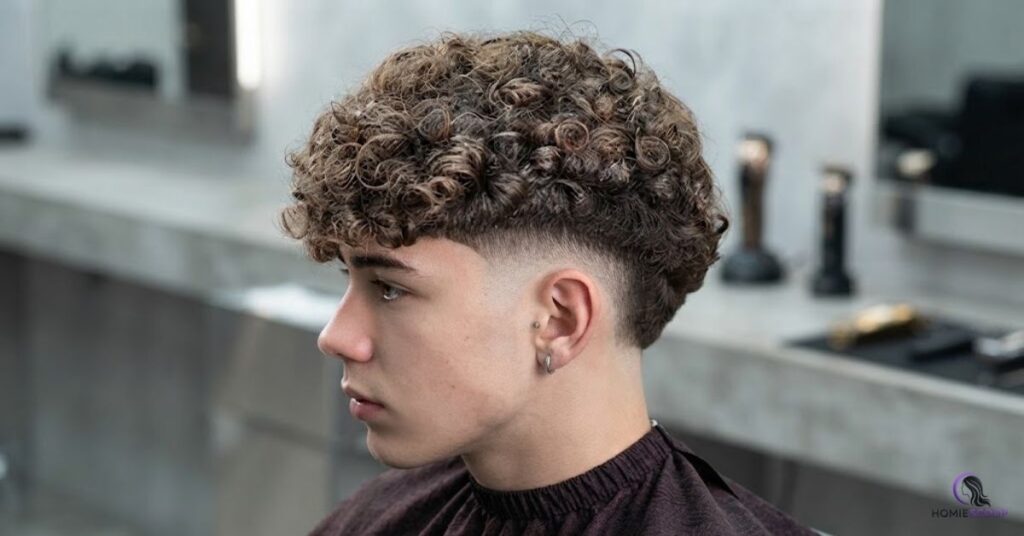
A curly burst fade mullet lets curls become the main feature of the hairstyle. Removing excess bulk around the ears makes the curls on top and at the back look fuller and more defined.
A curly burst fade mullet is especially effective when the barber understands shrinkage. Cutting curly hair too short can make the finished result much shorter than expected.
Styling Tip: Use a curl-friendly product and allow natural texture to remain visible.
5. Burst Fade Mullet for Straight Hair
A burst fade mullet with straight hair creates sharp lines and a clean silhouette. The straight strands make the burst fade haircut especially visible and allow the barber to create precise tapered sides.
The burst fade mullet straight hair look can be styled sleek or textured. For a more relaxed finish, add a small amount of matte product rather than creating a wet appearance.
Styling Tip: A lightweight product can give straight hair separation without flattening it.
6. Messy Burst Fade Mullet
The messy version uses a relaxed top and deliberately imperfect layers. A messy mullet is useful when you want a haircut that looks fashionable without appearing overly polished.
The back should still have a clear shape, while the top can have loose choppy layers. This makes the style feel more natural and youthful.
Styling Tip: Apply a little sea salt spray and work the hair with your fingers.
7. Textured Burst Fade Mullet
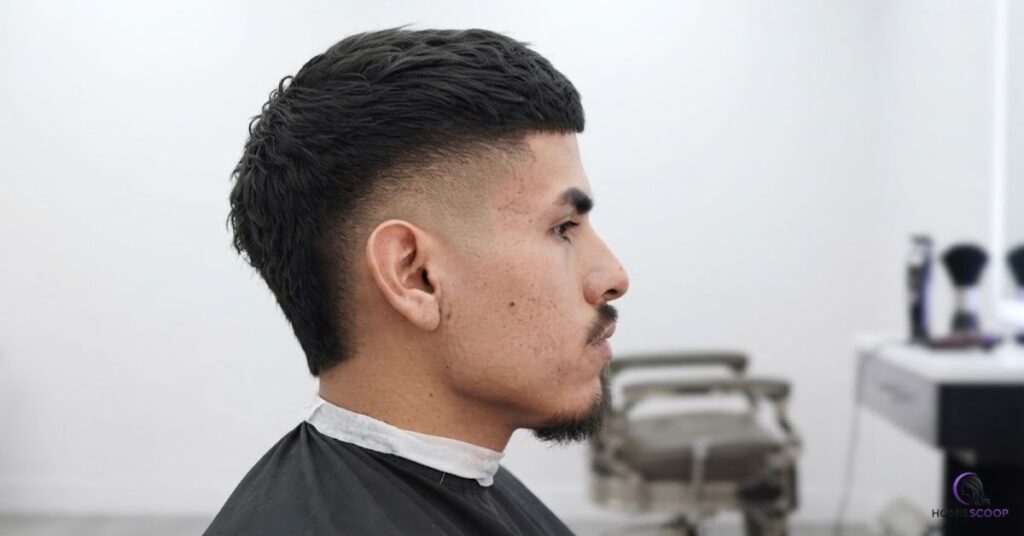
A textured burst fade mullet uses layering and point cutting to create movement. It is particularly useful when the hair looks flat or lacks natural separation.
The barber can keep enough length for hair volume while reducing excess weight. This creates a modern shape without making the top unnecessarily heavy.
Styling Tip: Use a small amount of matte clay to emphasize individual sections.
8. Skin Burst Fade Mullet
A skin fade mullet takes the sides extremely short, sometimes down to the skin. The contrast against the longer back makes the hairstyle immediately noticeable.
This is an edgy hairstyle that looks especially sharp with straight or thick hair. It also requires frequent trimming because the short sides reveal growth quickly.
Styling Tip: Keep the top textured and avoid using too much shiny product.
9. Taper Burst Fade Mullet
A tapered mullet provides a softer appearance than an aggressive skin fade. The sides transition gradually, allowing the back to remain the main focus.
This mullet with burst fade works well for someone who likes the concept of a mullet but does not want extremely exposed sides.
Styling Tip: Use a flexible product for a neat but natural finish.
10. Drop Burst Fade Mullet
A drop variation follows the natural curve of the head and drops lower behind the ear. It creates an interesting shape without needing a complicated design.
A drop fade mullet can complement a square face because the curved transition softens the overall outline. It is also useful when you want more structure around the back of the head.
Styling Tip: Keep the top moderately textured so the drop fade remains the main detail.
11. Burst Fade Mullet with Design
Adding a shaved line or small pattern can transform a standard Burst Fade Mullet into a personalized haircut. A single clean design is usually easier to maintain than a complicated pattern.
This edgy mullet haircut works well for people who want their haircut to look distinctive. The design can also be removed later as the hair grows.
Styling Tip: Keep the rest of the haircut simple so the design does not compete with the mullet shape.
12. Undercut Burst Fade Mullet
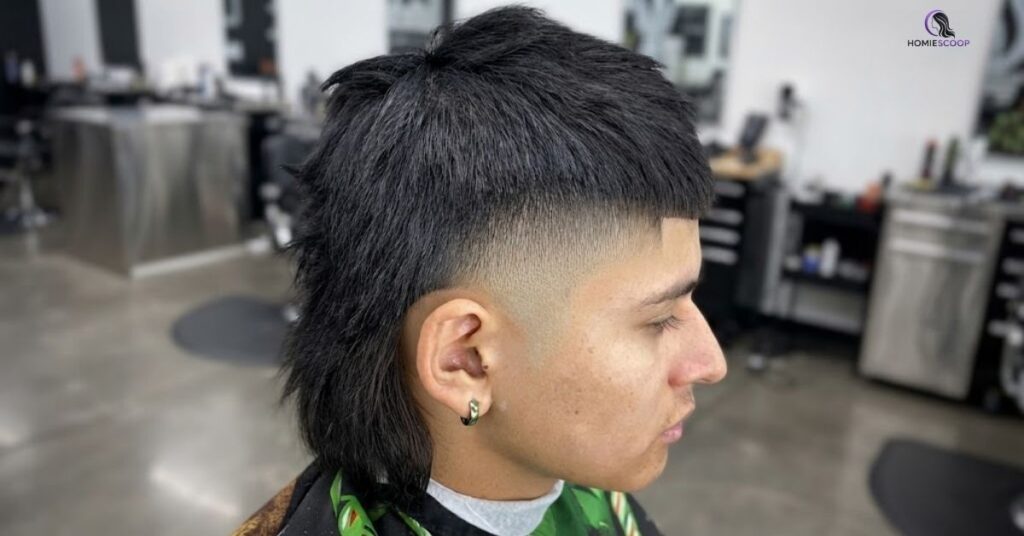
An undercut creates stronger separation between the longer hair and the faded area. When combined with a burst fade, it produces a more disconnected haircut.
A disconnected haircut is best for someone who enjoys visible contrast. It can work with a modern haircut or a more rebellious look.
Styling Tip: Use hair texture rather than excessive shine to emphasize the separation.
13. Fluffy Burst Fade Mullet
The fluffy version focuses on softness and hair volume rather than extremely sharp layers. It works particularly well with naturally thick or wavy hair.
This stylish mullet gives the top a fuller appearance while the faded sides keep the overall haircut balanced.
Styling Tip: Blow-dry the roots upward and finish with a lightweight product.
14. Modern Burst Fade Mullet
The modern version is cleaner and more controlled than a traditional mullet. A modern mullet haircut usually has precise faded sides, intentional texture, and a back that looks shaped rather than simply grown out.
This trendy mullet haircut is ideal for men who want the classic silhouette but prefer a contemporary finish.
Styling Tip: Use matte clay for a dry, modern appearance.
15. Short Burst Fade Mullet
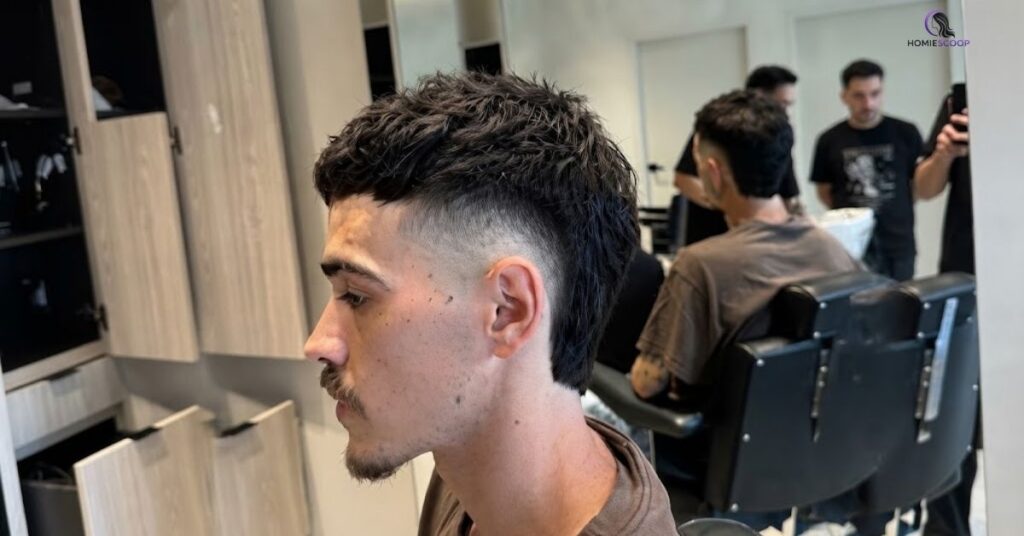
A short burst fade mullet keeps the overall shape compact. The back is shorter, the top is easier to manage, and the fade remains the main feature.
A short burst fade mullet haircut is especially useful if your school, workplace, or lifestyle does not allow a dramatically long back.
Styling Tip: Keep short hair on top textured with a small amount of product.
16. Long Burst Fade Mullet
A long version leaves much more length at the back, making the mullet unmistakable. A long burst fade mullet hairstyle works best when the longer section is healthy and properly layered.
The additional length gives you more styling options, including a natural flow, waves, curls, or a deliberately messy finish.
Styling Tip: Condition the back regularly to prevent dryness and split ends.
17. Burst Fade Mullet with Beard
Pairing a Burst Fade Mullet with a beard creates a strong masculine appearance. The beard can add balance to the longer hair at the back while the fade keeps the sides clean.
A connected temple fade can make the haircut and beard look more unified. Keep the beard edges neat if you want a polished masculine hairstyle.
Styling Tip: Match the beard’s level of sharpness with the haircut’s neckline.
18. Asian Burst Fade Mullet
Thick, straight hair can work exceptionally well with an Asian-inspired version. The haircut can preserve fullness on top while the sides are shaped into a precise burst fade.
Layering helps prevent the top from looking too heavy. This can create a clean modern mullet while retaining natural thickness.
Styling Tip: Use lightweight styling products when the hair is already naturally dense.
19. Blonde Burst Fade Mullet
Color can make layers and texture more noticeable. Blonde hair can emphasize the contrast between the faded sides and longer back.
A stylish mullet with lighter color looks especially interesting when paired with visible choppy layers. If you color your hair, remember that longer hair needs additional conditioning.
Styling Tip: Avoid excessive heat if the hair has already been chemically treated.
20. Wavy Hair Burst Fade Mullet
A wavy version uses natural movement instead of creating every piece manually. The Burst Fade Mullet becomes softer and more relaxed when waves flow through the top and back.
A burst fade mullet for wavy hair can be styled with minimal product. Sea salt spray is useful for adding definition without creating a heavy finish.
Styling Tip: Apply sea salt spray to damp hair and scrunch lightly.
21. Burst Fade Mohawk Mullet
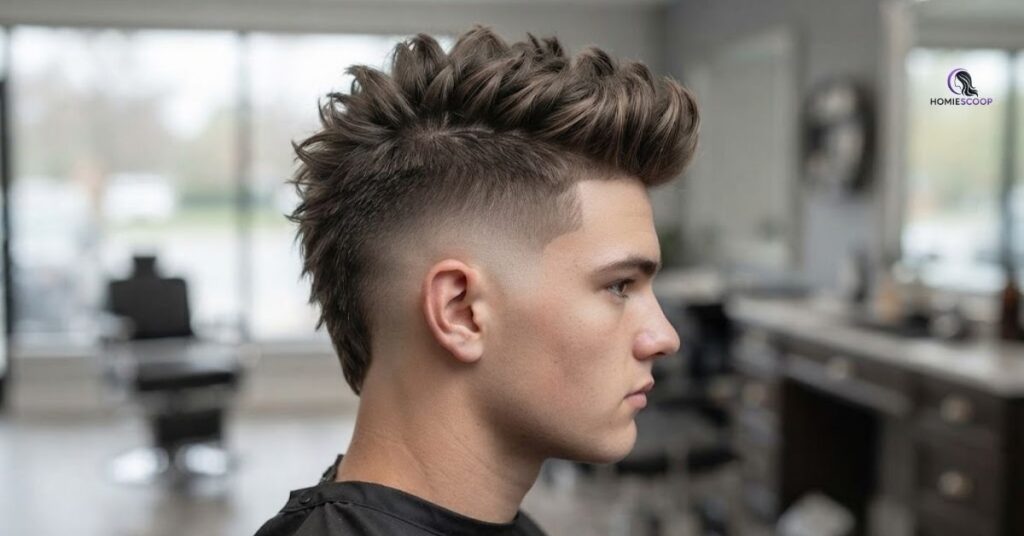
This bold variation combines the central height of a mohawk with the longer back of a mullet. The sides remain faded around the ears, creating a strong contrast.
It is one of the more dramatic burst fade mullet styles and is better suited to someone comfortable with an attention-grabbing haircut.
Styling Tip: Use a firm but matte product if you want the central section to stay raised.
22. Edgar Burst Fade Mullet
An Edgar-inspired version combines a defined front with the longer back associated with a mullet. The front can remain short while the back creates the signature length.
This modern haircut looks best when the front edge is precise. Regular trimming is important if you want to maintain sharp edges.
Styling Tip: Keep the front clean and use texture through the back.
23. Burst Fade Mullet with Fringe
Adding a fringe changes the proportions of the haircut and can help frame the face. A softer fringe works well with a round face or wider forehead.
The fringe can be straight, textured, or slightly separated. A burst fade with mullet becomes more personalized when the front and back lengths are intentionally balanced.
Styling Tip: Blow-dry the fringe forward and finish with a small amount of matte product.
24. Burst Fade Mullet for Thick Hair
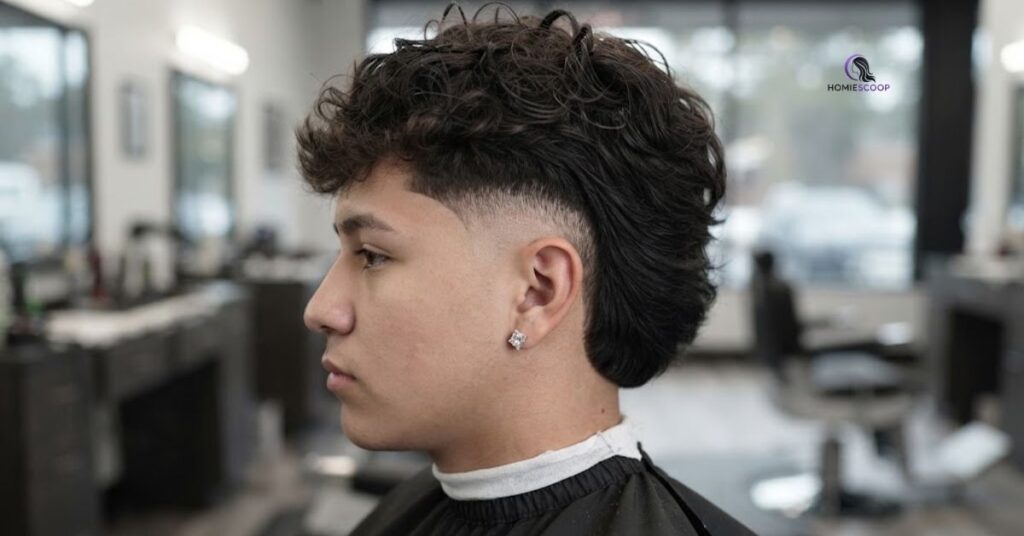
A burst fade mullet for thick hair uses the fade to remove unwanted weight around the ears. The barber can then add layers through the top and back.
Thick hair naturally creates hair volume, but too much bulk can make the haircut appear wide. Strategic texturing keeps the shape controlled.
Styling Tip: Ask your barber to remove weight without destroying the natural fullness.
25. Burst Fade Mullet for Thin Hair
A Burst Fade Mullet can also work with thinner hair when the cut is designed carefully. Keeping the sides short can make the top and back appear fuller by comparison.
Avoid heavy styling products because they can flatten fine strands. A lightweight texture product is usually a better choice.
Styling Tip: Use a small amount of volumizing product at the roots.
26. Burst Fade Mullet Straight Hair
The burst fade mullet straight hair version deserves its own option because straight strands make the shape extremely visible. The longer back can fall naturally or be styled into separated layers.
A burst mullet with straight strands is also relatively easy to control. If your hair naturally lies flat, ask for subtle layers to create movement.
Styling Tip: Use matte clay only where extra separation is needed.
27. Burst Fade Mullet Curly Hair
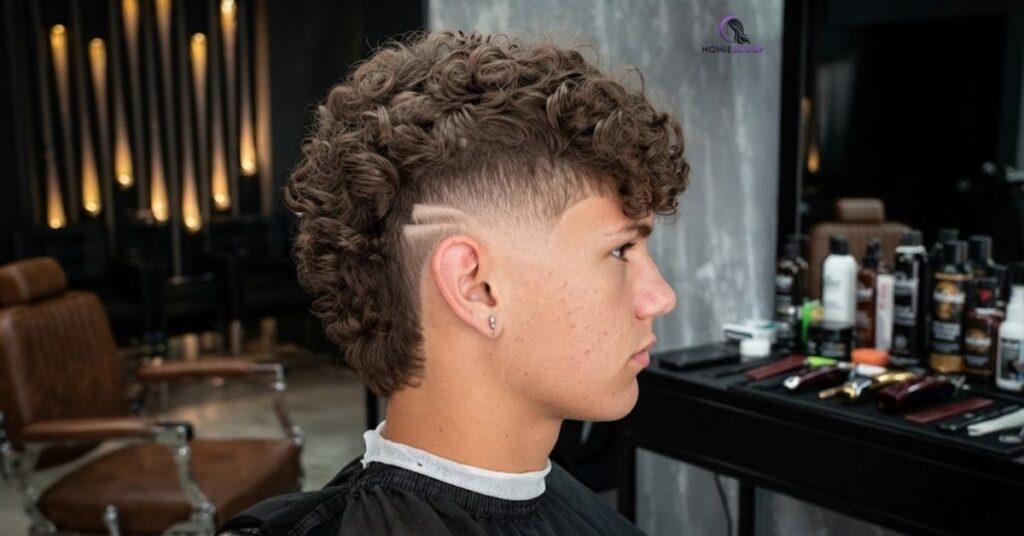
A curly version allows the back to become fuller and more dramatic. The rounded fade keeps the sides controlled while the curls provide height and texture.
A burst fade mullet with curly hair should account for curl shrinkage. Keeping slightly more length than you think you need can prevent the finished haircut from becoming too short.
Styling Tip: Apply curl cream while the hair is damp and allow it to dry naturally.
28. Burst Fade Mullet Short
This compact variation is ideal for someone who likes the shape but wants less commitment. It combines a shorter back with a clean burst fade haircut.
The style can also work as a transition from a short haircut into a longer mullet. As the back grows, your barber can gradually reshape it.
Styling Tip: Keep the neckline clean and the top lightly textured.
29. Burst Fade Mullet French Crop
The French crop version combines a short, textured front with the longer back of a mullet. This creates an unusual balance between a cropped front and a flowing rear section.
It is a good option for men who want short hair on top but still want noticeable length behind the head. The contrast makes this a modern and edgy hairstyle.
Styling Tip: Keep the crop textured rather than perfectly flat.
30. Burst Fade Mullet Kids
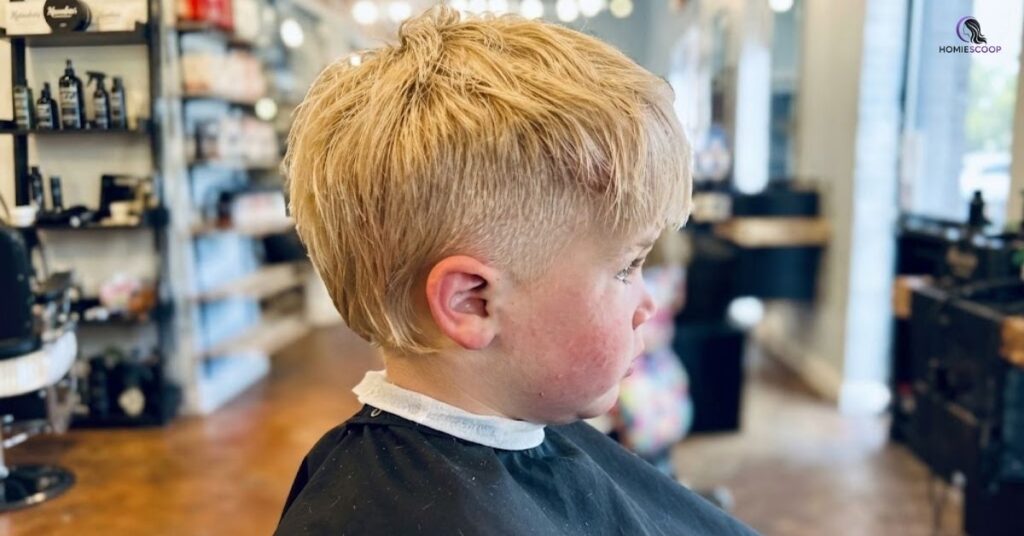
A Burst Fade Mullet can also be adapted for kids by keeping the back moderate and choosing a softer fade. A low version is usually easier to maintain and less dramatic.
For children, comfort and school grooming rules should come before extreme styling. A clean neckline and simple top can still create a fun mullet hairstyle.
Styling Tip: Use minimal styling products and let the natural texture do most of the work.
Burst Fade Mullet by Face Shape
Choosing a haircut based on face shape can make the final result look more balanced. An oval face is highly flexible and can usually handle low, mid, or high versions.
A round face often benefits from extra height and tighter faded sides. A square face can handle stronger contrast, while longer faces usually look better when the top is not excessively tall.
For a heart-shaped face, a softer front can balance the narrower chin. Your barber can adjust the mullet with burst fade according to the natural proportions of your forehead, cheeks, and jaw.
Burst Fade Mullet by Hair Type
Straight hair produces crisp edges and clearly visible layers. It is one of the easiest textures for creating a sharp burst fade mullet haircut because the hair tends to show the exact shape.
Wavy hair adds movement naturally, while curly hair creates extra volume and character. Thick hair benefits from removing excess weight around the sides, while finer hair usually needs lightweight products and strategic layering.
If you have natural curls, ask your barber to account for shrinkage. If your hair is straight and heavy, ask for texture rather than simply removing large amounts of length.
Modern Mullet Haircut vs. Traditional Mullet
| Feature | Modern Mullet Haircut | Traditional Mullet |
| Sides | Burst fade or taper | Usually longer |
| Top | Textured and controlled | Often more natural |
| Back | Shaped and layered | Usually noticeably longer |
| Finish | Modern and sharp | Retro and relaxed |
| Maintenance | Moderate | Low to moderate |
| Styling | More flexible | Simpler |
A modern mullet haircut usually looks cleaner because the sides are deliberately faded. A traditional mullet relies more heavily on length and does not necessarily include a mullet fade.
If you want something current, the modern approach gives you more control over the silhouette. If you prefer a vintage appearance, keeping the sides fuller can create a more traditional result.
Burst fade mullet straight hair
The burst fade mullet straight hair combination is particularly easy to customize because straight strands show every transition. You can choose a low, mid, or high fade and adjust the back according to how dramatic you want the silhouette.
For a cleaner finish, keep the top controlled and the back layered. For a relaxed burst mullet, allow the longer hair to fall naturally and use only a small amount of product.
Burst fade mullet curly hair
The Burst Fade Mullet works especially well with curls because the fade removes visual weight around the ears. The longer back can then expand naturally and create a fuller outline.
A curly burst fade mullet should not be treated exactly like straight hair. Curl pattern, shrinkage, and density all affect the final shape, so communication with your barber is important.
Burst fade mullet short
A short version is a practical entry point for anyone nervous about having a long back. The short burst fade mullet keeps the signature shape without requiring months of growth.
It is also easier to maintain at home. A little hair texture and a clean neckline can keep the haircut looking fresh between barber visits.
Burst Fade mullet French crop
A French crop creates a strong contrast between the short front and the longer rear. The result is an unusual but wearable combination that feels more contemporary than a traditional mullet.
The crop can be straight across or slightly textured. Pairing it with a moderate burst fade keeps the sides clean without making the haircut too extreme.
Mid burst fade mullet
A mid burst fade mullet remains one of the most versatile choices because it sits between subtle and dramatic. It gives the sides enough contrast to make the haircut obvious while preserving a balanced appearance.
This version works particularly well with wavy hair, straight hair, and moderate hair volume. It can also be adapted for an oval face, square face, or rounder facial structure.
Read More: Curly Burst Fade Haircut: 40 Styles for Every Curl Type(2026)
Burst fade mullet Kids
For kids, the haircut should remain practical and comfortable. A low or moderate fade with a shorter back creates the recognizable shape without excessive maintenance.
Parents can ask for a simple burst fade haircut with a neat neckline and natural texture. Avoid heavy styling products unless they are necessary for a special occasion.
Step-by-Step Burst Fade Mullet Tutorial
1. Choose Your Preferred Style
Start by deciding whether you want a low, mid, high, curly, textured, short, or long version. Think about your face shape, hair type, school or workplace requirements, and daily styling routine.
2. Show Reference Photos to Your Barber
Pictures are more useful than saying only “give me a mullet.” Show the barber the sides, front, and back of the haircut you want.
If possible, bring two or three examples. This makes it easier to explain the exact fade height and amount of length you want at the back.
3. Decide Fade Height and Mullet Length
Choose between a low burst fade mullet, mid burst fade mullet, or high burst fade mullet. Then decide whether you want a short, medium, or long back.
The balance matters. A very high fade with an extremely long back creates a much stronger contrast than a low fade with moderate length.
4. Add Texture or Volume if Needed
Texture helps prevent the haircut from looking flat. Layered haircut techniques and choppy layers can create movement while maintaining enough density.
For thick hair, texturing can reduce weight. For fine hair, light layers can improve the appearance of volume without removing too much hair.
5. Use Styling Products
Different textures need different products.
| Product | Finish | Best Use |
| Hair pomade | Controlled | Straight, thick hair |
| Matte clay | Dry, textured | Thick and medium hair |
| Sea salt spray | Tousled | Wavy and curly hair |
| Light cream | Natural | Everyday styling |
| Texture powder | Voluminous | Fine hair |
Use styling products sparingly. Too much product can make a modern haircut appear heavy and greasy.
6. Maintain With Regular Trims
A fade loses its sharpness faster than the longer back. Keeping the temple fade, neckline, and edges clean makes a major difference.
If you prefer a sharp finish, schedule barber appointments before the sides become too grown out.
Weekly Care Routine
Wash your hair according to its texture and oil level rather than automatically washing it every day. Longer hair at the back often benefits from regular conditioning.
For curly hair and wavy hair, detangle carefully when damp. For straight hair, avoid excessive heat when styling. The goal is to maintain healthy natural texture while keeping the fade clean.
Use a small amount of hair pomade, matte clay, or sea salt spray depending on your desired finish. There is no need to layer several products when one product can do the job.
Maintenance Schedule
| Fade Type | Suggested Trim |
| Low burst fade | Every 3–5 weeks |
| Mid burst fade | Every 3–4 weeks |
| High burst fade | Every 1–2 weeks |
| Skin fade | Every 1–2 weeks |
| Longer back | Shape every 8–12 weeks |
Your ideal hairstyle maintenance schedule depends on how quickly your hair grows. If you want sharp edges every day, you will need more frequent appointments.
Barber Tips for the Perfect Burst Fade Mullet
When learning how to ask for a burst fade mullet, be specific about the fade height and back length. Simply asking for a mullet can produce very different results from barber to barber.
Tell your barber whether you want a burst fade with mullet, mullet with burst fade, or a softer tapered mullet. Reference pictures are still the best way to communicate the shape.
If you are growing your hair from a short haircut, mention that before the barber begins cutting. They can preserve the sections needed to create a better back later.
For curly hair, discuss shrinkage before deciding the final length. For thick hair, ask about removing weight while preserving volume.
Common Mistakes to Avoid With a Burst Fade Mullet
Choosing the wrong fade height is one of the biggest mistakes. A very high fade may create too much vertical contrast on a long face, while a low fade may feel too subtle if you want an aggressive style.
Ignoring hair texture is another problem. A style that looks perfect on straight hair may need different layering on curly or wavy hair.
Using too many styling products can also flatten the hair. Start with a small amount of matte clay, pomade, or spray and add more only if necessary.
Finally, do not skip maintenance. A great burst fade mullet haircut can quickly lose its shape when the sides become overgrown.
FAQs
Is a mullet a burst fade?
No. A mullet describes the overall haircut shape, particularly the longer hair at the back. A burst fade describes the curved fading technique around the ears. A Burst Fade Mullet combines both features.
Is a burst fade haram?
Islamic opinions about specific haircut patterns can differ. Some scholars discuss qaza, which involves shaving parts of the head while leaving other areas, when evaluating certain uneven hairstyles. If religious permissibility is important to you, ask a qualified Islamic scholar about the exact haircut you plan to get.
What is a mullet burst?
A mullet burst usually refers to a mullet burst fade, meaning a mullet combined with a rounded fade around the ears. The terms can be used differently by barbers, so showing a reference picture is helpful.
What is the best burst fade?
There is no single best option for everyone. A low fade is subtle, a mid fade offers balance, and a high fade creates stronger contrast. The best choice depends on your face shape, hair type, preferred style, and maintenance routine.
Are mullets allowed in Islam?
There are different scholarly opinions about modern mullet hairstyles and how particular versions relate to Islamic guidance on haircuts. Because interpretations can vary, anyone concerned about religious compliance should consult a trusted qualified scholar and show them the exact style.
Conclusion
The Burst Fade Mullet gives you plenty of freedom to create a haircut that fits your personality. From a subtle low fade to a dramatic high version, you can adjust the sides, top, texture, and back length to suit your face shape and hair type.
Among the best burst fade mullet styles, the curly, textured, low, mid, short, and modern versions are especially versatile. Whether you want a burst fade mullet for men, a burst fade mullet haircut idea, or one of the more experimental modern burst fade mullet ideas, the key is choosing proportions that work with your natural hair.
Before visiting the barbershop, save reference photos and decide how much length you want at the back. Be clear about the fade height, texture, and neckline, then let your barber adjust the shape to your hair density and face.
