
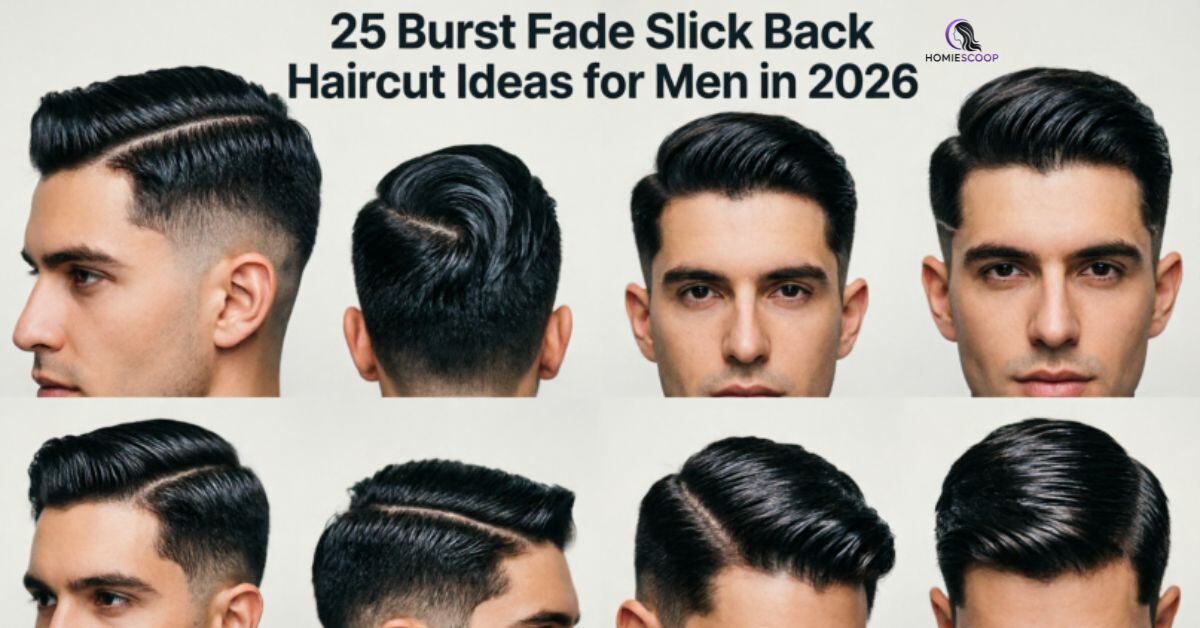
Choosing a haircut that looks sharp without feeling overly complicated can be difficult. The burst fade slick back combines controlled hair direction with a curved fade around the ear, creating a style that can move from everyday wear to a professional environment with ease.
The appeal comes from its flexibility. You can choose a low, mid, or high fade, keep the top short or long, work with straight, wavy, curly, thick, or fine hair, and finish the look with anything from a natural matte texture to a glossy wet look.
In this guide, you’ll find 25 haircut variations, styling advice, product guidance, face-shape recommendations, barber instructions, maintenance tips, common mistakes, comparisons, and answers to the most important questions about this versatile modern hairstyle.
What Is a Burst Fade Slick Back Haircut?
A Burst Fade Slick Back Haircut combines a rounded fade around the ears with a longer top that is directed toward the back of the head. Unlike a conventional fade that follows a more horizontal path, the burst fade creates a semicircular or curved shape around the ear.
The top can be styled in several ways. A classic version uses polished, slicked-back hair, while a modern interpretation can use natural texture, controlled volume, or a relaxed finish. The important feature is the backward hair direction combined with the curved fade transition.
The haircut is especially adaptable because the fade height and top length can be changed independently. A low burst fade creates a conservative silhouette, a mid burst fade provides balanced contrast, and a high burst fade gives the sides a much tighter appearance.
It also works with different hair textures. Straight hair can produce a smooth finish, wavy hair adds natural movement, curly hair creates volume and curl definition, while thick hair provides fullness and structure. Fine or thinning hair can also work when the top is cut and styled to avoid excessive weight.
For men who want a recognizable haircut without being locked into one finish, this is one of the more customizable modern barbering options.
22 Best Burst Fade Slick Back Haircut Ideas for Men in 2026
1. Classic Burst Fade Slick Back
The classic version uses medium-length hair on top with a balanced fade around the ears. Keeping approximately 2–3 inches of length gives enough room for hair movement while making daily styling manageable.
A medium-hold pomade creates a polished appearance without forcing every strand completely flat. For a more contemporary style, use a lightweight styling cream and let a little natural texture remain visible.
Ask your barber for a clean burst fade with a controlled fade transition, a natural hairline, and enough length on top to comb backward. This is an excellent starting point if you have never worn a slick back before.
2. Low Burst Fade Slick Back
A low burst fade keeps the fade close to the lower ear area and leaves more density around the sides. The result is subtle, conservative, and particularly suitable for professional settings.
This variation works well when workplace grooming standards are strict. It also provides a softer transition as the haircut grows out, making it a practical option for men who prefer fewer barber appointments.
For styling, use a low-shine pomade or matte styling cream. Comb the hair backward while preserving some natural movement instead of pressing the top completely flat.
3. Mid Burst Fade Slick Back
A mid burst fade offers a useful middle ground between subtle and dramatic. The fade sits around the middle of the ear and creates noticeable contrast without removing too much side volume.
This option is especially versatile for different face shapes. It can complement an oval face, add structure to a round face, and soften the visual impact of a square jaw when paired with a textured top.
A medium-length top gives you enough hair control for both a smooth slick back and a textured variation. Blow-dry backward first, then use a medium-hold product to establish the final shape.
4. High Burst Fade Slick Back
A high burst fade removes more hair around the sides and temple area, making the top the main visual focus. It creates a bold silhouette and works particularly well for men who enjoy a sharper, fashion-forward haircut.
The contrast becomes stronger when the top is kept dense and longer. Thick hair can look especially impressive because the shorter sides emphasize the fullness and height above.
A strong-hold pomade, styling clay, or firm wax can help control the top. Men with a round face may also appreciate the extra vertical emphasis, provided the top retains enough height.
5. Skin Burst Fade Slick Back
A skin burst fade brings the sides down extremely short, sometimes to a zero guard. The clean skin-tight finish creates maximum contrast with the longer hair above.
This is a high-maintenance variation because the difference between freshly cut and grown-out sides becomes visible quickly. Regular fade touch-ups are important if you want the skin finish to remain crisp.
The top can be glossy, matte, or textured. A high-shine pomade creates a dramatic contrast, while matte clay produces a more contemporary appearance.
6. Taper Burst Fade Slick Back
The taper version is softer than a skin fade. Instead of exposing a large amount of skin, the barber gradually reduces the hair around the ear and neckline.
This makes it one of the more forgiving haircut styles for men who want a structured shape without an extremely sharp fade. It also suits conservative workplaces and everyday wear.
A styling cream or lightweight pomade is often enough. The goal is controlled hair direction rather than an exaggerated wet-look finish.
7. Textured Burst Fade Slick Back
A textured version intentionally avoids an overly perfect surface. The hair still moves backward, but individual strands remain visible and the natural texture creates dimension.
Matte clay, texture paste, or a lightweight wax can create this finish. Use your fingers instead of a comb at the final stage to preserve natural movement.
This is a strong choice for men who want modern men’s hairstyles that feel relaxed rather than formal. It works particularly well with wavy hair and dense straight hair.
8. Long Hair Slick Back Burst Fade
Longer hair on top creates a dramatic contrast against the faded sides. Men growing their hair out can keep 4+ inches while asking the barber to clean the ear and temple area.
The extra length allows the hair to flow backward instead of simply lying flat. Straight hair creates a sleek silhouette, while natural waves add movement and a more relaxed appearance.
A lightweight pomade or styling cream can provide control without making the longer top heavy. Blow-dry the roots backward before finishing the ends.
9. Short Slick Back Burst Fade
Short hair can still be directed backward when the top has approximately 1–1.5 inches of length. This creates a compact, no-nonsense haircut that requires less daily styling.
The short top is particularly useful for men who want an everyday hairstyle rather than a high-maintenance style. A small amount of wax or matte paste can provide enough definition.
Keep the sides tight and the neckline clean for a sharp appearance. This variation is also an easy transition for someone who has never tried longer slicked-back hair.
10. Wavy Slick Back Burst Fade
Wavy hair naturally produces movement, making it unnecessary to force the top completely flat. The objective is to direct the wave pattern backward while retaining its texture.
A curl cream, lightweight mousse, or low-shine pomade can define natural waves. Use a blow-dryer on medium heat and avoid excessive brushing once the wave pattern is established.
The result combines a clean fade with a relaxed top. It is a particularly effective choice for men who want a modern hairstyle that does not hide their natural texture.
11. Curly Slick Back Burst Fade
Curly hair can absolutely be styled backward. Rather than trying to remove every curl, use the curl pattern as part of the design.
Start with a curl-defining cream on damp hair. After drying, use a small amount of gel or lightweight pomade to improve hold while keeping curl definition intact.
The burst fade provides a clean frame around the ear area while the curls create volume above. This contrast makes the haircut bold without requiring completely straight hair.
12. Thick Hair Slick Back Burst Fade
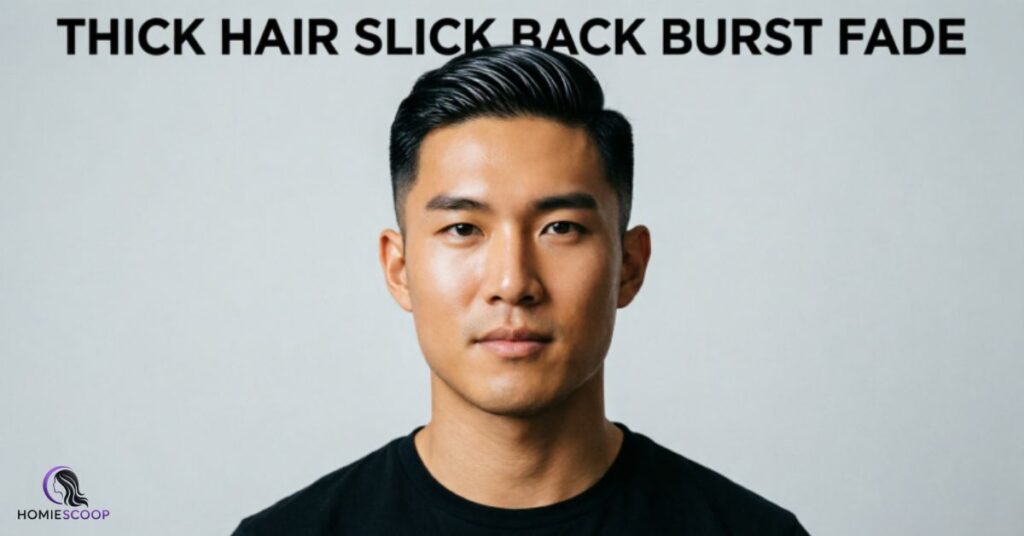
Thick hair provides plenty of density for a strong slick-back silhouette. The main challenge is controlling excessive volume without making the top look heavy.
A barber can remove strategic weight while preserving length. A high or mid fade can then create visual contrast between the dense top and tight sides.
Firm-hold clay, strong-hold pomade, or styling wax can help keep thick strands directed backward. Blow-drying the roots first makes the final product more effective.
13. Thin Hair Slick Back Burst Fade
Fine or thinning hair needs a different approach. The goal is not to press every strand tightly against the scalp because that can emphasize sparse areas.
A low or mid fade can preserve some side density, while moderate top length provides enough material for volume. Volumizing mousse and lightweight styling products are usually preferable to heavy oil-based formulas.
Blow-dry the roots backward and slightly upward before applying product. This creates a fuller appearance and prevents the top from becoming flat.
14. Pompadour Slick Back Burst Fade
This hybrid combines the backward direction of a slick back with the elevated front of a pompadour. The front is lifted before flowing toward the crown.
A round brush and blow-dryer are useful for creating the initial height. Once the shape is established, apply a firm-hold product through the top.
This variation produces a dramatic look and works especially well for formal events, fashion-conscious men, and anyone who prefers more volume than a conventional slick back.
15. Undercut Slick Back Burst Fade
An undercut introduces stronger separation between the top and sides. The longer top can be slicked backward while the shorter area around the ear receives the burst fade treatment.
The disconnected structure gives the haircut an edgy character. It is more suitable for creative workplaces and casual environments than conservative corporate settings.
Use a strong-hold styling product if the top is long or heavy. A clean neckline and carefully maintained fade help preserve the intentional contrast.
16. Beard Blend Burst Fade Slick Back
Adding a beard creates an opportunity to connect the haircut and facial hair into one continuous design. The fade-to-beard transition should be gradual rather than abrupt.
Short stubble works for a restrained appearance, while a full beard produces a stronger, more masculine silhouette. Beard shaping should follow the natural jawline rather than creating unnecessary width.
Regular beard trims, beard conditioning, and fade maintenance are important. When the transition is seamless, the hairstyle looks more polished and deliberate.
17. Messy Slick Back Burst Fade
A messy slick back keeps the backward direction but relaxes the finish. A few strands can fall naturally out of place, creating an undone look.
This variation works well for casual wear, nights out, and creative environments. Matte clay or texture paste is better suited to the look than a high-gloss product.
Apply the product lightly, then use your fingers to shape the hair. Avoid over-combing because the intentionally relaxed finish depends on visible texture.
18. Wet Look Slick Back Burst Fade
The wet look is the most reflective version of the style. High-shine pomade or gel creates a glossy surface that resembles freshly wet hair.
It works particularly well for formal events, evening wear, photography, and fashion-forward outfits. The skin fade or high fade underneath can make the shine look even more dramatic.
Use a water-based pomade if you want easier washing. Apply enough product to create the appearance you want without saturating the hair to the point that it becomes heavy.
19. Side Part Slick Back Burst Fade
A side part adds a distinct line before the hair moves backward. It gives the style a more traditional foundation while the burst fade keeps the haircut contemporary.
This is a strong option for professional men who want something more distinctive than a conventional side part. It also works well with a suit or business-casual clothing.
Use a comb to establish the part, then direct the larger section backward. A low-shine or natural-finish product keeps the style refined.
20. Razor Line Burst Fade Slick Back
A razor line adds a crisp visual detail to the haircut. The line can define a side part or create a sharper separation near the temple.
This style is best for men who enjoy attention-grabbing barbering details. The line needs regular maintenance because it loses definition as the hair grows.
Ask your barber to position the razor line according to your natural hairline and facial proportions. A poorly placed line can make the haircut look unbalanced.
21. Slick Back Mullet Burst Fade
The slick back mullet combines longer rear length with faded sides and backward styling. It has a stronger rebellious character than a conventional professional slick back.
The back should have enough length to create visible movement, while the sides remain controlled around the ears. A flexible styling product works well because the rear hair should not look rigid.
This is a strong choice for men who want a fashion-forward haircut with retro influence. It is less conservative but highly customizable.
22. Professional Executive Slick Back Fade
The executive variation keeps the fade relatively low or moderate and the top controlled. The goal is a refined appearance rather than maximum contrast.
A natural or low-shine finish is usually best for an office, boardroom, or formal business setting. Medium-length hair provides enough flexibility for a polished daily style.
Keep the neckline clean, the fade transition subtle, and the top free from excessive product residue. This produces a sophisticated appearance without looking over-styled.
23. Middle Part Burst Fade
A middle part gives the haircut a more contemporary shape. Instead of directing all the hair from one central point backward, the front separates slightly before flowing toward the sides and rear.
This variation works especially well with medium-length hair and natural waves. The part can be subtle rather than sharply defined, allowing the style to retain a relaxed appearance.
A lightweight styling cream or texture paste provides enough control without eliminating hair movement.
24. Natural Flow Burst Fade
The natural-flow version is designed around the hair’s existing direction. Instead of forcing a perfectly smooth surface, the barber cuts the top so it naturally moves backward.
This is useful for men who dislike spending a long time styling their hair. A small amount of lightweight product can enhance definition while keeping a natural finish.
It is particularly effective for wavy or thick hair because the natural texture becomes part of the haircut instead of a problem to overcome.
25. Curved Temple Burst Fade
A curved temple variation emphasizes the semicircular shape of the fade around the ear and temple. The top remains long enough for a controlled backward flow.
The defining feature is precision around the temple area. A professional barber can adjust the curve according to the ear position, natural hairline, and desired fade height.
This variation provides a sharp appearance without requiring a dramatic skin fade. It is a versatile choice for men who want a clean modern haircut with subtle technical detail.
Why Burst Fade Slick Back Haircuts Are Trending in 2026
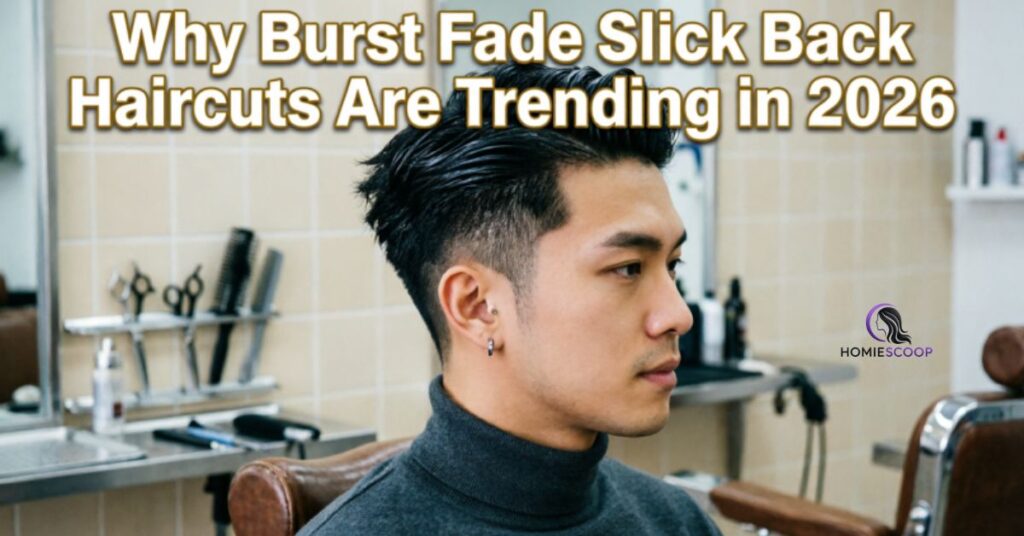
The style fits the current preference for haircuts that combine classic foundations with contemporary barbering. It has enough structure for formal clothing but enough flexibility for relaxed styling.
Another reason for its popularity is customization. Fade height, top length, texture, beard integration, and finish can all be adjusted without losing the fundamental shape.
Modern and Professional Appearance
A clean fade and controlled backward direction create a polished appearance. With a natural finish, the haircut can work in an office or corporate environment without appearing overly formal.
For a more fashion-forward result, raise the top slightly, increase fade contrast, or use a textured finish. The same basic haircut can therefore produce very different overall looks.
A professional hairstyle does not have to look boring. Careful proportions can make a modern hairstyle appropriate for business settings while still expressing personal style.
Works with Different Hair Types
Straight hair generally produces the smoothest finish, while wavy hair adds movement. Curly hair creates a more voluminous silhouette, and thick hair offers strong natural fullness.
Fine hair requires lighter products and careful volume control. The fade can be adjusted to preserve density where it matters most.
This adaptability is one reason the style fits so many modern men’s hairstyles. The haircut can be personalized instead of forcing every man into the same shape.
Suitable for Casual and Formal Styles
A polished finish works with suits, smart-casual clothing, and formal events. A matte textured finish works better with everyday clothing and casual wear.
Changing the styling product can transform the appearance without changing the haircut itself. Pomade creates control and shine, clay produces texture, and styling cream gives a softer finish.
That versatility makes it suitable for men who want one haircut for several parts of their lifestyle.
Read More: 40 Stylish Burst Fade Faux Hawk Haircut Ideas for Men in 2026
Popular in Modern Men’s Grooming
Modern barbering increasingly focuses on personalization rather than one universal formula. Fade height, hair length, natural texture, and facial hair can all be coordinated.
The style also photographs well because the curved fade creates a recognizable silhouette. A clean neckline and well-shaped beard can add further definition.
For men interested in men’s grooming trends 2026, this haircut offers a practical combination of classic hairstyle principles and contemporary barbering techniques.
Who Should Get a Burst Fade Slick Back Haircut?
The style is adaptable, but the best result comes from matching the cut to hair density, natural texture, face shape, and lifestyle.
Best Hair Types for This Style
Straight hair is the easiest starting point for a traditional smooth finish. Wavy hair can create a softer, more textured result, while curly hair produces a distinctive high-volume variation.
Thick and dense hair can support longer top lengths, whereas fine hair often benefits from moderate length and lightweight products.
Men with thinning hair should discuss the cut with an experienced barber. Styling the top backward can sometimes expose a receding hairline, so the barber may recommend a shorter or more textured variation.
Best Age Groups
Younger men can experiment with high fades, razor lines, textured tops, or mullet-inspired versions. Mature men may prefer low or mid fades with natural styling.
Men in their twenties, thirties, forties, and beyond can all wear the style when the proportions suit their facial structure and professional environment.
The key is not age but personalization. A conservative fade and low-shine finish can make the haircut considerably more understated.
Professional vs Casual Wearers
For a workplace, choose a low or mid fade, moderate top length, and natural or low-shine finish. Avoid excessive product, exaggerated height, or dramatic razor designs if the environment is conservative.
For casual wear, the options are broader. Textured hair, high fade contrast, longer length, or a beard blend can create a stronger personal style.
Creative industries usually allow more freedom, while corporate environments often reward cleaner and more restrained grooming.
Who Should Avoid This Haircut?
Men with very sparse hair or a strongly receding hairline may find that a backward style makes thinning areas more visible. That does not automatically rule out the haircut, but it means the design needs careful adaptation.
An experienced barber can determine whether a low fade, shorter top, textured finish, or different hair direction will provide better visual balance.
The same principle applies to anyone who dislikes daily styling. Longer slicked-back hair generally requires more preparation than a short textured haircut.
How to Choose the Right Burst Fade Slick Back for Your Face Shape
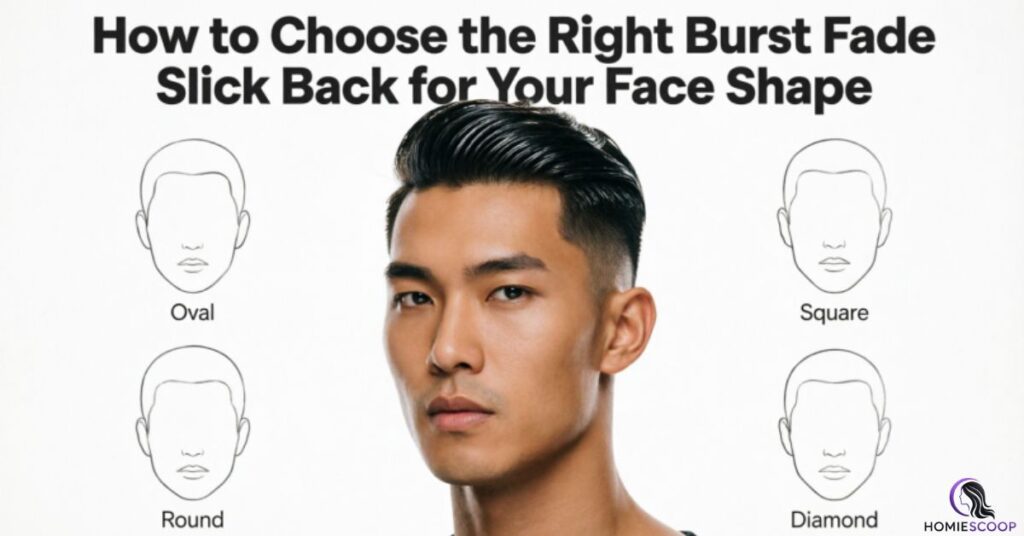
Face shape influences how much height, side width, and length should be visible. The right haircut should support facial proportions rather than simply copy a reference photograph.
Best Styles for Oval Faces
An oval face generally allows considerable flexibility because the facial proportions are naturally balanced. Low, mid, and high fades can all work depending on personal preference.
A classic slick back, textured top, or pompadour-inspired variation can be used without making major corrections to face width or length.
Avoid adding unnecessary height if you already have a naturally elongated appearance. A moderate top length can preserve balance.
Best Styles for Round Faces
Round faces often benefit from additional height and reduced side width. A mid or high fade can help create that visual effect.
Keeping the top longer and directing it upward before backward can create the illusion of additional face length. A pompadour-inspired front is particularly effective for this purpose.
Avoid excessively wide side volume. Tight sides and controlled top height usually create stronger facial balance.
Best Styles for Square Faces
Square faces already have strong jawlines and angular features. A textured top can soften the visual structure while maintaining the haircut’s sharp character.
A mid fade with medium-length hair works well because it creates contrast without making the jaw appear unnecessarily wider.
A slightly relaxed finish is often more flattering than an extremely rigid, skin-tight fade.
Best Styles for Diamond Face Shapes
Diamond faces tend to have wider cheekbones with a narrower forehead and jaw. The goal is to create visual balance rather than emphasize the widest point.
A mid fade with medium-length top hair can add useful volume around the upper portion of the face. A subtle side part can also create additional width.
Avoid extreme fade heights when they make the forehead or jaw appear disproportionately narrow.
How to Ask Your Barber for a Burst Fade Slick Back
Clear barber terminology makes a major difference. Do not rely only on saying “slick back” because the barber still needs information about the fade, length, texture, and finish.
Key Terms to Use at the Barber Shop
Tell your barber where you want the fade to sit and how much length you want to keep. You can specify low, mid, or high fade height.
If you want the shortest possible sides, request a skin fade or bald fade and clarify whether you want a zero guard. If you want a softer result, ask for a taper fade.
For the top, state the approximate length, such as 1–1.5 inches, 2–3 inches, or 4+ inches. Then describe whether you want a polished, textured, matte, or glossy finish.
If you want a hard part or razor line, mention it separately rather than assuming the barber will include it.
Showing Reference Photos
Reference photos are often more useful than a long verbal explanation. Bring photographs showing the front, side, and rear whenever possible.
Choose a reference with similar hair texture and density. A photograph of straight, dense hair may not accurately represent what the same cut will look like on fine curly hair.
Tell your barber which elements you like: fade height, top length, hair direction, texture, beard blend, or finish.
Choosing the Right Fade Height
Low fades preserve more side density and generally create a conservative appearance. Mid fades offer balanced contrast, while high fades create a more dramatic silhouette.
Skin-tight and bald fades require more frequent maintenance because growth becomes visible quickly.
Your lifestyle should influence the choice. If weekly barber visits are inconvenient, a softer taper or low fade may be more practical.
Deciding on Hair Length and Texture
Short tops are easier to manage but provide less styling flexibility. Medium-length hair offers a strong balance between control and versatility.
Long hair creates more movement and drama but requires more styling time and product control.
Your natural hair texture should guide the final cut. Curly and wavy hair should usually be shaped around their existing pattern instead of being forced into a completely flat finish.
Step-by-Step Tutorial: How to Style a Burst Fade Slick Back Haircut
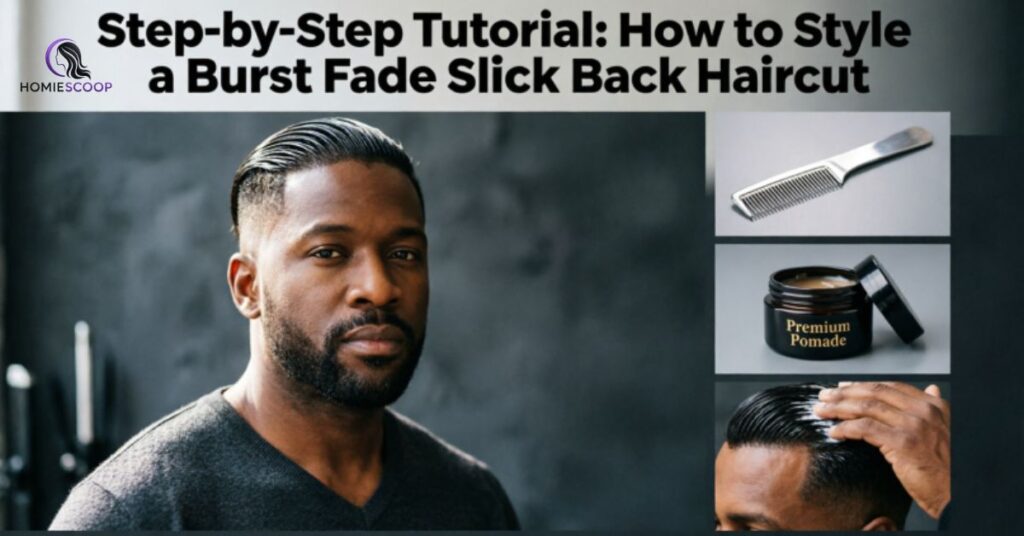
A consistent styling routine helps the haircut look better and reduces the temptation to use too much product.
Step 1 – Start with Clean, Damp Hair
Wash with a quality shampoo and conditioner appropriate for your scalp and hair texture. Towel-dry until the hair is damp rather than dripping wet.
Clean hair distributes styling products more evenly. If product buildup is present, styling can become heavy and difficult.
Do not overwash simply because you style daily. Excessive washing can remove natural oils and increase dryness.
Step 2 – Apply a Pre-Styling Product
Use a lightweight mousse, pre-styling spray, or similar product if you need extra volume or heat protection.
Apply a small amount through the roots and lengths. Fine hair usually needs less product than thick hair.
If you plan to blow-dry regularly, include a heat protectant spray in the hair preparation stage.
Step 3 – Blow Dry Hair Backward
Use medium heat and direct the airflow from the front toward the back. A round brush can help create height at the front, while fingers provide a more natural texture.
For curly or wavy hair, avoid brushing aggressively. Instead, guide the natural pattern backward while preserving curl definition.
The blow-dry stage establishes hair direction before the final styling product is added.
Step 4 – Apply Your Styling Product
Once the hair is mostly or completely dry, apply a small amount of pomade, clay, wax, or styling cream.
Start with less than you think you need. Too much product can produce greasy hair, heavy hair, excessive shine, or flat hair.
Warm the product between your palms before distributing it through the hair. Begin at the back and sides of the top, then work toward the front.
Step 5 – Shape the Slick Back
Use a comb for a polished finish or your fingers for a textured result.
Direct the hair backward and slightly upward if you want additional height. Do not automatically press everything flat against the scalp.
Check the front and sides from different angles. The final hair shape should work with the fade rather than overpower it.
Step 6 – Finish and Set the Style
A light finishing spray can improve longevity when necessary. Avoid adding several heavy products simply to increase hold.
For a glossy finish, allow the pomade or gel to provide the shine. For a matte finish, use clay or paste and keep the final layer light.
Once the style is set, avoid repeatedly touching it. Excessive handling can break the shape and transfer natural oils into the hair.
Best Hair Products for a Burst Fade Slick Back
The best product depends on hair texture, desired hold, and finish. There is no single formula that works equally well for every man.
Pomade vs Wax vs Clay
Pomade is the traditional choice for a smooth slick back. Water-based pomade is easier to wash out, while oil-based pomade can provide longer-lasting control.
High-shine pomade is suitable for a glossy finish. Low-shine pomade is better when you want a polished appearance without a wet effect.
Wax provides flexible control and some texture. Clay is generally better for matte styling, volume control, and modern textured finishes.
Best Products for Fine Hair
Fine hair benefits from lightweight products that do not collapse the strands. Lightweight mousse, volumizing mousse, sea salt spray, and lightweight styling cream can add body before the final product.
Avoid applying a heavy layer of oil-based pomade to fine strands. Excess product can create the appearance of less hair.
A small amount of lightweight pomade can still work when the goal is controlled backward movement.
Best Products for Thick Hair
Thick hair usually needs stronger control. Firm-hold clay, strong-hold pomade, styling wax, or a strong-hold gel can help manage dense strands.
Blow-drying backward first reduces the amount of product required. The product then works as a finishing layer rather than trying to force the hair into position from scratch.
For a polished appearance, a water-based pomade can be effective. For a textured finish, use matte clay or texture paste.
Best Products for Curly Hair
Curly hair often benefits from a curl-defining cream before stronger styling products. The first goal is to define the natural curls rather than destroy the curl pattern.
Once dry, a small amount of pomade or gel can improve hold and direct the curls backward.
A curl cream or curl-defining cream is especially useful when you want natural curls with controlled backward flow.
Best Products for Strong Hold
For maximum control, look for firm-hold pomades, strong-hold clays, or strong-hold gel.
Strong products should still be applied gradually. Adding more product is easier than removing an excessive amount.
If you want strong hold without an overly glossy appearance, a firm-hold clay is often a better choice than a high-shine product.
Burst Fade Slick Back Maintenance Tips
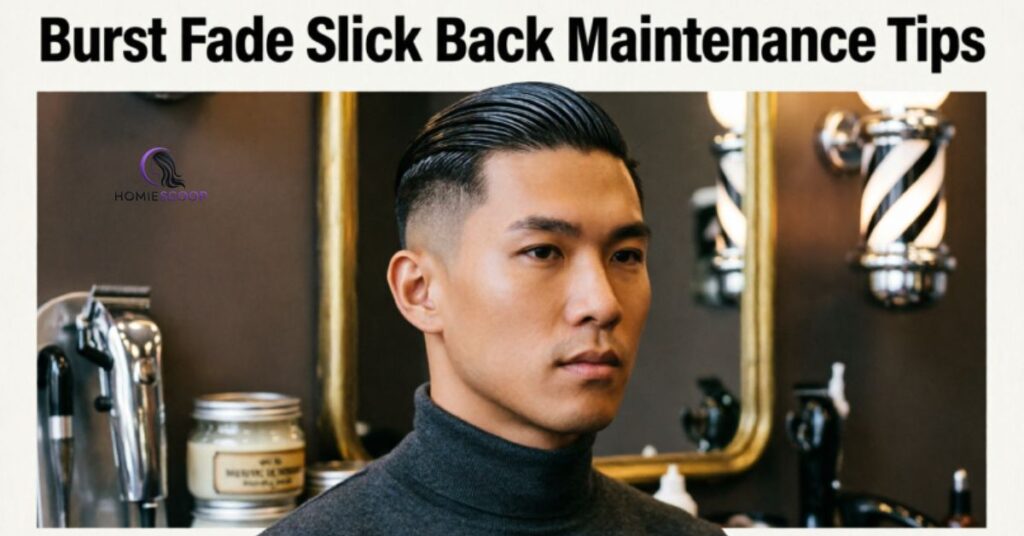
A good haircut loses its impact when the fade becomes uneven or the top loses its shape. Maintenance should cover the haircut, styling routine, scalp, and facial hair.
Get Regular Fade Touch-Ups
High and skin fades generally need more frequent attention than low or tapered versions. Every 1–2 weeks can work for men who want an especially crisp finish.
Low and mid fades can often be maintained on a roughly every 2–4 weeks schedule, depending on hair growth.
Regular trims also keep the neckline and fade transition clean. If you use a razor line, that detail usually needs additional touch-ups.
Style Your Hair Consistently
Daily styling helps you maintain predictable hair direction. Over time, hair becomes easier to control when you consistently blow-dry and comb it backward.
However, daily styling does not mean using heavy product every day. Use the minimum amount needed for your desired hold.
A consistent styling routine is especially useful when growing the top longer.
Maintain a Healthy Hair Care Routine
Use quality shampoo and conditioner appropriate for your hair. Washing too frequently can strip natural oils, while insufficient cleansing can allow product residue to accumulate.
Healthy hair generally responds better to styling. Pay attention to dryness, brittle ends, scalp discomfort, and changes in hair density.
If you use heat frequently, include heat protection as part of your regular hair care routine.
Avoid Product Build-Up
Pomade, wax, clay, gel, and styling cream can leave residue if they are not properly removed.
A clarifying shampoo can be used periodically when buildup becomes noticeable. Avoid excessive clarifying because it can contribute to dryness.
Use enough styling product to achieve the desired result rather than layering product throughout the day.
Protect Hair from Heat Damage
Frequent blow-drying can contribute to heat damage when performed at excessive temperatures or for too long.
Use medium heat, keep the dryer moving, and apply heat protectant spray before drying.
If your hair becomes unusually dry or brittle, reduce heat exposure and reconsider your styling routine.
Keep the Beard Groomed
A beard blend works best when the beard and haircut are maintained together. Regular beard trims preserve the connection between the fade and facial hair.
Beard shaping should follow the natural facial structure. Conditioning can also keep longer facial hair softer and easier to control.
A clean beard line and fresh fade create a more refined appearance than either feature maintained independently.
Common Mistakes to Avoid
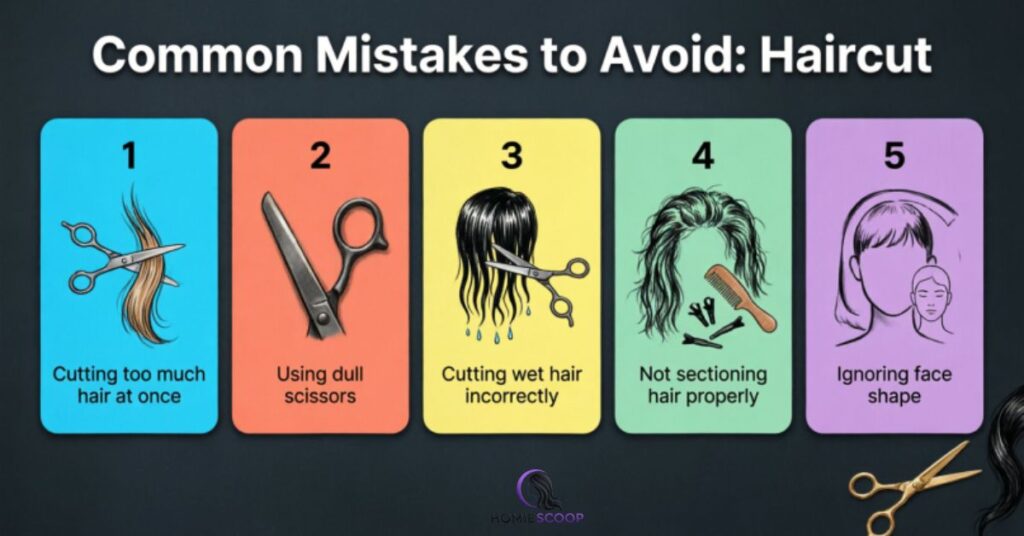
Small styling or cutting mistakes can change the entire silhouette. Understanding the most common problems makes it easier to communicate with your barber and manage the style at home.
Ignoring Hair Texture
Natural texture should influence both the haircut and the styling method. Curly hair should not automatically be treated like straight hair, and fine hair should not be overloaded with heavy products.
Work with natural waves, curls, density, and movement. The best result usually enhances the characteristics your hair already has.
Skipping Regular Trims
A burst fade loses its clean shape as the hair grows around the ear, temple, and neckline.
Skipping trims can also make the top look disconnected from the sides. Regular barber visits preserve the intended haircut shape.
If you want lower maintenance, choose a taper or low fade rather than expecting a skin fade to remain crisp for several weeks.
Choosing the Wrong Fade Height
Fade height has a major effect on visual balance. A high fade creates more contrast and removes more side width, while a low fade retains fullness.
Your face shape, workplace, hair density, and preferred maintenance schedule should all influence the decision.
Discuss the fade height before the barber begins cutting. Changing the height after the hair is removed is not always possible.
Burst Fade Slick Back vs Other Popular Hairstyles
Different haircut styles emphasize different features. The right choice depends on hair direction, volume, styling difficulty, maintenance, and personal style.
Burst Fade Slick Back vs Comb Over
| Feature | Burst Fade Slick Back | Comb Over |
| Hair Direction | Hair moves backward | Hair moves primarily to one side |
| Overall Look | Modern, sleek, structured | Classic, clean, traditional |
| Volume | Controlled backward volume | More side-directed volume |
| Fade Compatibility | Burst fade, skin fade, taper fade | Fades and traditional tapers |
| Styling Difficulty | Moderate | Easy to moderate |
| Best Hair Types | Straight, wavy, curly, thick, fine with adaptation | Straight and wavy hair |
| Professional Appearance | Modern and polished | Conservative and professional |
| Maintenance Level | Medium to high | Medium |
| Best For | Men wanting contemporary style | Men wanting a classic hairstyle |
The main difference is hair direction. The comb over emphasizes a sideward flow, while the slick back focuses on backward movement.
Burst Fade Slick Back vs Pompadour
| Feature | Burst Fade Slick Back | Pompadour |
| Hair Direction | Backward | Upward then backward |
| Overall Look | Sleek and refined | Voluminous and dramatic |
| Volume | Moderate | High |
| Styling Focus | Control and direction | Height and fullness |
| Styling Difficulty | Moderate | Moderate to high |
| Best Hair Length | Medium to long | Medium to long |
| Best Hair Types | Straight, wavy, thick, curly | Straight and wavy with enough density |
| Professional Appearance | Highly adaptable | More noticeable |
| Maintenance Level | Medium | Medium to high |
| Best For | Versatile everyday styling | Statement styling |
The pompadour puts greater emphasis on height. The slick back puts greater emphasis on smooth backward flow and controlled shape.
Burst Fade Slick Back vs Quiff
| Feature | Burst Fade Slick Back | Quiff |
| Hair Direction | Backward | Upward and slightly backward |
| Overall Look | Polished and structured | Textured and energetic |
| Volume | Moderate | Higher at the front |
| Styling Focus | Smoothness and control | Height and texture |
| Styling Difficulty | Moderate | Moderate to high |
| Best Hair Length | Medium-length top | Short to medium top |
| Best Hair Types | Straight, wavy, thick, curly | Straight, wavy, thick |
| Professional Appearance | Strong | Professional but more casual |
| Maintenance Level | Medium | Medium to high |
| Best For | Refined personal style | Youthful, modern styling |
A quiff generally creates more front height, while the slick back distributes the hair direction toward the rear.
Burst Fade Slick Back vs Faux Hawk
| Feature | Burst Fade Slick Back | Faux Hawk |
| Hair Direction | Backward | Upward toward the center |
| Overall Look | Clean and polished | Edgy and attention-grabbing |
| Volume | Moderate | Strong center volume |
| Styling Focus | Direction and structure | Height and definition |
| Styling Difficulty | Moderate | Moderate to high |
| Best Hair Length | Medium top | Short to medium top |
| Best Hair Types | Straight, wavy, thick, curly | Straight, wavy, thick |
| Professional Appearance | Suitable for many workplaces | More casual |
| Maintenance Level | Medium | Medium to high |
| Best For | Versatile modern style | Bold personal style |
The faux hawk creates a central ridge and a much stronger visual statement. The slick back remains more adaptable across formal and professional environments.
FAQs
What fade looks best with a slick back?
A mid burst fade is one of the most versatile choices because it balances side tightness with enough surrounding hair to keep the silhouette natural. A low fade is better for conservative settings, while a high or skin fade creates stronger contrast.
The best choice also depends on face shape, hair density, and maintenance preferences. Your barber can adjust the fade transition to complement the top length.
What is a burst fade slicked back haircut?
A burst fade slicked back haircut combines a curved fade around the ears with hair directed toward the back. The fade can be low, mid, high, tapered, or skin-tight.
The top may be smooth, textured, glossy, matte, short, medium, or long. That flexibility is what makes the style suitable for different hair types and lifestyles.
Why is Burst fade so popular?
Burst fades create a distinctive curved shape that differs from conventional fade designs. They also work particularly well around the ears and can be connected to different top lengths and beard styles.
Combined with slicked-back hair, the result has a strong visual contrast while remaining customizable. It can be conservative or bold depending on the fade height and finish.
Can I get a burst fade with hair in the back?
Yes. You can keep significant length at the back while using a burst fade around the ears. This is especially common with mullet-inspired variations.
Tell your barber exactly how much rear length you want to preserve. A reference photo is useful because “long in the back” can mean very different things to different people.
Is a burst fade just a mullet?
No. A burst fade is a fade technique that curves around the ear. A mullet is a haircut structure characterized by shorter sides and longer hair at the back.
The two can be combined, which is why a slick back mullet burst fade exists, but a burst fade does not automatically make a haircut a mullet.
Conclusion
The Burst Fade Slick Back Haircut remains a versatile option because its core structure can be adapted to different hair lengths, textures, face shapes, workplaces, and personal styles. Low, mid, high, tapered, skin, textured, curly, long, and mullet-inspired versions all create distinct results.
The best version is the one that matches your natural hair, facial proportions, styling ability, and maintenance schedule. Bring a reference photo, discuss fade height and top length with your barber, and choose a product that supports the finish you actually want.
