

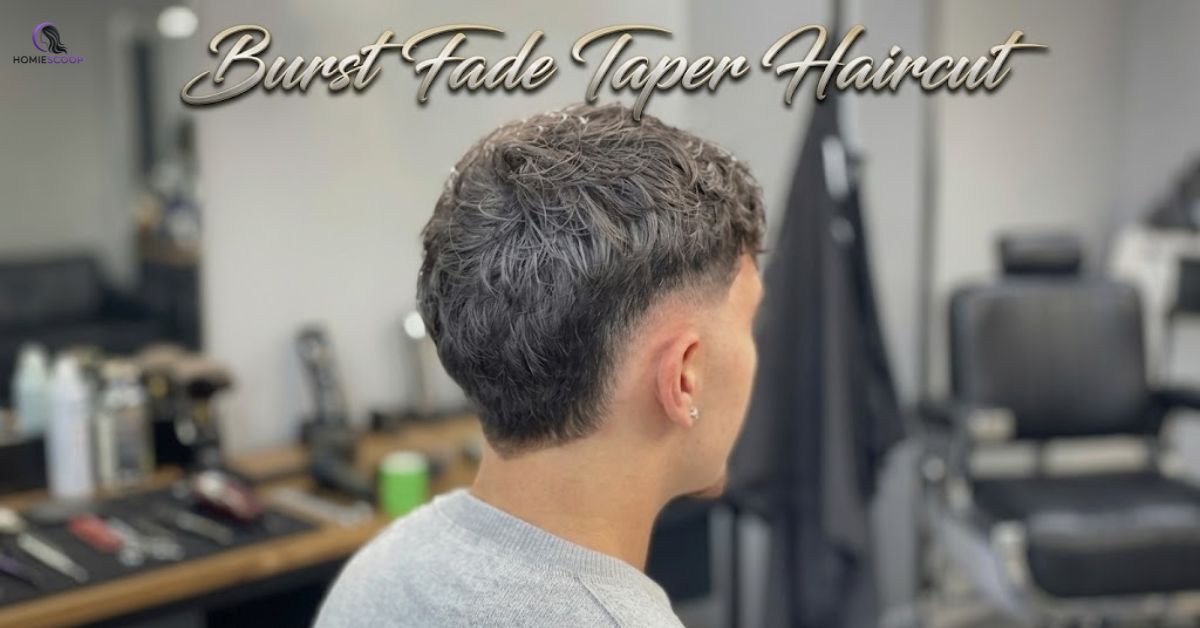
A Burst Fade Taper Haircut combines the rounded fading pattern around the ears with a gradual taper through the sideburns and neckline. The result is a balanced cut that can look clean, relaxed, athletic, or bold depending on the length and texture left on top.
The appeal of a Burst Fade Taper Haircut is its flexibility. You can pair it with curls, waves, straight hair, a crop, quiff, pompadour, mohawk, mullet, twists, or a beard. The barber can also adjust the fade from subtle to dramatic, making the style suitable for different face shapes and personal preferences.
If you’re choosing a new Burst Fade Taper Haircut, the key is to match the fade height, top length, texture, and neckline with your everyday routine. This guide covers 23 ideas, styling advice, comparisons, maintenance tips, and the exact details to tell your barber.
What Is a Burst Fade Taper Haircut?
A Burst Fade Taper Haircut uses a rounded fade pattern that follows the natural area around the ear while keeping a softer taper toward the neckline. Unlike a conventional fade that travels evenly around the head, the burst pattern creates a distinctive semicircular effect.
A taper burst fade can be subtle or dramatic. A burst taper generally keeps more hair around the back and upper sides, while the burst taper fade gives the barber room to create stronger contrast. The result is a burst fade taper that feels modern without necessarily looking extreme.
A burst fade with a taper is especially useful when you want the visual character of a burst fade but prefer a controlled finish around the neck and sideburns. Compared with a traditional taper fade haircut, the shape around the ears is more noticeable.
The cut works across straight, wavy, curly, thick, and fine textures. A burst fade haircut can therefore be adapted to different lengths and styling preferences. Among current burst fade styles, the taper version is particularly flexible because it can move between casual and professional settings.
For men comparing a taper haircut for men with a men’s fade haircut, the biggest difference is how the fading is distributed. The taper focuses more on specific finishing areas, while a fade generally creates a broader transition.
A low burst fade produces a restrained appearance, while a mid burst fade gives more contrast. A high burst fade creates a stronger visual statement. These choices allow a barber to customize the shape without changing the overall character of the cut.
23 Best Burst Fade Taper Haircut Ideas
These Burst Fade Taper Haircut ideas range from classic and understated to textured and expressive. Consider your hair density, face shape, styling time, and desired maintenance before choosing one.
1. Classic Burst Fade Taper
The classic version keeps moderate length on top and creates a smooth rounded transition around the ears. It is an excellent introduction to a taper burst fade because the shape is visible without becoming overly dramatic.
A burst taper works especially well when the top is combed, lightly textured, or brushed to the side. Ask for tapered sides and a tapered neckline so the finish remains controlled.
Styling Tip: Use a small amount of matte paste and comb the top into place.
Read More: 35 Top Burst Fade Textured Crop Haircuts for Men in 2026
2. Skin Burst Fade Taper
A skin burst fade removes the hair very close to the skin around the ears. This creates a stronger contrast between the sides and the top while making the rounded fade shape highly visible.
The style works well with a short burst fade, but it can also support a longer top. A clean fade haircut requires more frequent touch-ups when the fade reaches the skin.
Styling Tip: Use matte clay on the top to emphasize the contrast.
3. Burst Fade Taper with Beard
A Burst Fade Taper Haircut paired with facial hair creates a connected appearance from the sideburns toward the beard. The barber can use a blended fade to transition between the haircut and facial hair.
A burst fade with beard can look rugged without becoming messy. Keep the beard length consistent with the top and ask for a gradual transition rather than a sudden disconnect.
Styling Tip: Keep the beard edges clean and moisturized.
4. Burst Fade Taper with Design
Adding a shaved pattern turns the area above the ear into a visual feature. A burst fade with design can include a simple curved line, geometric mark, or subtle pattern.
Because hair designs grow out quickly, this version requires regular barber visits. It works particularly well when the rest of the haircut remains simple.
Styling Tip: Keep the top controlled so the design remains the main detail.
5. Burst Fade Taper with Line Up
A sharp hairline can make a Burst Fade Taper Haircut look exceptionally polished. The line-up defines the forehead, temples, and sometimes the area around the ears.
This is a strong choice for men who prefer a clean-cut hairstyle. A barber can combine a sharp hairline with a rounded fade shape without making the haircut look too severe.
Styling Tip: Use a light styling paste and avoid excessive product near the hairline.
6. Textured Burst Fade Taper
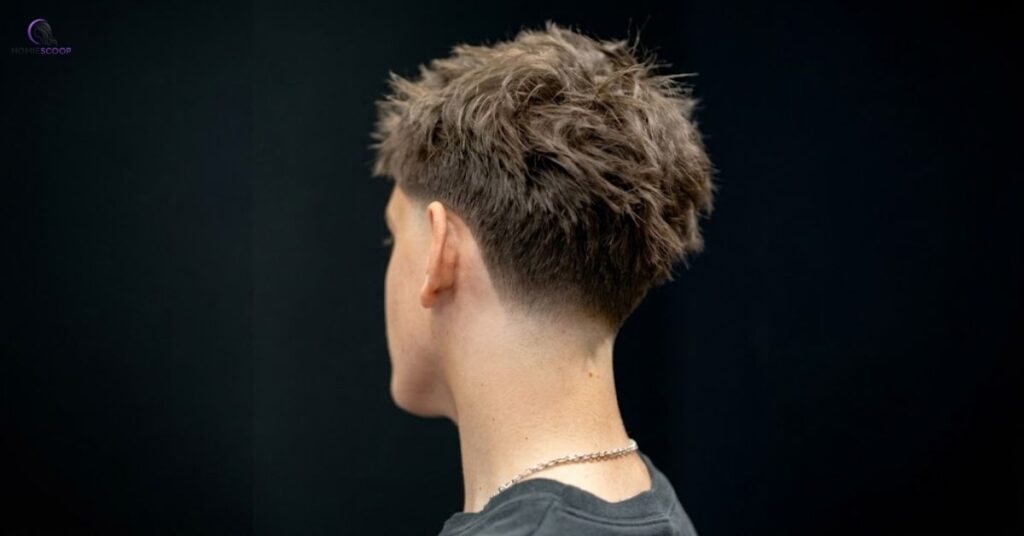
A textured haircut adds movement to the top while the sides remain controlled. This variation works especially well with medium-length hair and naturally thick textures.
A burst fade textured top can be messy, brushed forward, or lifted slightly. It is also a good example of a fade haircut with texture because the contrast between the top and sides creates depth.
Styling Tip: Apply a small amount of matte clay with your fingers.
7. French Crop Burst Fade Taper
A short crop with a forward fringe gives the cut a youthful, structured appearance. The rounded fade keeps the sides neat while the fringe adds definition at the front.
This can become a particularly effective short burst fade for men who don’t want to spend much time styling. It can also work as an easy-to-style haircut when the top is naturally straight or slightly wavy.
Styling Tip: Push the fringe forward and use matte product for separation.
8. Crew Cut Burst Fade Taper
A crew cut gives the top a compact athletic appearance while the fade creates definition around the ears. This is a practical option for men who prefer a low-maintenance men’s hairstyle.
The combination can also be adapted into a professional burst fade by keeping the fade moderate and the neckline clean. It suits people who want a masculine haircut without complicated styling.
Styling Tip: Use a lightweight product only if extra texture is needed.
9. Pompadour Burst Fade Taper
A pompadour creates height at the front and gives the haircut a dramatic silhouette. The sides stay controlled, allowing the longer top to become the focus.
A burst fade with pompadour can work particularly well with dense hair. The barber should preserve enough length to create volume without making the top look excessively heavy.
Styling Tip: Blow-dry the front upward and backward before applying pomade.
10. Quiff Burst Fade Taper
A quiff is less formal than a pompadour but still creates noticeable volume. It can be worn with a loose finish or shaped carefully for a sharper appearance.
A burst fade with quiff is a useful option for oval, square, and rectangular face shapes because the added height can visually balance the face.
Styling Tip: Lift the front with a blow dryer and finish with matte clay.
11. Slick Back Burst Fade Taper
The slick-back version creates a neat, mature appearance. Keeping the sides close while leaving enough length on top produces a strong contrast.
This variation can become a stylish fade haircut for formal occasions. A modern taper fade around the edges prevents the style from looking overly heavy.
Styling Tip: Use a water-based pomade for a controlled finish.
12. Comb Over Burst Fade Taper
A comb over gives the top a traditional structure while the burst fade brings the overall cut into the current era. It can be styled with either a natural part or a defined part.
This is among the more versatile burst fade taper styles because the top can be dressed up for work or loosened for casual situations.
Styling Tip: Comb the top diagonally and use medium-hold paste.
13. Side Part Burst Fade Taper
A side part provides clear direction and structure. When paired with a rounded fade, it gives a classic burst fade appearance with a contemporary edge.
The style can also be adapted as a professional burst fade by keeping the sides moderate and avoiding excessive skin exposure.
Styling Tip: Use a comb and medium-hold product for a precise part.
14. Hard Part Burst Fade Taper
A hard part adds a shaved line that separates the top from the faded area. It creates a more defined, geometric look than a natural part.
A burst fade with hard part is best for men who enjoy a sharp finish and don’t mind regular maintenance. The line needs occasional refreshing to stay visible.
Styling Tip: Keep the top textured but controlled so the hard part remains prominent.
15. Brush Up Burst Fade Taper
The brush-up style directs the hair upward and slightly backward. It adds volume without requiring the height of a traditional pompadour.
This is a modern men’s haircut that works especially well with medium-length hair. It can be made casual or polished depending on the product.
Styling Tip: Blow-dry upward and use a small amount of matte clay.
16. Messy Burst Fade Taper
The messy version intentionally leaves the top loose and textured. The contrast between relaxed hair and precise sides gives the haircut character.
It is a good choice for men who want a casual burst fade while avoiding an overly polished finish. Finger styling usually produces a better result than using a fine comb.
Styling Tip: Use texture powder or matte clay and shape the hair with your fingers.
17. Burst Fade Taper for Thick Hair
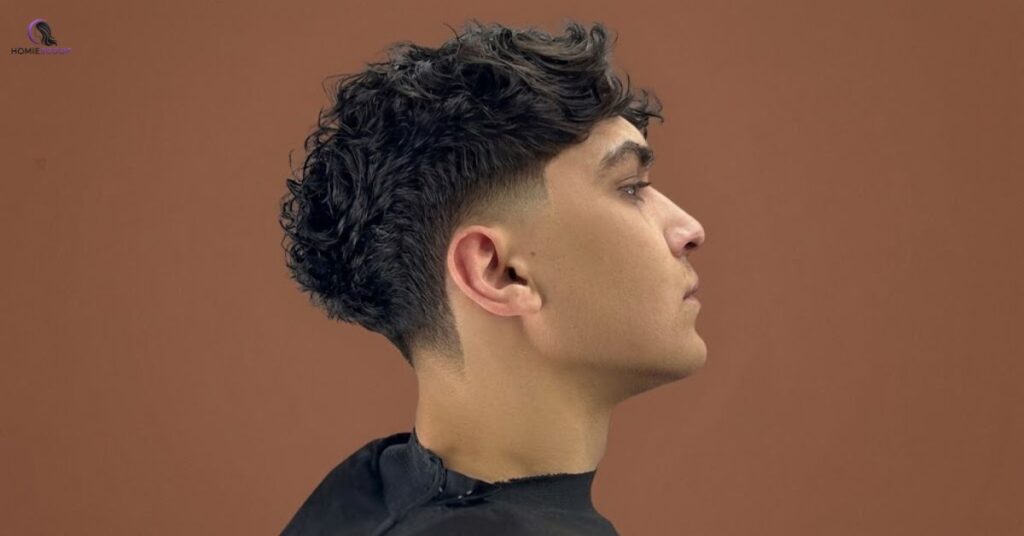
Thick hair benefits from removing excess weight around the sides while retaining fullness on top. A barber can use thinning or texturizing techniques to create movement.
A burst fade for thick hair can be paired with a textured haircut, crop, quiff, or brushed-up top. The goal is to control bulk without making the hair look flat.
Styling Tip: Use lightweight styling cream to control volume.
18. Burst Fade Taper for Thin Hair
A shorter fade can make the hair on top appear fuller by creating contrast. For thinner hair, avoid removing too much density from the top.
A burst fade for thin hair works particularly well with texture and moderate length. The barber can use a soft blended fade rather than an extremely harsh transition.
Styling Tip: Try volumizing mousse or powder and avoid heavy oily products.
19. Burst Fade Taper for Black Men
Natural coils, twists, and afro textures provide many possibilities for this haircut. A curved fade can frame the natural shape while maintaining a strong outline.
A burst fade for men with tightly textured hair can be paired with twists, an afro, short curls, or a more sculpted top. The barber should work with the natural pattern instead of fighting it.
Styling Tip: Maintain moisture with a suitable leave-in conditioner.
20. Burst Fade Taper for Teens
Teenagers often prefer hairstyles that look current without requiring a long morning routine. The burst taper can be combined with crops, curls, textured tops, or a faux hawk.
For school or other settings where grooming needs to remain conservative, a low or medium version is usually easier to manage.
Styling Tip: Choose a simple matte product that can be applied quickly.
21. Professional Burst Fade Taper
A professional version keeps the fade controlled and the top neat. A low or mid fade usually creates a more conservative appearance than a very high skin fade.
A professional burst fade can be styled with a side part, comb over, short textured top, or controlled quiff. It offers a clean appearance while still having more character than a standard office haircut.
Styling Tip: Use a light cream or medium-hold paste.
22. Modern Burst Fade Taper
The modern variation combines contemporary styling with the recognizable rounded fade. It can include a textured crop, fringe, asymmetric top, or subtle design.
A modern burst fade is especially useful for men who like experimenting with 2026 trends while retaining a recognizable barbering foundation.
Styling Tip: Keep the texture natural rather than making every strand rigid.
23. Sharp Burst Fade Taper
The sharp version focuses on precision. The barber creates a clean transition, defined edges, and a carefully shaped neckline.
This is one of the best burst fade haircuts for men who enjoy a fresh-from-the-barber appearance. It does require regular maintenance because small amounts of growth can soften the details.
Styling Tip: Book regular cleanups and keep the top consistently shaped.
Mid taper fade
A mid taper fade gives the haircut a balanced transition between the lower and upper areas. It can work particularly well when you want more definition than a low taper but less intensity than a high fade.
For men considering a Burst Fade Taper Haircut, the mid option offers a practical middle ground. It can support curly, wavy, straight, or textured tops without overwhelming the face.
Burst Fade Low Taper
A low taper keeps the transition closer to the ear and neckline. When combined with a burst pattern, it creates a subtle rounded effect that is easy to wear every day.
A Burst Fade Taper Haircut with a low taper is ideal for people who want a cleaner appearance without removing too much hair from the sides. It can also be easier to maintain between appointments.
Burst fade High
A high version pushes the fade higher around the sides, increasing contrast. It is a stronger choice for men who want their haircut to stand out immediately.
When selecting a Burst Fade Taper Haircut with a high fade, consider your face shape and top length. Leaving more volume on top can help balance the stronger sides.
Burst fade mullet
The mullet keeps additional length toward the back while the burst pattern cleans up the area around the ears. This creates a distinctive combination of length, texture, and contrast.
A burst fade mullet can be subtle with a short back or dramatic with significant length. It is one of the more expressive burst fade haircut ideas for men who want a fashion-forward appearance.
Low burst fade
A low burst fade follows the natural contour around the lower ear area. It is usually less dramatic than a mid or high version and can therefore work well in conservative environments.
For a balanced Burst Fade Taper Haircut, a low burst fade can preserve more visual weight on the sides. It also provides a strong foundation for curls, waves, short crops, and medium-length tops.
Burst taper
A burst taper combines the curved fading around the ear with controlled tapering at the neckline and sideburns. It is one of the most adaptable approaches because the barber can adjust the contrast.
A Burst Fade Taper Haircut can therefore be customized to look classic, modern, edgy, or understated. Your hair texture and desired maintenance level should guide the final choice.
Burst Fade Taper vs Other Popular Fade Haircuts
The main difference between these cuts is where the fading happens and how much hair remains around the sides. A burst fade taper emphasizes the rounded area around the ears, while conventional fades often create a more continuous horizontal transition.
A burst fade haircut may look stronger or more graphic, whereas a taper fade haircut can appear more understated. Understanding these differences makes it easier to communicate with your barber.
Burst Fade Taper vs Low Fade
| Feature | Burst Fade Taper | Low Fade |
| Fade pattern | Rounded around ears | Low and more continuous |
| Contrast | Moderate | Low to moderate |
| Shape | Rounded fade shape | Conventional transition |
| Styling | Highly adaptable | Classic and versatile |
| Maintenance | Moderate | Usually lower |
The burst option creates more visual movement around the ears, while a low fade keeps the overall shape more uniform. Men wanting a clean fade haircut with personality may prefer the burst version.
Burst Fade Taper vs Mid Fade
| Feature | Burst Fade Taper | Mid Fade |
| Main focus | Around ears | Middle of sides |
| Shape | Curved | More horizontal |
| Contrast | Adjustable | Moderate to high |
| Best use | Creative and versatile | Balanced everyday styles |
| Top options | Many | Many |
A mid burst fade raises the visual impact compared with a low version. The burst shape still distinguishes it from a standard mid fade.
Burst Fade Taper vs High Fade
| Feature | Burst Fade Taper | High Fade |
| Fade location | Around ears | Higher on sides |
| Contrast | Adjustable | Usually strong |
| Side volume | More retained | Less retained |
| Appearance | Rounded | Dramatic |
| Maintenance | Moderate | Often frequent |
A high burst fade can create a bold silhouette, but it should be selected with the top length and face shape in mind. A softer burst taper is usually easier to wear in multiple environments.
Burst Fade Taper vs Taper Fade
| Feature | Burst Fade Taper | Taper Fade |
| Main area | Ear curve plus neckline | Sideburns and neckline |
| Shape | Rounded | Gradual |
| Visual impact | More distinctive | More subtle |
| Styling range | Broad | Broad |
| Character | Modern | Classic |
The taper fade haircut generally gives a cleaner, quieter transition. The burst version adds a recognizable curved element around the ears.
How to Ask Your Barber for a Burst Fade Taper
When requesting a Burst Fade Taper Haircut, don’t rely only on the haircut name. Explain the fade height, top length, neckline, and finishing details.
Explain the Fade Level
Tell your barber whether you want a low, mid, or high version. A low burst fade keeps the effect close to the ears, while a high burst fade creates more contrast.
You can also explain whether you want the fade down to the skin or whether you prefer some visible stubble. A skin burst fade gives a stronger contrast, while a softer blend creates a more natural finish.
Show a Reference Photo
A reference photo removes uncertainty about proportions and styling. It helps your barber understand the exact rounded fade shape, top length, and neckline you want.
This is especially useful when requesting burst fade styles because the same name can be interpreted differently from one barber to another.
Discuss the Top Length
Tell your barber whether you want short, medium, or long hair on top. Short hair creates a practical look, while longer hair provides more styling possibilities.
For example, burst fade with short hair is easy to maintain, while burst fade with medium hair allows quiffs, crops, and textured styling. Burst fade with long hair gives you more dramatic options.
Mention Beard or Line-Up Preferences
If you have facial hair, explain whether you want a natural connection or a more defined blend. A burst fade with beard can look excellent when the transition is gradual.
You can also request a line-up. A burst fade with line-up creates stronger facial framing, while a softer natural edge produces a more relaxed appearance.
How to Style a Burst Fade Taper Haircut (Step-by-Step Tutorial)
Styling a Burst Fade Taper Haircut depends mostly on the top length and hair texture. The fade itself needs little daily styling, while the top can be shaped according to your chosen look.
Step 1: Start with Clean, Damp Hair
Wash the hair with a mild shampoo and condition when needed. Towel-dry until the hair is damp rather than dripping.
Clean, damp hair makes it easier to distribute styling products evenly. This is especially useful for a textured haircut or any fade haircut with texture.
Step 2: Apply a Styling Product
Use a product suited to your hair type. Matte clay works well for texture, pomade works for polished looks, and lightweight cream can work for natural movement.
For fade with natural hair, avoid applying excessive product to the sides. The goal is to enhance the top while preserving the clean fading underneath.
Step 3: Shape the Top Section
Use your fingers or a comb to create the desired shape. A quiff needs upward movement, a side part needs directional control, and a crop generally needs forward styling.
A burst fade with fringe is usually pushed toward the forehead, while a burst fade with quiff needs volume near the front. A burst fade with crop top benefits from controlled texture.
Step 4: Blow Dry for Volume
Use moderate heat if additional volume is needed. Direct airflow in the direction you want the hair to sit.
For a burst fade with pompadour, direct the hair upward and backward. For a burst fade with faux hawk, guide the central section upward while keeping the sides controlled.
Step 5: Define the Details
Once the hair is nearly dry, add a small amount of product to specific areas. Avoid overworking the hair.
If you have a burst fade with hard part, make sure the part remains visible. If you have a burst fade with design, keep product away from the shaved pattern.
Step 6: Finish with Hold and Texture
Finish with the smallest amount of product needed. A matte finish suits casual styles, while a slight shine works better for formal styles.
A short burst fade usually needs very little product. A long burst fade may require more control, particularly when the top includes waves or volume.
Best Hair Products for a Burst Fade Taper

The right product can make a Burst Fade Taper Haircut easier to manage. Choose based on texture, length, desired shine, and required hold.
Matte Clay
Matte clay is useful for textured crops, messy tops, and short-to-medium styles. It creates separation without adding excessive shine.
It is especially helpful for a burst fade textured top because the product enhances individual strands while keeping the sides visually clean.
Pomade
Pomade is better for slick backs, comb overs, side parts, and pompadours. Water-based formulas are generally easier to remove than traditional oil-heavy formulas.
Use a moderate amount. Too much product can make even a clean fade haircut look heavy.
Styling Paste
Paste offers flexible hold with a natural finish. It works well when you want movement rather than a rigid shape.
It is a useful option for a trendy taper haircut because you can restyle the top throughout the day.
Sea Salt Spray
Sea salt spray creates texture and can enhance natural waves. It works particularly well for burst fade wavy hair.
Apply it to damp hair and scrunch lightly. Avoid saturating the hair because too much product can leave the texture dry or stiff.
Hair Spray
Hairspray is primarily a finishing product. It can help preserve a carefully styled quiff, pompadour, or side part.
Use a light layer rather than soaking the hair. The best result should still look natural.
Burst Fade Taper Haircut Maintenance Tips
A Burst Fade Taper Haircut stays sharp when the fade, neckline, and top are maintained consistently. Your ideal schedule depends on hair growth and how precise you want the haircut to remain.
Get Regular Trims
Most men can schedule a cleanup every few weeks. Skin fades and sharp line-ups generally need more frequent attention than softer versions.
If you prefer a casual burst fade, you can often let it grow slightly longer before returning to the barber.
Use Quality Hair Products
Choose products according to texture rather than simply buying the strongest hold. Fine hair can become weighed down by heavy products, while thick hair may need more control.
A textured haircut generally looks better with lightweight matte products.
Wash and Condition Your Hair
Clean hair is easier to style and maintain. Conditioning is particularly useful for curly and wavy textures.
Men with burst fade curly hair should focus on maintaining moisture and minimizing unnecessary friction.
Keep the Neckline Clean
A tapered neckline can lose its shape quickly as hair grows. Light cleanup between full appointments can keep the haircut looking polished.
A tapered neckline also helps the style transition naturally into the back of the head.
Protect Hair from Heat Damage
If you regularly blow-dry your hair, avoid excessive heat and consider a heat-protective product. This is especially important when styling longer tops frequently.
Healthy hair makes any men’s fade haircut look better because the top remains easier to shape.
Common Mistakes to Avoid with a Burst Fade Taper Haircut
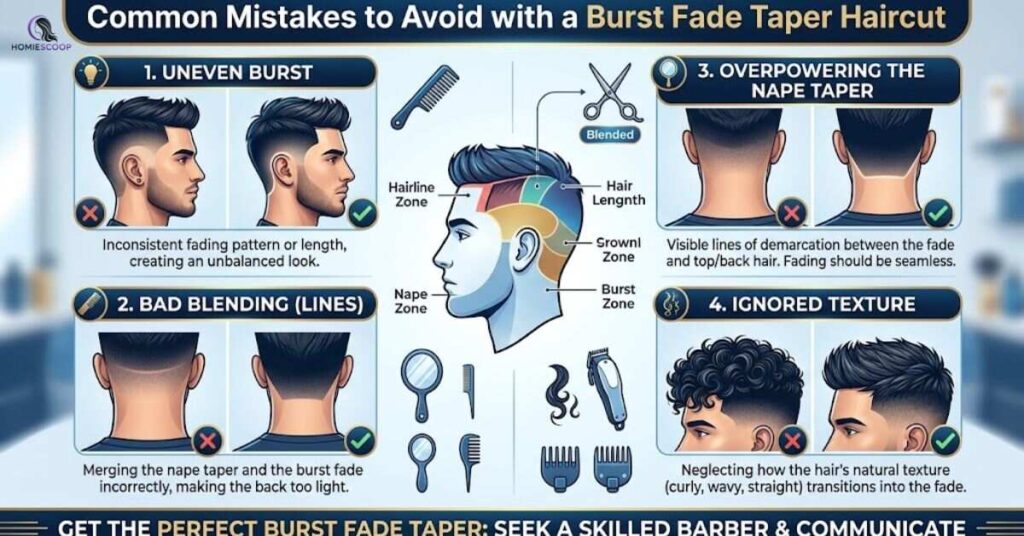
Choosing the wrong proportions can make even a technically good haircut look unbalanced. These mistakes are easy to avoid when you communicate clearly with your barber.
1. Choosing the Wrong Fade Height
A high fade may look too aggressive on some face shapes, while a very low fade may not provide enough contrast.
Use your face shape haircut goals to determine whether low, mid, or high placement is most suitable.
2. Ignoring Your Hair Texture
Straight, wavy, curly, and coily hair behave differently. A barber should adapt the top length and blending technique to your natural texture.
For burst fade straight hair, texture can be created through cutting and styling. For burst fade curly hair, the natural curl pattern should remain visible.
3. Skipping Regular Trims
As the hair grows, the rounded fade becomes less defined. Regular appointments preserve the contrast and clean edges.
This is particularly important for a skin burst fade or sharp line-up.
4. Using the Wrong Styling Products
Heavy products can flatten fine hair, while very light products may not control dense hair.
For burst fade for thin hair, use lightweight volumizing products. For burst fade for thick hair, use products that control bulk without making the top greasy.
5. Not Showing Your Barber a Reference Photo
Haircut names are not always interpreted identically. A picture gives your barber a much clearer idea of the desired proportions.
Save an image showing the sides, back, and top whenever possible.
6. Forgetting Neckline Maintenance
The neckline is easy to overlook, but it has a major effect on the finished appearance. A clean neckline supports the entire shape.
A tapered neckline can make the cut look more refined even when the top is slightly grown out.
7. Expecting Every Style to Suit Every Face Shape
The best burst fade haircuts are customized rather than copied exactly. A round face may benefit from additional height, while a longer face may look better with controlled volume.
A professional barber can modify the top and fade height to create better proportions.
8. Overloading the Top with Product
Too much product can destroy natural movement. It may also make textured hair appear greasy.
Start with a small amount and add more only if necessary.
9. Ignoring the Hairline
A sharp hairline can dramatically change the appearance of the cut. However, excessive edging can make the result look unnatural.
Discuss whether you prefer a crisp line-up or a softer natural edge.
10. Choosing a Style You Cannot Maintain
A complicated design or high-contrast fade may require frequent barber visits. If your schedule is busy, consider an easy-to-style haircut with a softer finish.
The best style is one you can realistically maintain.
FAQs
What is a burst fade taper?
A burst fade taper combines the rounded fading effect around the ears with gradual tapering around the neckline and sideburns. It can be customized as a low, mid, or high style.
Is a burst fade haram?
A haircut’s religious ruling can depend on how the haircut is cut and the interpretation of the relevant Islamic guidance. Some scholars object to qaza, which involves shaving portions of the head while leaving other portions, while other circumstances may be treated differently. If this matters to you religiously, ask a trusted qualified scholar about the exact haircut you plan to get.
Which fade is best for boys?
A low or moderate burst fade is often a practical choice for boys because it can look neat without being excessively dramatic. The best option depends on school rules, hair texture, face shape, and how much maintenance is acceptable.
What is the V Burst fade?
A V Burst fade usually refers to a burst-style fade with the neckline shaped into a V at the back. The V creates a pointed finish and can add definition to the rear profile.
Is burst fade in style?
Yes. Burst fade variations remain popular because they work with many top styles, including curls, crops, mullets, mohawks, waves, twists, and longer textured hair. The style can also be adjusted to look subtle or bold.
Conclusion
A Burst Fade Taper Haircut is a flexible choice for men who want a haircut that combines a distinctive rounded fade with controlled tapering. From a classic version to a skin fade, curly top, mullet, mohawk, crop, quiff, or beard combination, there are many ways to personalize the shape.
The best Burst Fade Taper Haircut is the one that fits your hair texture, face shape, lifestyle, and maintenance routine. Take a clear reference photo to your barber, explain your preferred fade height and top length, and choose a finish that you can comfortably maintain.
