

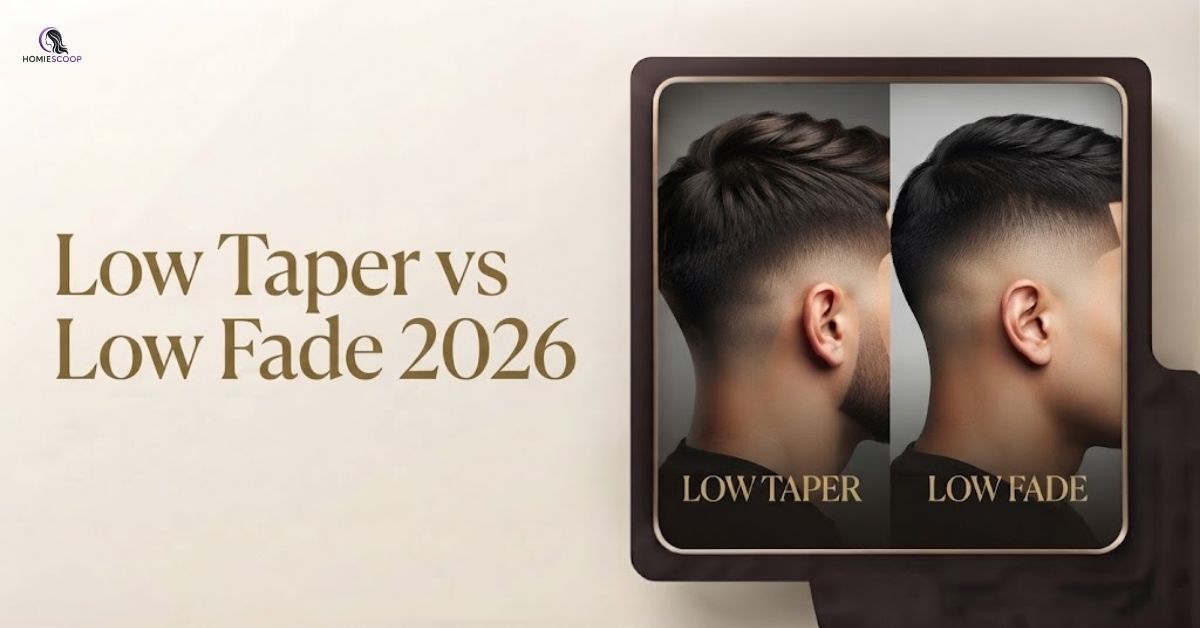
Choosing between Low Taper vs Low Fade usually comes down to how much contrast, skin exposure, and maintenance you want from your haircut. Both styles keep the transition low around the ears and neckline, but they create noticeably different results.
A low taper keeps more hair around the sides and creates a softer transition, while a low fade removes more length and can reach skin level. Understanding the difference makes it easier to explain your preference to a barber and choose a style that works with your hair type, face shape, styling routine, and workplace.
The main difference
The central difference between Low Taper vs Low Fade is the transition zone. A low taper usually concentrates tapering around the sideburns, ears, and neckline. The hair transition is gradual and tends to preserve more length.
A low fade also starts low, but its fade zone usually becomes considerably shorter. Depending on the fade type, the barber may take the bottom almost completely down to bare skin. This creates a stronger gradient and more visible contrast.
A taper is therefore associated with a soft blend, gradual blend, subtle blend, and natural look. A fade can create a sharp fade, defined edge, crisp outline, and clean finish.
That distinction explains the broader taper vs fade conversation. A taper focuses on controlled reduction around selected edges, whereas a fade usually emphasizes a larger gradient across the lower sides.
When comparing Low Taper vs Low Fade, think about these four questions:
- How much skin exposure do you want?
- How much contrast do you want?
- How often can you schedule barber visits?
- Do you prefer an understated look or a statement look?
A low taper generally answers those questions with minimal skin exposure, low contrast, easier upkeep, and an understated appearance. A low fade generally provides more skin exposure, higher contrast, more upkeep, and a sharper appearance.
What is a low taper?
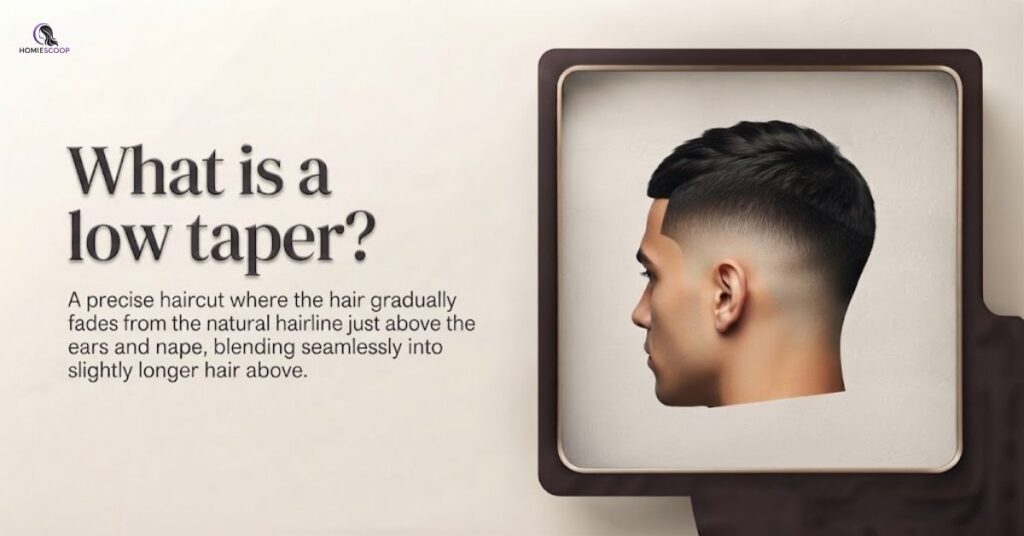
A low taper haircut gradually reduces hair around the sideburns and neckline without necessarily removing most of the surrounding hair. The barber creates a soft blend rather than a dramatic drop.
The result is usually a natural, neat, tidy appearance. The sideburns become shorter, the nape becomes cleaner, and the neckline can be shaped without making the entire side of the head look extremely short.
A low taper can work especially well when you want a fuller appearance. Because less hair is removed, hair density can remain visually substantial around the sides. This can be useful for fine or thin hair where excessive skin exposure might make the sides appear sparse.
The technique also works across many hair types. Straight hair can display a clean gradual blend, while wavy hair can give the transition a relaxed quality. Curly hair, coily hair, and textured hair can also use a taper when the goal is to preserve surrounding volume.
For someone researching Low Taper vs Low Fade, the low taper is often the more conservative interpretation of a short-sided haircut. It can suit an office, school, workplace, interview, wedding, or everyday setting without making the haircut itself the main feature.
The low taper also offers practical advantages during grow-out. Because the transition is subtle, additional hair growth may not immediately destroy the haircut’s shape. This does not mean it requires no maintenance, but it can make the period between appointments feel more forgiving.
A barber can also combine a low taper with a textured top, textured crop, quiff, messy top, comb-back, slick back, curls, locs, dreads, or Afro. The top can remain longer while the edges receive controlled tapering.
What is a low fade?
A low fade haircut also begins near the lower portion of the head, but the reduction in hair is usually more dramatic. The barber creates a gradient that can move from longer hair into very short hair or skin-level hair.
This makes a low fade visually different from a low taper. The fade can produce stronger contrast between the top and sides, particularly when the bottom reaches a skin fade or very short shadow fade.
A low fade haircut can work well with short hair because the clean lower section gives the overall haircut a defined shape. It can also frame a textured crop, quiff, curls, messy top, or other style that benefits from stronger separation.
For thick hair, a fade can help reduce visual weight around the lower sides. For curly, coily, or textured hair, the contrast may emphasize the natural texture above the fade zone.
The trade-off is maintenance. A sharp fade can lose some of its defined finish as hair growth fills in the shortest section. A person who wants maximum sharpness may therefore schedule regular barber visits.
When considering Low Taper vs Low Fade, remember that a low fade does not automatically mean a skin fade. A fade can stop at a short shadow rather than reaching bare skin. Your barber can adjust the fade type, fade height, and degree of skin exposure.
Low taper vs low fade at a glance
The easiest way to compare Low Taper vs Low Fade is to focus on how the two styles handle contrast, hair length, and the transition from longer hair to shorter hair.
| Feature | Low taper | Low fade |
| Starting area | Sideburns, ears, neckline | Lower sides, ears, neckline |
| Blend | Soft blend | Stronger gradient |
| Skin exposure | Minimal to moderate | Moderate to high |
| Contrast | Low contrast | High contrast |
| Overall impression | Natural and understated | Sharp and defined |
| Side coverage | Fuller appearance | More exposed |
| Grow-out | Usually forgiving | Sharpness fades sooner |
| Upkeep | Lower taper upkeep | Higher fade upkeep |
| Styling | Versatile | Strong with defined styles |
| Best fit | Conservative or flexible settings | Modern or statement looks |
The practical difference becomes obvious when you compare the same haircut after several weeks. A taper can retain a relatively natural shape as hair growth increases length. A fade can lose its original gradient more noticeably.
This is why Low Taper vs Low Fade is not simply a question of which haircut looks better. It is a question of which hair transition matches your preferences.
Which one looks more natural, and where each works best
A low taper generally creates a more natural appearance because it leaves more surrounding hair intact. Its soft blend can disappear into the existing hair instead of creating an obvious boundary.
A low fade intentionally creates more visible contrast. The defined edge and sharper sides become part of the haircut’s visual identity.
For an office, school, interview, or formal events, someone who wants an understated look may prefer the low taper. It can look polished without making the haircut appear overly dramatic.
In casual settings and social settings, a low fade can provide a more current look. Strong contrast can make the haircut stand out, especially when paired with a textured top or high-volume styling.
The distinction can also depend on grooming expectations. A conservative workplace may favor a natural transition, while a creative workplace may allow more visible contrast.
Neither approach is inherently suitable for every person. The best choice depends on your personal style, desired contrast, desired sharpness, desired natural appearance, and maintenance routine.
For Low Taper vs Low Fade, the appearance spectrum can be summarized as:
- Soft vs sharp
- Low contrast vs high contrast
- Natural vs defined
- Subtle vs dramatic
- Low maintenance vs high maintenance
- Longer-lasting vs frequent touch-ups
- Minimal skin exposure vs skin exposure
- Understated vs statement-making
- Traditional vs modern
- Blended sides vs sharp sides
These differences also explain why one person may describe a taper as more refined while another person may prefer the stronger visual impact of a fade.
Choosing based on your face shape
Face shape should influence the decision, but it should not be treated as an absolute rule. Hair density, hair length, hair type, hair texture, and the amount of volume kept on top can change the final face silhouette.
Round face
A round face can benefit from additional height or controlled volume on top. A low fade may create stronger vertical contrast around the sides, while a low taper can maintain a fuller appearance.
Oval face
An oval face is generally flexible. Both styles can work because the face shape already has relatively balanced facial proportions. The choice can therefore focus more on desired contrast and personal style.
Square face
A square face already has an angular appearance because of the jaw. A softer taper can complement that definition without adding as much visual sharpness. A fade can still work when balanced with texture or controlled height.
Long face
A long face or oblong face may benefit from keeping some visual weight around the sides. A very aggressive fade can make the sides look extremely narrow, while a taper can preserve more width.
Heart-shaped face
A heart-shaped face often has more width around the forehead and a narrower chin. A low taper can maintain balance, while a low fade can work when the top and sides are carefully proportioned.
When discussing Low Taper vs Low Fade with a barber, explain what you want to emphasize. Instead of simply naming your face shape, mention whether you want more width, height, definition, or a fuller appearance.
Your barber can then adjust the fade height, tapering, hairline, outline, and top length.
Read More: Low Taper Fade: The Complete 2026 Haircut & Style Guide
Choosing based on your hair type
Hair type is one of the most useful factors in the Low Taper vs Low Fade decision. Hair texture and hair density affect how clearly a blend appears and how much contrast the sides create.
Straight hair
Straight hair makes the transition easy to see. A low taper can produce a clean, smooth appearance, while a low fade can highlight the gradient and defined edge.
A low taper fade for straight hair can also pair naturally with a comb-back, slick back, textured crop, or quiff.
Wavy hair
Wavy hair naturally adds movement. A soft blend can make that movement look relaxed, while a fade can create stronger separation beneath a textured top.
Curly hair
Curly hair can pair particularly well with a low fade because the contrast frames curls above the fade zone. However, a low taper can be useful when preserving a more natural shape is the priority.
For anyone researching Low Taper vs Low Fade curly hair options, consider how much curl volume you want to retain around the temples and sideburns.
Coily and textured hair
Coily hair and textured hair can display strong contrast when the lower sides are reduced significantly. A fade can emphasize an outline, while a taper keeps more hair around the edges.
Thick hair
Thick hair can handle either approach. A fade may remove more weight, while a taper can preserve a fuller appearance without leaving the sides overly bulky.
Fine and thin hair
Fine hair and thin hair often benefit from careful tapering because excessive skin exposure can make the sides appear thinner. A subtle blend may preserve the impression of density.
Hair growth also matters. Someone with rapid hair growth may notice a sharp fade changing sooner than a gradual taper.
Maintenance and how long each lasts
Maintenance is one of the biggest practical differences in Low Taper vs Low Fade. A taper can generally tolerate more growth before its appearance changes dramatically.
A fade depends more heavily on its shortest section and its visible contrast. As hair grows, the fade lines become less pronounced and the clean finish gradually becomes softer.
A useful general schedule is:
- Two to three weeks: common for people who want a very sharp fade.
- Three to five weeks: often workable for a taper or someone comfortable with additional grow-out.
- More than five weeks: possible depending on hair growth, hairstyle, and personal tolerance.
These are guidelines rather than fixed rules. Hair growth varies considerably.
A skin fade usually requires more attention because skin-level hair exposes new growth quickly. A shadow fade can be slightly more forgiving, although it still depends on how quickly your hair grows.
Taper upkeep is usually easier because the transition is designed to remain subtle as it grows. Fade upkeep focuses more heavily on preserving sharpness.
Good hair maintenance is not only about booking a barber. It also involves washing appropriately, conditioning when suitable for your hair, managing texture, and maintaining the desired styling routine.
Pairing with popular styles on top
The top of the haircut changes how the sides are perceived. This matters when deciding between Low Taper vs Low Fade.
Textured crop
A textured crop works with both. A fade can create a stronger modern frame, while a taper keeps the crop more understated.
Quiff
A quiff has height, so a fade can reinforce the contrast between the top and sides. A taper creates a softer interpretation.
Messy top
A messy top can benefit from sharp sides because the contrast creates deliberate structure. A taper gives the same style a more relaxed finish.
Comb-back
A comb-back works naturally with a taper when the goal is refined grooming. A fade can make the same style more contemporary.
Slick back
A slick back paired with a low taper fade can create a polished appearance. A low fade can make the style look more defined and structured.
Curls
Curls can be framed with a fade or kept more naturally with a taper. The choice depends on whether you want maximum definition or more surrounding fullness.
Afro
An Afro can be paired with tapering around the temples and neckline to preserve the main shape. A fade removes more of the lower-side hair and increases contrast.
Locs and dreads
Locs and dreads can use either technique. A taper can clean the edges without dramatically changing the silhouette, while a fade can create a stronger base.
For a Low Taper Fade Afro, Low Taper Fade Dreads, or Low Taper Fade Slick Back, the important factor is how the side treatment interacts with the top.
Low taper vs low fade curly hair
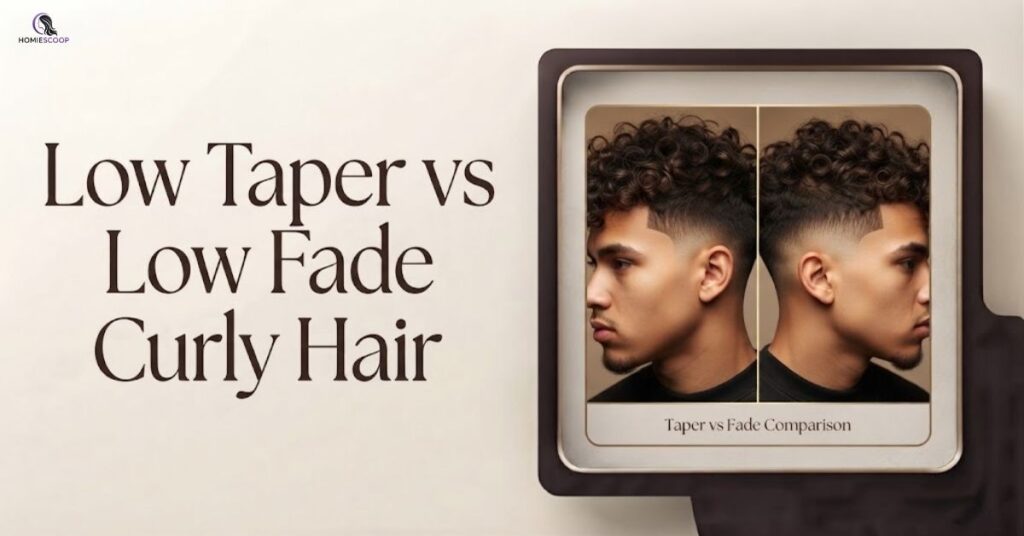
Curly hair can make the difference between a taper and fade especially noticeable. The curls provide natural volume above the ears, so a fade can create a strong frame around that texture.
A low taper haircut can be preferable when the goal is to keep the sides visually fuller. The barber can clean the sideburns and neckline while preserving more surrounding curl.
For a sharper finish, a low fade haircut can expose more of the lower scalp and create a defined edge beneath the curls. The result can look particularly crisp immediately after a fresh cut.
The choice should account for curl pattern, hair density, hair length, and styling routine. Someone with dense curls may have plenty of flexibility, while someone with thinner curls may prefer a softer transition.
Mid taper fade
A mid taper fade moves the transition higher than a traditional low taper. This changes the balance between the top and sides without necessarily creating the same level of exposure as a conventional mid fade.
The style can suit people who want more visible tapering while retaining some of the natural structure associated with a taper. It sits between subtle and dramatic.
For someone comparing Low Taper vs Low Fade, a mid taper fade can be a useful middle ground when neither extreme feels right.
The final result depends on the barber’s blending technique, hair density, and desired fade height. Showing a reference photo is particularly useful when asking for a mid taper fade.
Haircut taper vs fade
The basic haircut taper vs fade distinction is simple: tapering normally reduces hair around selected edges, while fading creates a broader gradient through increasingly short lengths.
A taper can leave more weight around the sides and generally creates less skin exposure. A fade usually removes more hair and creates a more obvious transition.
Both techniques can be incorporated into a taper fade. In everyday barber language, however, the exact terminology can vary from one barbershop to another.
If you are uncertain, describe the visual result instead of relying entirely on terminology. Tell the barber whether you want a soft blend, strong contrast, visible scalp, minimal skin exposure, or a defined finish.
High taper fade
A high taper fade raises the tapering area higher toward the temples. It therefore produces more visible change than a low taper while maintaining the focused nature of tapering.
This can create a more modern appearance without necessarily turning the entire side into a conventional high fade.
Compared with a low taper, the higher placement can change the face silhouette and make the top appear more prominent. Hair density and face shape should therefore be considered.
Low taper haircut
A low taper haircut is particularly versatile because it can remain subtle while still making the edges look clean. It works with different hair lengths and textures.
A barber can taper the sideburns, nape, and neckline while leaving the main side length intact. This makes it useful for someone who wants a neat appearance without a dramatic fade zone.
It can also work well for an office, school, formal event, workplace, or casual setting. The style is flexible enough to adapt to different grooming expectations.
Low taper vs high taper
The main difference between a low taper and high taper is where the transition begins. A low taper keeps the change close to the ears and neckline, while a high taper moves it farther upward.
A low taper generally creates a more understated look and preserves more visual weight around the sides. A high taper creates more noticeable structure.
For someone deciding between the two, consider face shape, hair density, hair length, desired contrast, and personal style. The higher the transition, the more it can affect the overall silhouette.
How to ask your barber
When requesting Low Taper vs Low Fade, avoid relying only on the name of the haircut. Explain exactly where you want the transition and how short you want the bottom.
A useful barber consultation can include:
- Name the technique: taper or fade.
- Specify the height: low, mid, or high.
- Explain the skin exposure you want.
- Mention whether you want a shadow fade or skin fade.
- Describe your preferred neckline.
- Explain how you want the sideburns treated.
- State how much hair length you want preserved.
- Show a reference image.
- Explain your normal barber frequency.
- Mention your workplace or school requirements.
For example, someone requesting a low taper might say: “Keep the taper low around the sideburns and neckline, preserve the side length, and keep the transition soft.”
Someone requesting a low fade might say: “Keep the fade low, create a clean gradient, and take the bottom down to a short shadow rather than completely bare skin.”
These instructions make the desired contrast easier for a barber to understand.
So, which should you choose?
When deciding Low Taper vs Low Fade, start with your desired appearance rather than a trend. If you want a natural look, fuller sides, minimal skin exposure, and easier upkeep, a low taper may fit your routine.
If you prefer visible contrast, sharp sides, a defined edge, and a more dramatic current look, a low fade may better match that preference.
Consider a low taper when:
- You prefer an understated look.
- You want a natural transition.
- You want more side coverage.
- You have fine or thin hair.
- Your workplace has conservative grooming expectations.
- You prefer longer-lasting shape retention.
- You do not want frequent barber visits.
- You want flexibility for formal and casual settings.
Consider a low fade when:
- You want strong contrast.
- You like sharp sides.
- You want a crisp outline.
- You enjoy a modern or statement look.
- You have thick, curly, coily, or textured hair.
- You want the top to stand out.
- You are comfortable with regular maintenance.
- You like a fresh cut to look especially defined.
Low taper vs low fade decision checklist
Before sitting in the barber chair, ask yourself:
- Do I want soft or sharp sides?
- Do I prefer low contrast or high contrast?
- Do I want minimal skin exposure or visible skin?
- How quickly does my hair grow?
- How often can I schedule barber visits?
- Do I need the haircut to work in an office or school?
- What does my face shape look like with different side lengths?
- How dense is my hair?
- What styling routine do I actually follow?
- Do I want a traditional or modern finish?
The most useful approach to Low Taper vs Low Fade is to match the haircut to your lifestyle instead of choosing purely from a photograph.
Conclusion
The Low Taper vs Low Fade choice is mainly about transition, contrast, skin exposure, and maintenance. A taper keeps the change softer and more subtle, while a fade creates a stronger gradient and sharper visual definition.
Your hair type, hair density, face shape, workplace, styling routine, and preferred barber frequency all matter. Show your barber a reference image and explain the finish you want before the clippers start.
FAQ’s
Is low taper better than low fade?
Neither haircut is universally better. A low taper is useful when you want a softer blend, fuller sides, minimal skin exposure, and easier grow-out. A low fade is useful when you want stronger contrast, sharper sides, and a more defined finish.
Are fades haram in Islam?
Islamic opinions about fades can differ depending on how the haircut is created and which scholarly interpretation is followed. Some scholars discuss the concept of qaza, traditionally associated with shaving part of the head while leaving another part unshaved.
Which is better, fade or taper?
The answer depends on the result you want. A taper generally provides a softer transition and more surrounding hair, while a fade usually produces stronger contrast and more visible short hair.
What lasts longer, a taper or fade?
A taper generally looks acceptable for longer during grow-out because its transition is less dependent on an extremely short section remaining sharp. A fade can lose visible definition as hair growth fills the shortest area.
Is a fade easier than a taper?
Neither is automatically easier. A fade may require more technical blending and regular maintenance to preserve its sharpness, while a taper requires controlled transitions around smaller areas.
