

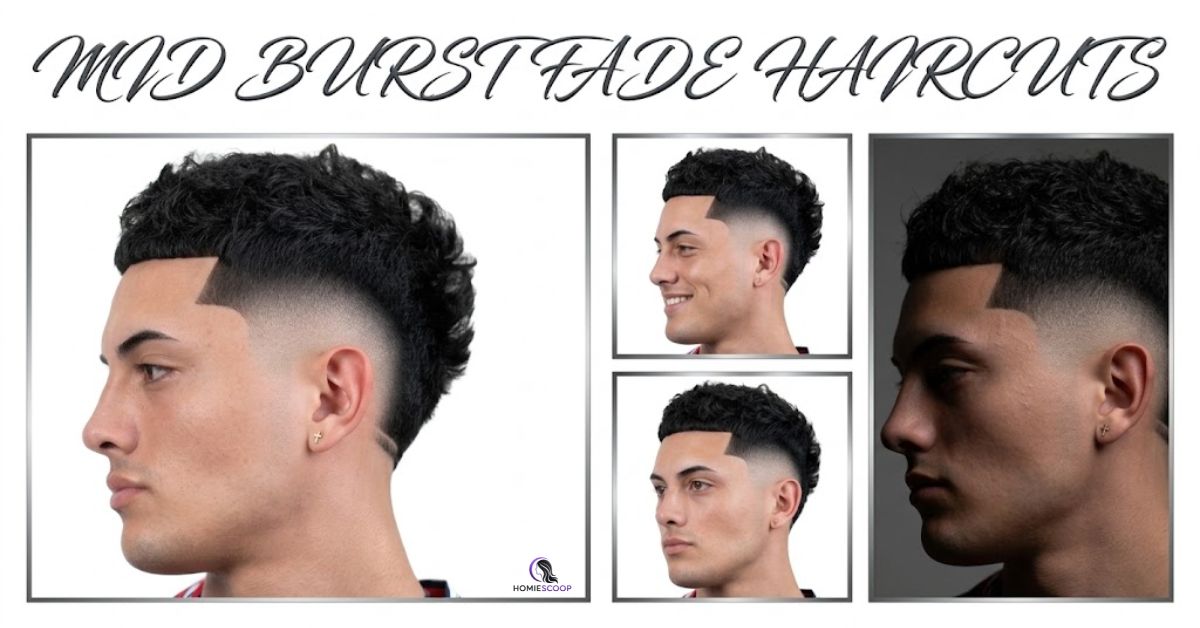
A Mid Burst Fade Haircuts look combines a rounded fade around the ear with a controlled amount of length through the upper sides. The result can be clean enough for a professional setting while still offering the contrast, movement, and personality expected from a modern hairstyle.
The appeal of this haircut comes from its flexibility. A barber can change the fade height, top length, fade blend, and finish without changing the basic shape. That makes it suitable for straight hair, wavy hair, curly hair, thick hair, fine hair, and thin hair, provided the haircut is adjusted to the natural hair texture and facial structure.
What Is a Mid Burst Fade Haircut?
A mid burst fade haircut places the curved fade around the ear at a middle position rather than keeping the fade very low or pushing it toward the crown. The result is a rounded fade that hugs the ear while preserving more hair above and behind the fade line.
The technique is different from a conventional fade haircut because the blend follows the shape of the ear. A barber normally uses clippers, a mid-range guard, a smaller guard, and sometimes a straight razor to create a clean transition. A bald fade or skin fade can be added at the lowest point when a sharper finish is wanted.
The defining feature is the curved fade rather than a straight horizontal reduction. This ear-hugging fade creates a rounded fade that can connect naturally with the side of the head, neckline, and beard. The exact fade height can be raised or lowered according to the person’s face shape, hair weight, and preferred contrast.
A good fade blend should remove unwanted bulk without making the upper hair look disconnected. Hair blend is especially important around the ear, because an uneven transition can make the entire haircut look unfinished. For this reason, barbering skill matters as much as the chosen haircut style.
Why the Mid Burst Fade Is Still Popular in 2026
The Mid Burst Fade Haircuts category remains useful because it sits between subtle and dramatic styling. A low burst fade can look understated, while a high burst fade creates stronger contrast. The middle position gives a barber room to build a balanced fade transition.
Current 2026 hairstyle trends also favor haircuts that can be customized. Social feeds, short-form video, and social media trends have increased interest in styles that look distinctive from multiple angles. The rounded fade photographs particularly well because the curve remains visible from the front, side, and three-quarter view.
Another reason for its popularity is adaptability. Men, teen boys, older men, and guys who want a current hairstyle can all choose different versions. A professional haircut may use a softer fade blend, while a bold haircut can combine a sharp fade line with a textured top or longer back.
The cut can also be adapted to natural texture. Curly hair can retain curls above the fade, straight hair can use texture for visual fullness, wavy hair can keep its natural movement, and thick hair can have excess weight removed. Fine hair and thin hair can benefit from controlled contrast that makes the top appear more substantial.
Who Should Try a Mid Burst Fade Haircut?
A Mid Burst Fade Haircuts style can suit many face shapes and hair types because the sides and top are treated independently. Someone with an oval face can usually choose from many top lengths, while a round face may benefit from additional visual length above the fade.
A square face can handle stronger contrast because the angular facial structure already has definition. A diamond face may benefit from a carefully placed fade that keeps the upper sides balanced. A long face can often look better with moderate height and additional width through the top rather than an excessively high fade.
Hair texture is equally important. Curly hair naturally provides volume, wavy hair provides movement, straight hair may need styling product for texture, and thick hair may require weight removal. Fine hair and thin hair generally benefit from a lighter styling approach that avoids flattening the top.
A beard can also change the result. A beard blend can connect the sideburn area with facial hair, creating a continuous hair-to-beard transition. The barber should consider the beard, neckline, and side of the head together rather than treating the haircut as an isolated shape.
Quick Decision Guide
If you prefer a conservative haircut style, consider a softer mid fade, taper, or taper blend around the ear. These options preserve more visual weight and can be easier to maintain between appointments.
If you want stronger definition, a bald fade or skin fade at the lowest section can produce a cleaner contrast. A smaller guard and careful clipper fade can sharpen the lower edge without forcing the entire haircut to become extremely short.
For curly hair, keep enough top length for curls to form naturally. For straight hair, ask for texture and controlled layering. For wavy hair, preserve natural texture instead of cutting away every sign of movement.
For thick hair, weight removal can make daily styling easier. For fine hair, avoid excessive thinning. For thin hair, a textured top can create visual fullness without relying on heavy hair product.
For an office or professional setting, a side part, slick back, or controlled top provides a polished result. For a bolder look, consider a faux hawk, mohawk, mullet, or undercut.
Read More: Burst Fade Haircut Guide: 40 Styles by Face Shape & Hair Type (2026)
28 Mid Burst Fade Styles for a Fresh New Look
The original competitor presents 28 style variations in this section; the structure below retains those numbered concepts while adding two more useful variations to create a 30-style guide.
1. Classic Mid Burst Fade
The classic mid burst fade is the easiest starting point for someone who wants clean sides without an extreme visual change. The barber creates an even blend around the ear and keeps the top controlled enough for everyday styling.
A natural finish works especially well here. A small amount of matte pomade can control flyaways while preserving a natural look. The haircut works for men who want a versatile haircut, guys in a professional setting, and anyone trying a burst fade for the first time.
2. Modern Mid Burst Fade
The modern version uses more contrast between the clean sides and the textured top. Instead of making every strand perfectly controlled, the barber leaves enough hair movement to create a relaxed, current hairstyle.
Texture powder can add volume without making the top feel heavy. This haircut style works particularly well when the top has natural texture, although straight hair can also benefit from light product and directional styling.
3. Mid Burst Fade Mullet
The Mid burst fade mullet combines a rounded fade around the ear with noticeably longer hair toward the back. The contrast between the clean sides and longer rear section gives the haircut a stronger personality.
This is a useful haircut variation for guys who want a bold haircut without shaving the entire side of the head. The back can remain textured, controlled, or deliberately messy depending on the desired modern hairstyle.
4. Curly Mid Burst Fade
Curly hair pairs naturally with a burst fade because the rounded sides can remove excess bulk while leaving curls prominent on top. The barber should work with the natural curl pattern rather than forcing the hair into a straight shape.
Curls benefit from appropriate moisture and a lightweight styling product. The goal is definition without stiffness, so the natural texture remains visible while the fade supplies clean structure around the ear.
5. Wavy Mid Burst Fade
Wavy hair creates movement without requiring an elaborate styling routine. A clean fade underneath gives the waves more visual definition because the sides have less competing volume.
The top can remain medium-length hair or slightly longer, depending on the preferred shape. A matte finish product or light texture product can emphasize natural movement without turning the waves into a rigid style.
6. Straight Hair Mid Burst Fade
Straight hair can make a burst fade look especially crisp because the top contrasts clearly with the rounded sides. A barber can introduce layers or texture so the top does not appear flat.
A small amount of texture powder can improve volume, while matte pomade can provide controlled direction. A side part or textured top can work well when the goal is a clean haircut with a contemporary edge.
7. Textured Mid Burst Fade
The textured version prioritizes visual texture through the top while keeping the fade blend clean around the ear. It is useful for thick hair because controlled texture can distribute hair weight instead of allowing the top to look bulky.
A styling product should support rather than hide the hair texture. Texture powder can provide separation, while a matte finish keeps the haircut modern and avoids an overly glossy appearance.
8. Messy Mid Burst Fade
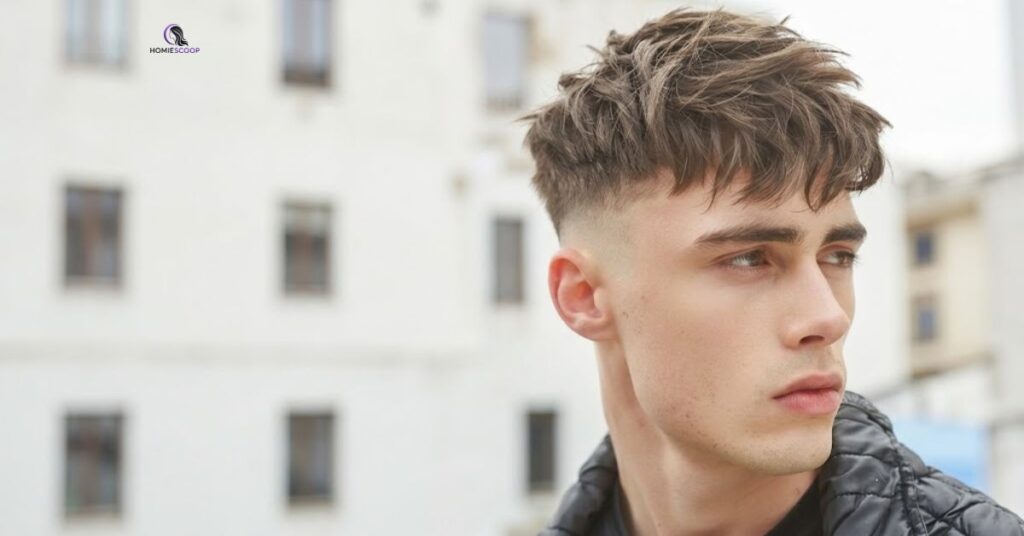
A messy top works because the sides remain disciplined. The contrast tells the eye that the top is intentionally styled rather than simply neglected.
Use fingers to create irregular movement instead of combing every strand into place. This haircut variation is especially useful for guys who want an easy styling routine and a low-effort hairstyle that still looks intentional.
9. Mid Burst Fade with Beard
Adding a beard creates an opportunity for a clean beard blend. The sideburn area should gradually connect the haircut to facial hair rather than ending with an abrupt change.
The hair-to-beard transition can be subtle or sharply defined. A barber can use a clipper guard around the sideburn and beard, then refine the line with a straight razor where appropriate.
10. Mid Burst Fade with Side Part
A side part gives the haircut a structured direction. The sides remain clean while the top follows a deliberate parting line, making this a strong choice for a professional hairstyle.
Pomade can provide control, although a matte styling product may be preferable when a natural finish is desired. The barber should preserve enough top length for the part to remain visible after styling.
11. Mid Burst Fade Pompadour
The pompadour adds height to the front while the burst fade controls the sides. This creates strong contrast and makes the top the main visual feature.
Hair volume is important, so blow-drying upward can help establish the shape before applying pomade. The finished style can have a polished appearance without looking overly formal if the sides remain softly blended.
12. Mid Burst Fade Comb Over
The comb over offers a conservative alternative to more dramatic textured styles. The top is directed across the head while the fade maintains a modern outline around the ear.
This is an adaptable haircut for a professional setting because the contrast can be adjusted through fade placement. A softer fade transition will look more restrained, while a sharper fade line creates more definition.
13. Mid Burst Fade Slick Back
The slick back directs the top away from the face and exposes more of the forehead. The clean sides create a strong frame around the longer top.
Pomade works well when shine and hold are wanted. For a modern hairstyle, a matte pomade can provide control without making the top look wet. This version works best when there is enough hair length to push backward comfortably.
14. Mid Burst Fade Fringe
A fringe keeps some top length toward the front and can soften facial proportions. The fade supplies contrast without requiring the entire top to be styled upward.
Textured hair often works particularly well because natural separation prevents the fringe from looking too flat. Guys with straight hair can add a small amount of texture product to create movement.
15. Mid Burst Fade Crop Top
The crop top keeps the upper hair short and manageable. It is a useful option for someone who wants visible texture without spending much time on hair styling.
A clipper fade around the ear can remain tight while the top receives light texture. This combination creates a clean haircut with a practical daily routine.
16. Mid Burst Fade Mohawk
The mohawk version leaves a stronger strip of hair through the center while the sides become substantially shorter. It is more dramatic than a standard haircut but still benefits from the rounded burst shape.
A controlled top can make the style easier to wear, while a taller top increases visual length. This is a bold haircut for guys who want the fade itself to become part of the statement.
17. Mid Burst Fade Faux Hawk
The faux hawk provides the attitude of a mohawk with less height and less commitment. The top is lifted toward the center, while the sides curve around the ear.
A matte styling product can create separation without making the hair rigid. This haircut style is particularly useful for teen boys and younger men who want a modern hairstyle that can still be adapted for everyday wear.
18. Mid Burst Fade with Design
A shaved design can be added to the faded section for extra definition. The design might be a simple sharp line, a curved line, or a more personal geometric pattern.
The barber should consider the fade line and natural head shape before adding the design. A design that follows the haircut structure usually looks cleaner than a pattern placed without regard to the surrounding blend.
19. Mid Burst Fade Buzz Cut
A buzz cut keeps the top very short, making maintenance simple. The burst fade adds shape around the ear so the haircut does not look completely uniform.
This is one of the most practical choices for guys who want a low-maintenance haircut. A clean finish and balanced fade height do most of the styling work.
20. Mid Burst Fade Undercut
An undercut creates a stronger separation between the longer top and shorter sides. The contrast can be subtle or dramatic depending on the transition chosen by the barber.
More top length allows slick back, textured top, or side part styling. Because the upper section remains relatively independent, the haircut can change appearance without changing the basic fade.
21. Mid Burst Fade for Thick Hair
Thick hair benefits from strategic weight removal. The barber can reduce excess density around the sides while leaving enough volume on top to create a balanced silhouette.
The key is not to remove so much hair that the top becomes weak. Hair weight, hair volume, and top length should be considered together so the finished shape looks intentional.
22. Mid Burst Fade for Thin Hair
A thin hair version should emphasize texture rather than excessive length. Tight sides can make the top look comparatively fuller, while light layering can create visual separation.
Texture powder is often useful because it can provide grip without adding the heavy appearance that some styling products create. The barber should avoid aggressive thinning if the hair already lacks density.
23. Mid Burst Fade Afro Style
Natural texture can remain full on top while the sides receive a rounded fade. The result emphasizes the contrast between dense natural hair and clean side shaping.
The barber should account for shrinkage and curl behavior before choosing the final top length. A consultation about natural texture is especially useful because the hair may appear considerably shorter after it dries.
24. Mid Burst Fade Long Top
A longer top provides the greatest styling flexibility. It can be worn textured, pushed back, parted, or allowed to fall naturally depending on the day.
Long hair requires more attention to weight and direction. The fade should support the top rather than overpower it, so fade height and top length need to be planned together.
25. Mid Burst Fade Taper Blend
A taper blend creates a softer transition and can be useful for men who want less contrast. Instead of making the lower section look extremely exposed, the barber gradually changes the length.
This haircut variation is especially practical for a professional setting. It retains the rounded burst concept while making the finished result closer to a standard fade haircut in overall subtlety.
26. Mid Burst Fade for Teen Boys
Teen boys can choose different top lengths depending on school, sports, styling habits, and personal preference. A short top is easy to manage, while a textured top offers more personality.
Parents and teenagers can use a barber consultation to discuss maintenance before the haircut begins. A practical haircut is more likely to look good consistently when its styling demands match the wearer’s routine.
27. Mid Burst Fade with Spiky Hair
Spiky hair adds upward movement and a slightly retro character. The fade provides a clean foundation while the top becomes the main source of visual texture.
A styling product with moderate hold can separate the spikes without making them look excessively rigid. Short or medium top length generally makes this version easier to control.
28. Low Maintenance Mid Burst Fade
The low-maintenance version keeps the top simple and lets the fade provide most of the visual definition. It works for guys who prefer easy styling and do not want to spend several minutes preparing their hair each morning.
A short top, natural finish, and restrained product routine can keep the haircut practical. Regular barber visits remain useful because the curved fade loses definition as the hair grows.
29. Mid Burst Fade with Short Styled Top
This version combines a short styled top with clean sides and a deliberate finish. It sits between a buzz cut and a longer textured haircut, giving the wearer enough hair to create direction without demanding extensive styling.
A small amount of matte pomade can establish the shape. The short top is also helpful for people who want a haircut that transitions easily between casual and professional situations.
30. Mid Burst Fade with Medium-to-Long Top and Beard Blend
The final variation combines more top length with a beard blend. The longer top supplies movement and styling options, while the facial hair creates a stronger lower frame.
This can be especially effective when the beard and haircut share a consistent taper. The barber can blend around the ear, sideburn, and beard so the entire style feels connected rather than assembled from separate parts.
Mid burst fade haircuts men
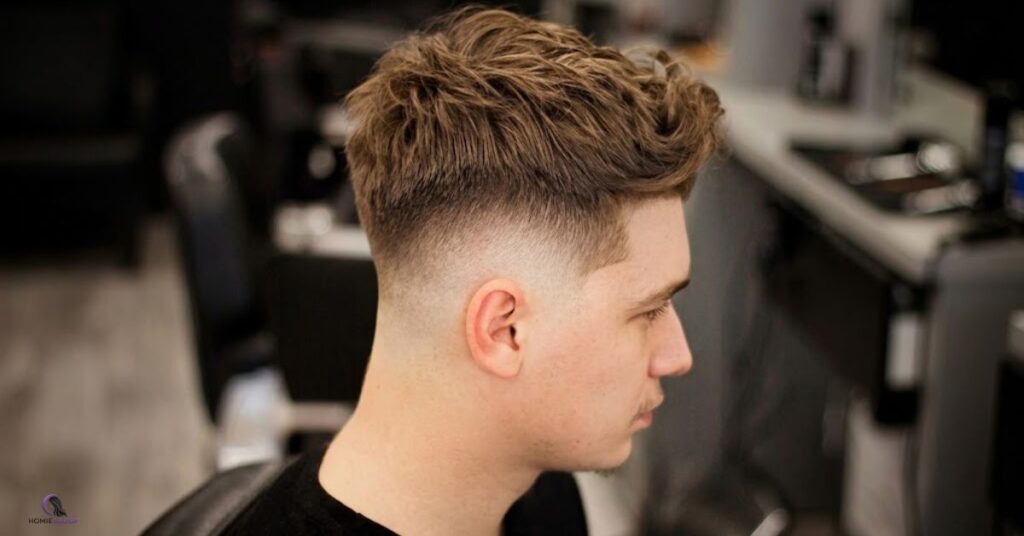
For men, the strongest advantage of Mid Burst Fade Haircuts is customization. The same basic curved fade can support a side part, slick back, textured top, pompadour, faux hawk, or longer back section.
A barber can adjust the fade height according to the client’s face shape and hair type. Men with a round face may prefer additional height on top, while men with a long face may prefer a little more width and less height.
The haircut also works for older men who want a current hairstyle without choosing an extreme trend. A softer taper blend can make the result more conservative, while a sharper fade line creates a stronger modern look.
Low burst fade
A Low burst fade sits lower around the ear and usually produces less contrast than a mid placement. It can be a useful alternative for someone who likes the rounded shape but wants the sides to remain visually fuller.
Compared with a high fade, the low fade generally creates a quieter outline. Compared with the Mid Burst Fade Haircuts category, it can feel more conservative and may require less visual adjustment when growing out.
The best choice depends on fade placement rather than popularity alone. A barber should examine facial proportions, hair growth, and desired top length before recommending the final fade height.
Mid burst fade haircuts straight hair
Straight hair can make Mid Burst Fade Haircuts look especially defined because the difference between the smooth top and curved fade is easy to see. The barber can add layers or controlled texture when the hair naturally lies flat.
A matte finish is often easier to keep modern than excessive shine. Texture powder can add grip near the roots, while a light styling product can help create a side part, textured top, or slick back.
Straight hair also makes fade errors more visible, so the fade blend needs to be even. A clean finish around the ear and neckline can make the entire haircut look more polished.
High burst fade
A High burst fade begins higher and therefore creates stronger contrast. It is generally more dramatic than a mid fade and can expose more of the sides of the head.
People who prefer a bold haircut may like the stronger fade height, especially when paired with a mohawk, faux hawk, or textured top. However, a high placement can emphasize facial length, so face shape should be considered.
The mid placement remains a useful middle ground because it can provide definition without pushing the fade as high as possible. The choice should reflect personal style, facial structure, and maintenance preference.
Burst fade mullet
The Burst fade mullet is one of the most recognizable combinations in current barber trends. The rounded fade keeps the area around the ear clean while the back remains substantially longer.
A mullet can be subtle or dramatic. A medium-to-long top creates more options, while a shorter top produces a sharper, easier-to-manage version. The back can also be layered to improve hair movement.
This haircut style is particularly visible across social media hairstyle trends and short-form video. Its strong silhouette makes it photo-friendly, but it still requires a barber who understands how to balance the front, sides, and back.
Mid Burst fade short Hair
Short hair makes Mid Burst Fade Haircuts easier to maintain because there is less top length to manage. A buzz cut, crop, short styled top, or lightly textured finish can all work with the rounded fade.
A short top does not mean the haircut has to look basic. The barber can create contrast through fade height, a sharp line, a clean finish, or a subtle beard blend.
For someone seeking a low-maintenance haircut, short hair paired with a well-executed fade can be an easy-to-style haircut. A small amount of styling product may be enough when additional texture is desired.
How to Ask Your Barber for a Mid Burst Fade Haircut
The best barber consultation begins with specific information rather than simply naming a haircut. Show your barber the fade height you prefer, describe the top length, and explain whether you want a sharp fade or a softer blend.
Bring a reference photo when possible, but also describe your own hair type. Curly hair, straight hair, wavy hair, thick hair, fine hair, and thin hair can require different cutting approaches even when the reference image looks identical.
Step 1: Say “Mid Burst Fade” and Point to Where You Want It to Start
Tell your barber that you want the fade to sit around the middle of the side of the head. Then clarify whether you want the lower section to reach skin level or retain some shadow.
The phrase “mid burst fade” establishes the general direction, but fade placement determines the final appearance. Pointing to the side of the head can prevent confusion about how high the fade should begin.
Step 2: Describe the Top Length You Want
Top length is one of the most important decisions. Say whether you want short hair, medium-length hair, long hair, or a specific styling capability.
Instead of saying “leave it long,” explain whether you want enough length for a slick back, side part, pompadour, messy look, or controlled top. Clear instructions help the barber create the haircut you actually expect.
Step 3: Mention Your Hair Texture
Tell your barber whether your hair is curly, straight, wavy, thick, fine, or thin. Hair texture influences the way the clippers move through the sides and the amount of length needed above the fade.
Natural texture should be treated as part of the haircut rather than a problem to eliminate. A good barber uses texture to create shape, movement, and volume.
Step 4: Decide on Fade Contrast
Ask whether the fade should be sharp or soft. A sharp fade can use a smaller guard and stronger contrast, while a softer blend leaves more gradual transitions.
A skin fade or bald finish produces a more exposed lower section. A standard fade can preserve additional shadow. Your preferred finish should match your lifestyle and willingness to maintain the haircut.
Step 5: Bring a Reference Photo
A reference image gives the barber information about proportions, not just the haircut name. It can show the desired top length, fade height, beard connection, and styling direction.
Tell your barber what you like about the image and what you want changed. For example, you might like the curved fade but prefer a shorter top or a softer beard blend.
Step 6: Ask What Maintenance Looks Like for Your Hair
Ask how often you should return and what products will work with your hair type. A low-maintenance haircut should not require a complicated daily routine.
Your barber can also explain how the fade will grow out, whether a taper blend would be easier to maintain, and whether your neckline or hairline needs special attention.
How to Maintain a Mid Burst Fade Haircut
Maintenance is mostly about preserving the shape of the fade and keeping the top healthy. The exact schedule depends on how quickly your hair grows and how sharp you want the fade line to remain.
A bald finish or skin-level fade usually shows growth sooner because even small amounts of new hair become visible. A softer clipper fade can remain visually acceptable for longer because the transition is less dependent on a completely bare lower section.
How Often Should You Get a Trim?
Many people prefer a barber visit every few weeks, although the ideal schedule varies. Someone who wants an extremely sharp fade may return sooner, while someone comfortable with a natural look can wait longer.
The fade height also matters. A higher fade can make new growth more obvious, while a lower or softer taper blend can appear less changed as it grows.
Daily Hair Care Tips
Use a routine suited to your hair type. Curly hair may need moisture and curl definition, while straight hair may benefit from lightweight volume. Thick hair can require weight control, while fine or thin hair usually benefits from avoiding excessive product.
Do not overload the top with heavy hair product. Too much pomade can reduce natural movement, while excessive powder can leave buildup. Clean hair, balanced conditioning, and appropriate styling are usually more useful than a large collection of products.
Best Styling Routine
Start with slightly damp hair and choose a styling product based on the intended result. Matte pomade works for control, texture powder works for volume, and a lighter styling product can support a natural finish.
For a messy look, use your fingers rather than a comb. For a slick back or side part, use a comb to create direction. For a pompadour, blow-dry upward before applying pomade.
Best Hair Products for a Mid Burst Fade Haircut

The right hair product should match both the hair texture and the chosen haircut style. Product selection should not be based solely on the fade because most of the styling work occurs on the top.
For thick hair, lightweight products can reduce the risk of making the top feel heavy. For fine hair, texture powder can create grip. For curly hair, a product designed to preserve natural texture may work better than a rigid pomade.
Pomades for a Sleek Look
Pomade is useful for slick back, side part, comb-over, and pompadour styles. A matte pomade can create a controlled top without excessive shine, while traditional pomade can provide a more polished appearance.
Use a small amount first. Adding too much product can flatten hair volume and hide natural texture. The ideal application depends on hair weight, top length, and the desired finish.
Texture Powders for Volume
Texture powder can improve hair volume and provide grip without the heavier feel associated with some creams or waxes. It works particularly well for messy looks and textured tops.
Apply a small amount near the roots and work it through gradually. The goal is visual texture and movement rather than a dry, overloaded appearance.
Hair Sprays for Hold
Hair spray can help preserve a styled top when stronger hold is needed. It can be useful for a pompadour, faux hawk, spikes, or another shape that needs support throughout the day.
Choose the level of hold based on the style. A flexible finish is usually more natural, while stronger hold is appropriate for styles that depend on height and structure.
Mid Burst Fade vs Low Burst Fade: What’s the Difference?
The main difference is fade placement. A low burst fade keeps the curved transition closer to the ear, while a mid fade moves the transition farther upward. Both use the same basic rounded concept, but their visual impact is different.
The low version generally feels softer and more understated. The mid version provides more contrast and can make the top appear more prominent. Neither is automatically better; the right choice depends on facial structure, hair texture, and desired style.
Mid Burst Fade vs Low Burst Fade Comparison
| Feature | Mid Burst Fade | Low Burst Fade |
| Fade placement | Middle side position | Lower ear area |
| Visual contrast | Moderate to strong | Soft to moderate |
| Typical character | Modern and defined | Subtle and classic |
| Best pairing | Textured top, mullet, faux hawk | Controlled top, taper, side part |
| Maintenance | Moderate | Often easier |
| Face-shape flexibility | High | High |
| Styling potential | Broad | Broad |
| Overall impression | Noticeable | Understated |
Which Burst Fade Style Is Better?
There is no universal winner. A low burst fade can be more appropriate for someone who wants a conservative haircut, while a mid version can be more attractive to someone seeking visible contrast.
The choice should account for face shape, hair texture, hair volume, and styling habits. A barber can also combine elements of a taper and burst fade to create a softer transition.
Mid Burst Fade vs High Burst Fade: What’s the Difference?
A high burst fade moves the fade height closer to the upper sides of the head. That creates stronger contrast and makes the remaining top look more dominant.
A mid fade stays lower, making it easier to balance with a wider range of top lengths. The difference becomes especially noticeable when the haircut includes a pompadour, faux hawk, mohawk, or long textured top.
| Feature | Mid Burst Fade | High Burst Fade |
| Fade height | Middle | Higher |
| Contrast | Balanced | Dramatic |
| Top emphasis | Moderate | Strong |
| Maintenance visibility | Moderate | Higher |
| Styling range | Very broad | Broad |
| Overall effect | Modern and adaptable | Bold and high-contrast |
Common Mistakes to Avoid with a Mid Burst Fade Haircut
The biggest mistake is choosing the fade height without considering facial structure. A haircut that looks excellent in a photograph may need a different placement on another head.
Another common mistake is ignoring natural hair texture. Curly hair, straight hair, wavy hair, thick hair, fine hair, and thin hair each behave differently. The barber should account for natural movement and weight before deciding how much to remove.
It is also easy to focus only on the fade and forget the top. Top length determines whether the finished haircut can become a side part, slick back, pompadour, faux hawk, textured top, or simple short style.
Choosing the Wrong Fade Height
Fade height affects visual proportions. A higher fade can create the impression of additional vertical height, while a lower placement can preserve more width around the sides.
If you have a long face, discuss whether excessive height would emphasize visual length. If you have a round face, ask whether additional top height could create balance.
Ignoring Hair Texture
Hair texture determines how the top sits after the haircut. Straight hair may need texture, curly hair may need room for shrinkage, wavy hair can benefit from movement, and thick hair may require careful weight removal.
Your barber should consider natural texture before deciding on guard number, top length, and fade transition. A technically clean fade can still look wrong if the top does not suit the hair type.
Skipping Regular Maintenance
A fade loses definition as the hair grows. The rounded line becomes less obvious, the fade blend becomes softer, and the clean finish around the ear gradually disappears.
If you want a sharp haircut, schedule maintenance before the style becomes difficult to restore. A softer natural look can tolerate more growth, especially when the transition is intentionally gradual.
Frequently Asked Questions
Is a burst fade haram?
There is no single universal answer that applies to every religious interpretation. Some Islamic scholars consider certain forms of qaza, where parts of the head are shaved while other parts are left substantially longer, impermissible, while interpretations can differ about specific contemporary fade styles.
Is a mid-burst fade a thing?
Yes. A mid-burst fade describes a burst fade whose curved transition sits around the middle portion of the side of the head. It is distinct from a low burst fade and high burst fade because the fade placement changes the visual balance.
Which fade is most attractive?
Attractiveness depends on face shape, hair type, personal preference, grooming, and how well the fade works with the top. A well-balanced fade can look better than a more fashionable fade that does not suit the person’s proportions.
What is a mid-high burst fade?
A mid-high burst fade is generally used to describe a placement between a traditional mid burst fade and a high burst fade. It gives the barber more room to increase contrast without taking the fade fully toward the highest possible position.
What is a no. 1 haircut?
A No. 1 haircut typically refers to using a No. 1 clipper guard, which leaves a short amount of hair rather than shaving completely to the skin. Exact remaining length can vary slightly by clipper system and technique.
Conclusion
Mid Burst Fade Haircuts give men a flexible foundation for everything from a clean buzz cut to a textured top, pompadour, faux hawk, mullet, or beard blend. The strongest result comes from matching fade height, top length, hair texture, and face shape rather than copying a style without adjustment.
Whether you want a professional haircut, a bold haircut, or a low-maintenance haircut, a skilled barber can adapt the rounded fade to your needs. Bring a reference photo, explain your preferred finish, and choose a maintenance routine you can realistically follow.
