

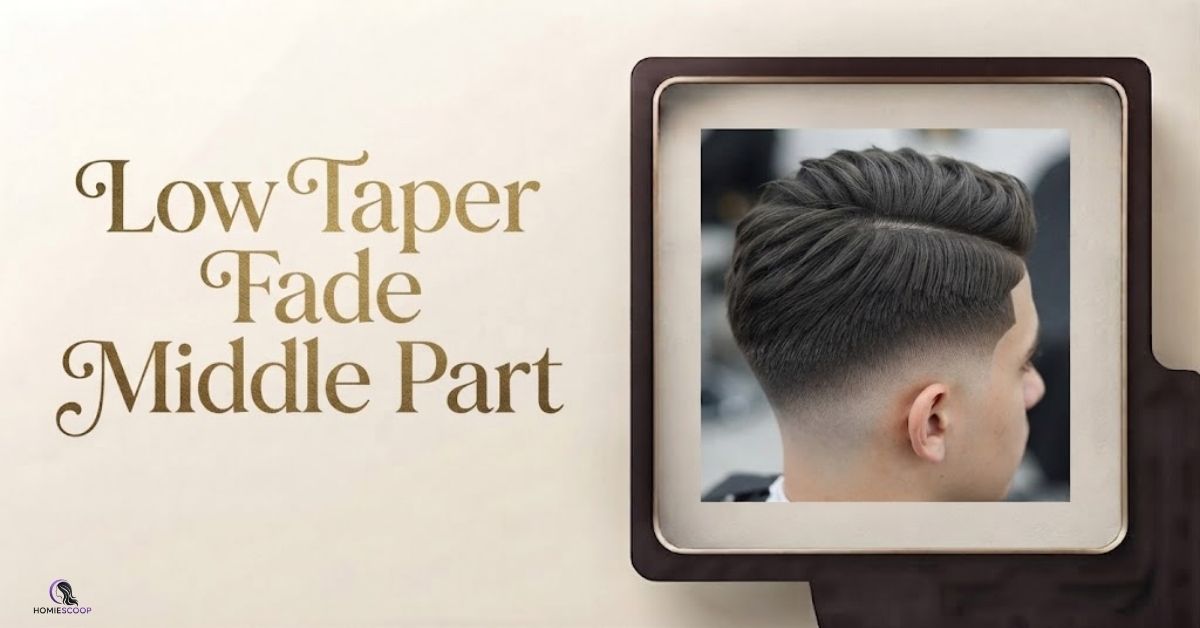
The low taper fade middle part combines a softly tapered perimeter with longer hair that separates naturally through the center. The result is clean around the ears and neckline while keeping enough length on top for movement, texture, and different styling options.
This haircut can work with straight, wavy, curly, thick, or fine hair when the length and taper placement are adjusted properly. It also offers several variations, from a short middle part to longer curtain-inspired versions.
What is a low taper fade middle part haircut?
A low taper fade middle part brings two elements together: a low taper haircut around the ears, sideburns, and neckline and a longer middle part hairstyle on top. Instead of removing large sections of hair from the sides, the barber creates a gradual transition that keeps the overall shape balanced.
The middle part taper fade works particularly well when the top has enough hair length to separate naturally. A low taper middle part can therefore range from a neat short style to a longer curtain hairstyle. The final appearance depends heavily on hair texture, face shape, and how much volume you prefer.
The low taper fade, explained
A low taper fade gradually reduces hair length toward the lower sides and neckline. Unlike a very high fade, the low taper fade haircut keeps most of the side area intact, which creates a softer transition.
The low taper haircut is also different from a full skin fade. A barber can use a clipper fade while retaining some length at the shortest point. This gives the haircut a natural appearance and makes the hair fade easier to grow out.
Why the middle part works with it
The center separation gives the taper fade with middle part a recognizable shape. The hair moves away from the center and creates a balanced frame around the face.
A low fade middle part can also look like a modern version of classic curtains. The difference is that the cleaner perimeter gives the traditional classic middle part a sharper modern edge. With the right hair length, the top can be worn naturally, textured, or more polished.
Why the low taper fade middle part is so popular
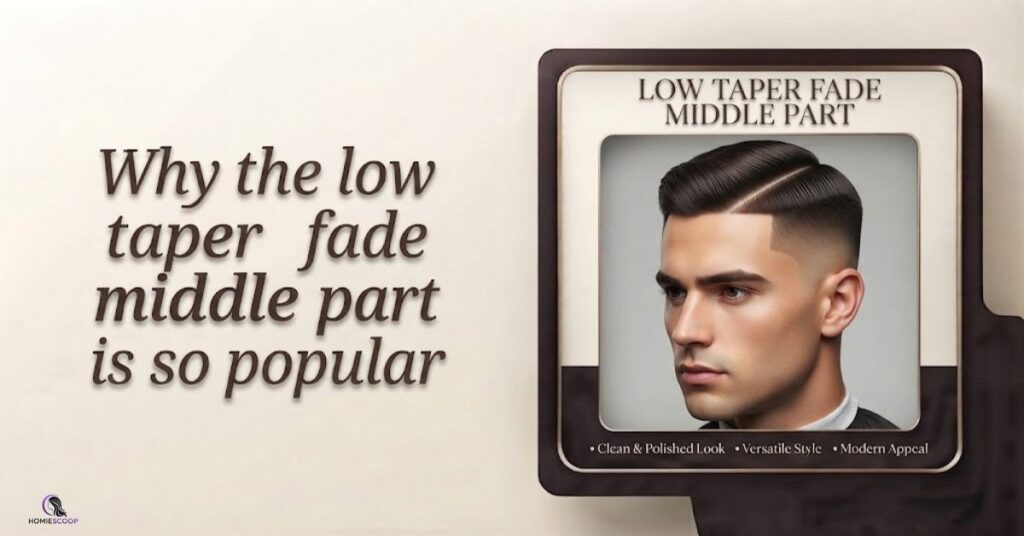
The low taper fade middle part has become a popular choice because it combines a relaxed top with a controlled perimeter. It can look appropriate in casual settings while still working for school, work, events, and everyday wear.
Another reason is flexibility. The same middle part haircut can be changed with styling products. A small amount of styling cream can create a natural finish, while matte clay can provide stronger texture. Sea salt spray can add movement to wavy hair without making the style look overly polished.
Practical benefits include:
- The taper keeps the neckline and sideburns clean.
- The longer top provides several styling options.
- A modern middle part can work with different hair types.
- The style can be adjusted for different face shapes.
- Tapered sides retain more weight than some stronger fades.
- A textured middle part can look casual without appearing messy.
- A clean middle part can be suitable for more formal situations.
The low taper fade haircut for men is particularly useful for people who want a current haircut without committing to extremely short sides. The combination of a soft hair fade, natural texture, and face-framing hairstyle makes the overall appearance adaptable.
Who does it suit best?
The low taper fade middle part can be adapted to many people, but the ideal version depends on face shape and hair type. The goal is not simply to copy one photograph but to adjust the middle part hairstyle to your natural proportions.
By face shape
An oval face can generally handle a wide range of men’s hairstyles, including a middle part fade with moderate volume. A square face can benefit from softer movement around the forehead because the hair creates a less rigid outline.
For a round face, some height and volume and texture on top can help create a longer visual shape. For an oblong face, keeping additional side weight can prevent the haircut from appearing excessively narrow.
Your barber should consider your face shape before choosing the final top length and taper placement. A small adjustment to the taper haircut can make a noticeable difference.
By hair texture
Straight hair usually makes the center division easy to see. A straight hair middle part can therefore be styled with minimal product when the natural direction is already established.
Wavy hair adds natural movement and works especially well with a softer middle part taper fade. A wavy hair middle part often needs less artificial texture because the waves already provide shape.
A curly middle part creates more volume and can make the contrast between the top and faded sides stronger. Curly hair may need additional length because curls shrink when dry.
Thick hair can support a fuller textured middle part, while fine hair may benefit from lighter products that do not flatten the top. In every case, the hair texture should influence the cutting technique and styling routine.
Types of low taper fade middle part styles
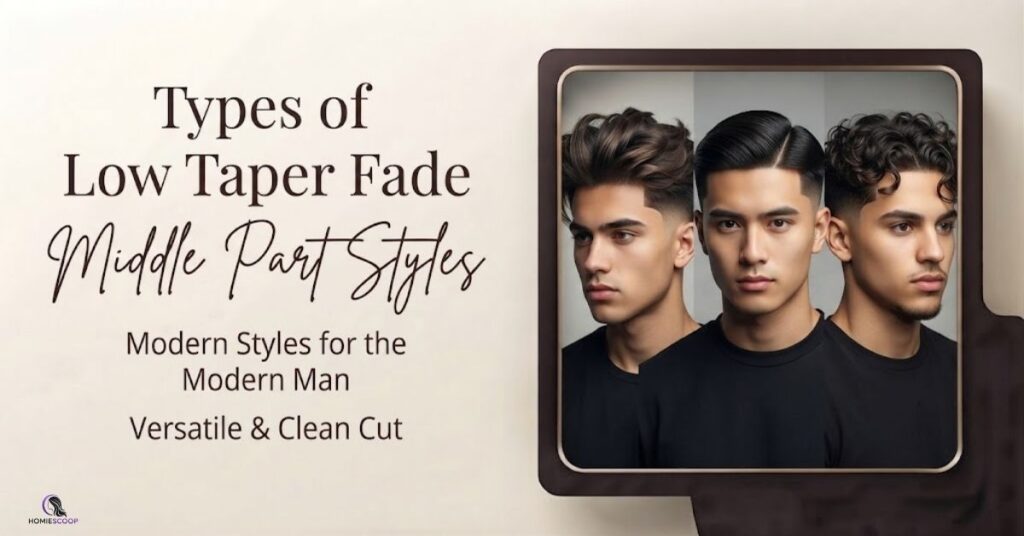
There is no single way to wear a low taper fade middle part. Your preferred hair length, texture, and daily routine can determine which version works best.
- Classic Low: A balanced middle part hairstyle with clean tapered sides and medium-length hair.
- Wavy: Natural waves are enhanced with sea salt spray or a lightweight cream.
- Curly: A fuller curly top contrasts with the controlled low taper.
- Short: A shorter top gives a practical version with less styling time.
- Long Curtain: Extra length creates a dramatic curtain hairstyle that frames both sides of the face.
- Textured: Choppy movement gives the top more volume and a less formal appearance.
- Clean: Smooth styling creates a neat middle part haircut suitable for professional settings.
- Messy: A messy middle part uses loose texture for a relaxed appearance.
- Side-Weighted: The center part remains visible while one side carries slightly more movement.
- Natural Flow: The top follows the person’s natural hair direction instead of being heavily controlled.
The modern middle part can therefore look very different depending on styling. A low taper fade haircut for men does not have to look identical from person to person.
How it compares to other fades
Fade terminology can become confusing because different barbers use terms slightly differently. The main difference is usually the starting height, amount of hair removed, and how close the shortest area gets to the skin.
| Cut | Main difference | Overall appearance |
| Low taper | Blend stays low around ears and neckline | Soft and subtle |
| Low fade | Usually covers more of the lower sides | More visible fade |
| Mid taper | Blend begins higher | More contrast |
| High taper | Taper rises higher toward temples | Stronger contrast |
| Skin fade | Shortest section reaches skin | Very sharp |
| Scissor curtains | Sides remain mainly scissor-cut | Softer and fuller |
A low fade middle part normally gives more visible fading than a low taper because the graduation can cover a larger area. The middle part fade therefore becomes more noticeable.
A middle part taper fade keeps more of the natural side weight. This makes it useful for people who want a softer silhouette. A low taper haircut can also transition into a fuller style more easily when growing out.
The difference between a low taper and mid taper fade is primarily placement. A mid taper begins higher, while a low taper keeps the graduation closer to the ears and neckline.
How to ask your barber for it
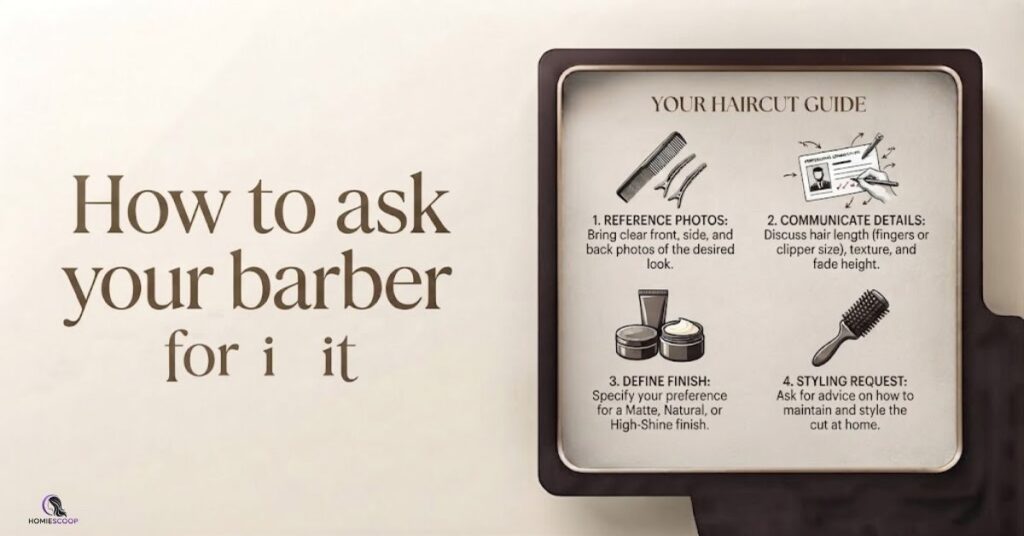
When asking for a low taper fade middle part, explain the haircut in separate parts. Start by describing the taper, then the top, then the desired finish.
A useful barber request is:
“Keep the taper low around my ears and neckline, leave enough length on top for a natural middle part, and keep the sides blended rather than taking too much weight away.”
Show your barber a front, side, and back reference photo whenever possible. Also explain whether you want a clean middle part, messy middle part, or more textured finish.
Tell the barber your hair type as well. Straight, wavy, curly, thick, and fine hair can require different cutting approaches. If you want to grow the top longer, mention that before the barber removes too much length.
How much length you need on top
A comfortable middle part haircut generally needs enough length for both sides to fall away from the center. Around two to four inches can work for many straight or wavy styles, while curly hair may require more because of shrinkage.
For a longer curtain hairstyle, additional length creates a stronger face-framing effect. Medium-length hair is often a useful starting point because it gives enough flexibility to create a clean, textured, or slightly messy finish.
How to style it at home
Styling a low taper fade middle part does not have to take a long time. Start with slightly damp hair rather than soaking-wet hair.
- Towel-dry the hair gently.
- Create the center separation with your fingers or a comb.
- Apply a small amount of styling cream or matte clay.
- Direct both sides away from the center.
- Use a dryer on a low or moderate setting if extra control is needed.
- Finish with a light product to hold the shape.
A hair styling routine should match your hair type. Straight hair may need only a small amount of styling cream. Wavy hair can benefit from sea salt spray, while curly hair may respond better to curl cream or leave-in conditioner.
For a textured middle part, work the product through the lengths instead of concentrating too much around the roots. For a clean middle part, use a comb and controlled blow-drying to establish the direction.
Styling products should not overpower the natural hair flow. Too much matte clay can make fine hair look heavy, while too much cream can reduce volume in thicker hair.
Read More: Mid Taper Fade Fluffy Hair: What It Is, Styles, And How To Ask For It
Maintaining the cut
The low taper fade middle part is relatively forgiving, but it still benefits from regular haircut maintenance. Most barbers recommend refreshing the taper roughly every three to four weeks, although growth rate and desired sharpness can change the schedule. (Taper Trends)
The top usually does not require a full trim every time the taper is refreshed. You can ask the barber to clean the neckline and sideburn taper while preserving the length needed for your middle part hairstyle.
A consistent hair care routine also helps. Use a suitable shampoo and conditioner, avoid excessive heat, and use heat protection when regularly blow-drying or straightening.
Habits that trip people up
- Using too much product: Heavy styling products can flatten volume and make the hair look greasy.
- Ignoring the taper: Overgrown faded sides can make the haircut lose its shape.
- Changing the part constantly: Training the hair in one direction can make styling easier.
- Cutting the top too short: A middle part needs enough length to fall naturally.
- Ignoring texture: The same cut does not behave identically on straight, wavy, and curly hair.
- Skipping trimming: Regular barber visits help preserve the tapered sides and neckline.
- Overusing heat: Excessive heat can make hair dry and harder to style.
Keeping the tapered sides neat while allowing the top to grow naturally is one of the easiest ways to preserve the haircut’s shape.
Mid taper fade
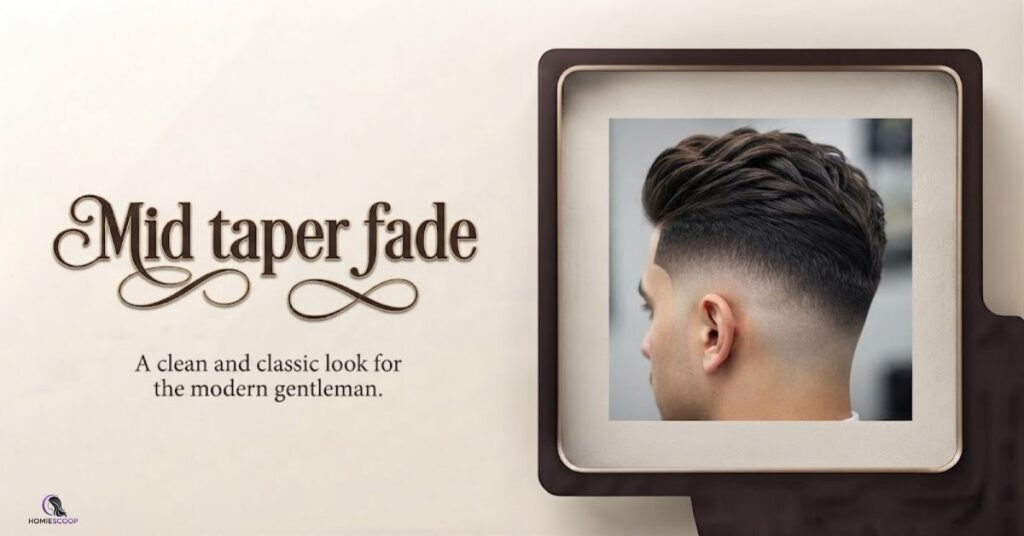
A mid taper fade starts higher than a low taper, generally creating more visible contrast around the temple area. It can be paired with the same middle part hairstyle, but the overall silhouette becomes more noticeable.
If you want a stronger hair fade while keeping a center-parted top, the mid option can provide that contrast. However, someone looking for a subtle appearance may prefer the lower placement.
High taper fade
A high taper fade moves the taper higher toward the temples and creates a stronger distinction between the top and sides. It can make a middle part appear more dramatic because less side weight remains.
The high option is especially useful when someone wants a more pronounced trendy men’s haircut. By comparison, the low taper fade middle part keeps more natural side weight and gives a softer finish.
Low taper fade middle part straight hair
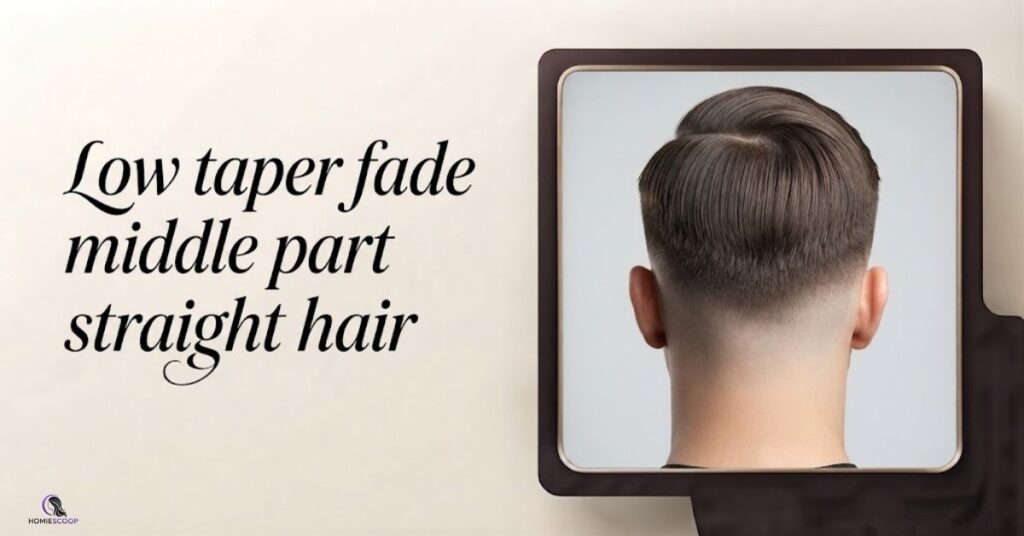
Straight hair is one of the easiest textures for creating a defined center separation. A straight hair middle part can fall naturally on both sides when the top has sufficient length.
For a polished result, use a small amount of styling cream and a comb. For a relaxed look, allow the natural hair flow to remain visible and use only a small amount of product.
A low taper fade haircut on straight hair should not remove too much weight if the hair is fine. Keeping the top fuller can create the appearance of greater density.
Middle part low taper
The middle part low taper is a softer variation where the taper remains close to the ears and neckline while most of the side length is retained.
This option is suitable for someone who wants a classic middle part but also wants the perimeter cleaned up. The result combines traditional styling with a modern barber finish.
Low taper Fade middle part wavy hair
Wavy hair gives the low taper fade middle part extra movement without requiring heavy styling. The natural bends in the hair can make the center split appear softer and more effortless.
A lightweight sea salt spray or styling cream can improve definition. Avoid applying excessive product because the goal is to preserve the natural volume and texture of the waves.
For a longer wavy hair middle part, ask your barber to preserve enough length for the waves to form properly. Cutting too much can remove the movement that makes the style distinctive.
Low taper haircut
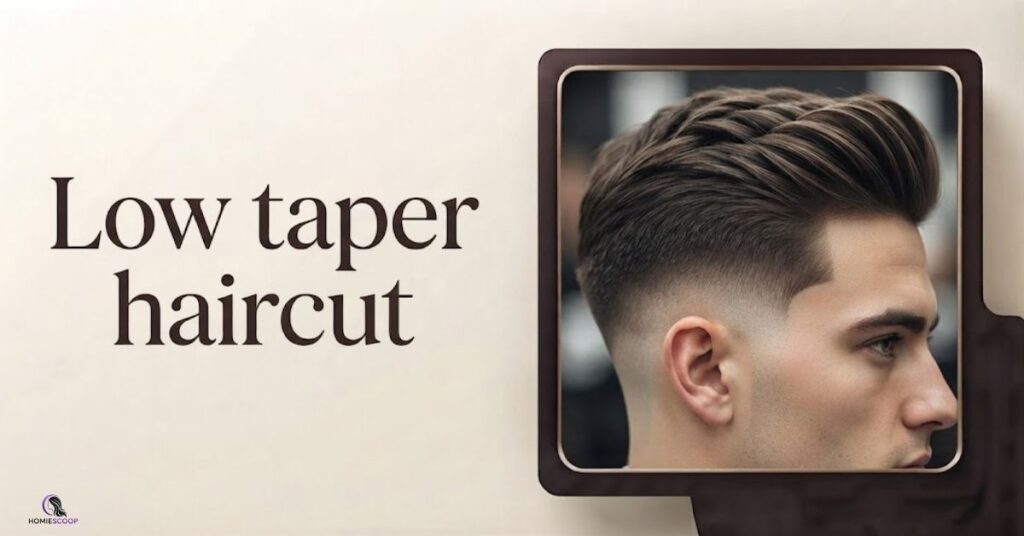
The low taper haircut is built around a gradual reduction of length near the lower sides, sideburns, and neckline. It is a versatile foundation because it can support many different top styles.
A low taper can be combined with a middle part, crop, quiff, slick back, or textured top. The main advantage is that the taper controls the edges while leaving the top flexible.
For someone who wants a low taper fade haircut for men that can grow out naturally, retaining some side weight can make the transition less obvious. Regular hair trimming around the neckline and sideburns can still keep the haircut polished.
Is a low fade good for the middle part?
Yes, a low fade middle part can work well when you want more visible fading than a traditional low taper. The fade gives the center-parted top stronger contrast while keeping the top as the main styling area.
The choice depends on how much side weight you want. A taper is softer, while a low fade generally makes the sides look cleaner and more visibly faded.
Is mid-fade haram in Islam?
Whether a particular fade is considered permissible in Islam can depend on the religious interpretation being followed and the specific haircut. Some scholars discuss the concept of qaza, which concerns shaving parts of the head while leaving other parts, but opinions and applications can differ.
If this is important for you, ask a trusted qualified Islamic scholar who understands the specific haircut rather than relying only on social-media claims. The exact degree of shaving and remaining hair can matter.
Why does Gen Z like middle parts?
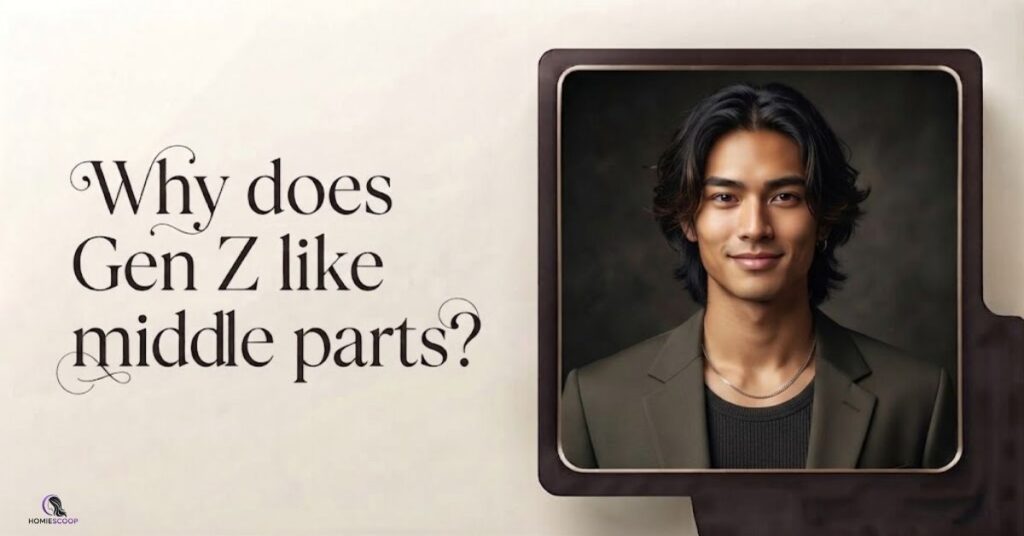
Middle parts have returned as part of broader interest in retro-inspired men’s hairstyles, especially styles associated with the 1990s and early 2000s. The look also photographs well because the center separation creates symmetry.
Modern versions are usually more textured than older styles. Combining a modern middle part with a low taper gives the haircut a cleaner contemporary outline while keeping the recognizable center part.
What is a low zero fade?
A low zero fade is a fade where the shortest section is cut extremely close, commonly with the clipper at or near zero before the blend moves upward. It creates more contrast than a softer taper.
Because the shortest section is very close to the skin, it can require more frequent haircut upkeep. Someone wanting a subtle appearance may prefer a shadow-style taper instead.
What is that gen z haircut?
There is not one single Gen Z haircut. Several styles have become associated with current trends, including middle parts, textured crops, tapers, mullets, and variations of curtain styles.
The low taper fade middle part fits that broader trend because it combines a recognizable middle part with a clean but relatively subtle perimeter. The exact version can be adjusted according to hair type, face shape, and personal styling preference.
Picking the version that fits you
If you want minimal styling, choose a shorter middle part haircut with a subtle taper. If you enjoy styling, medium or longer hair gives you more options for texture, volume, and movement.
Straight hair often suits a clean finish, while wavy hair works naturally with a more relaxed textured middle part. Curly hair can create a fuller look, while fine hair may need lightweight products for support.
Think about your daily routine before choosing the length. A longer curtain hairstyle can look impressive but requires more hair styling routine and maintenance than a short version.
Is it right for you?
The low taper fade middle part is a flexible haircut because the taper and top can be adjusted independently. You can keep the sides subtle while experimenting with short, medium, long, textured, straight, wavy, or curly variations.
Before your appointment, consider your face shape, hair texture, desired hair length, and how much time you want to spend styling. Showing your barber several reference angles can also make the desired result easier to understand.
FAQ’s
Is low fade good for the middle part?
Yes. A low fade can create stronger contrast around a middle part while keeping the top long enough to frame the face. It is more noticeable than a very subtle taper.
Is mid-fade haram in Islam?
Views can differ depending on the interpretation of Islamic guidance about qaza and shaved sections. For a personal religious ruling, consult a qualified scholar who can assess the exact haircut.
Why does Gen Z like middle parts?
Middle parts connect with revived 1990s and early-2000s styles while also working with modern textured cuts. They can be adapted to straight, wavy, and curly hair.
What is a low zero fade?
A low zero fade starts with an extremely short clipper length low on the sides before gradually blending upward. It creates a sharper finish than a traditional taper.
What is that gen z haircut?
Gen Z uses several haircut trends rather than one specific style. Middle parts, textured cuts, tapers, fades, and modern mullets are among the styles commonly associated with current youth grooming trends.
Conclusion
The low taper fade middle part is a versatile haircut that combines a clean, subtle taper with the natural flow of a center-parted style. Whether your hair is straight, wavy, curly, thick, or fine, the cut can be adjusted to match your texture, face shape, and preferred hair length.
For the best result, keep the top long enough to maintain the middle part while regularly cleaning up the tapered sides, neckline, and sideburns. With the right styling products and simple haircut upkeep, this modern style can remain fresh, balanced, and easy to wear.
