

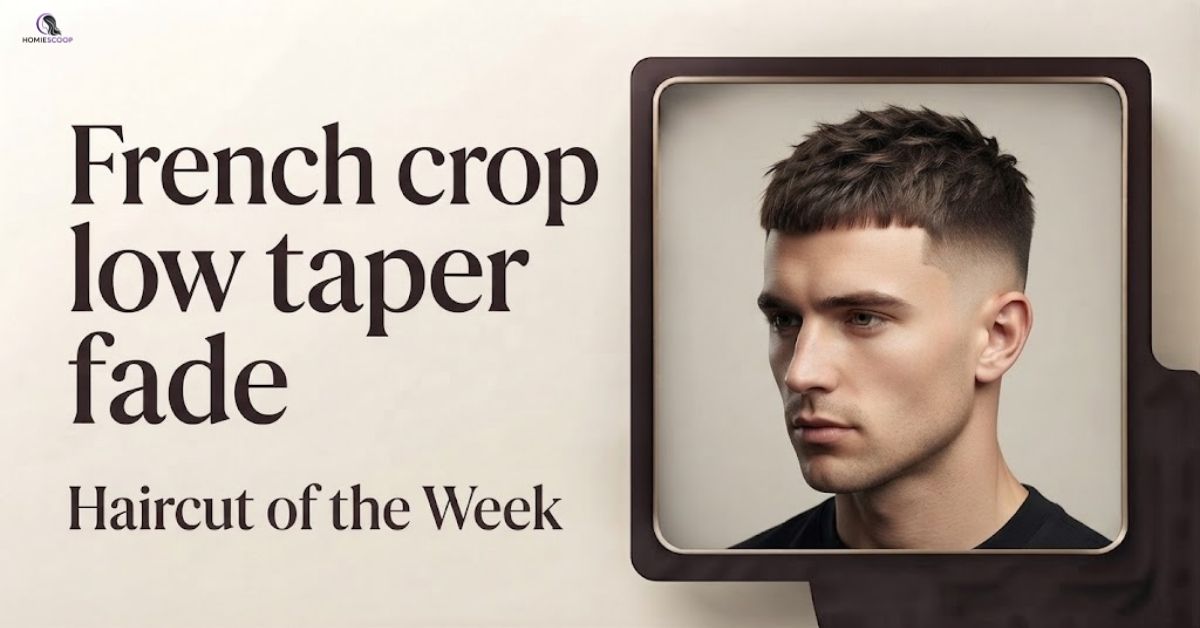
A French crop low taper fade combines a short-to-medium crop on top with a low, controlled taper around the temples, sideburns, ears, and neckline. The defining feature is the forward-directed fringe, while the sides and back stay progressively shorter without taking the blend unnecessarily high.
The appeal of this hairstyle is its flexibility. A barber can adjust the top length, fringe length, top texture, taper location, and blend depth according to straight hair, fine hair, wavy hair, thick hair, facial proportions, hair density, and natural hair growth. The result can therefore range from a clean formal look to a casual look with visible texture.
The quick version
- A French crop is a forward-styled crop haircut with a defined fringe, while a low taper fade keeps the shortest point close to the lower perimeter of the head.
- A French crop haircut can use a blunt fringe, textured fringe, straight-edged fringe, or soft textured fringe depending on the desired appearance.
- A low taper does not necessarily mean bare skin. Your barber can create a natural taper, shadow transition, skin-close taper, or low fade haircut.
- The top should retain enough weight on top for the hair to sit properly, particularly when fine hair has noticeable scalp visibility.
- Straight hair usually benefits from deliberate top texture, while wavy hair and thick hair can use natural movement.
- Curly hair often needs additional top length because shrinkage changes the visible fringe length after drying.
- Bring a haircut reference photo, but explain the taper location and top length rather than asking for an exact copy.
- A soft taper usually gives easier haircut upkeep than a skin-close finish.
- The most useful haircut consultation is specific: explain the fringe, top length, blend depth, hairline, neckline, and desired contrast.
What is a French crop low taper fade?
A French crop low taper fade is a haircut built from two main components. The first is a short-to-medium top styled forward. The second is a low taper fade or localized taper around the lower sides, temples, sideburns, and neckline.
The top is usually the visual focus. Hair is pushed forward from the crown toward the forehead, creating a forward-styled top and a forward-styled crop. The fringe may be deliberately blunt or broken into a textured fringe. The sides and back then provide contrast without taking attention away from the crop haircut.
The term low taper fade can describe slightly different barbering approaches. One barber may create a gradual blend that remains close to the ears and neckline. Another may use a more visible fade technique while still keeping the taper height low. For that reason, haircut terminology matters during a haircut consultation.
The French-crop top and fringe

The French crop haircut is primarily identified by its forward-directed fringe. The top length is normally short to medium, and the hair direction is deliberately forward rather than brushed upward.
A textured crop emphasizes separation and movement. A blunt French crop instead uses a stronger front line. A textured French crop can soften that line through point cutting, internal texture, or a deliberately irregular fringe.
The difference between a French crop and an ordinary short haircut is therefore not simply length. Hair movement, forward direction, fringe length, top texture, and the relationship between the top and sides all contribute to the hairstyle.
A textured fringe with a low taper fade is particularly close to this style. The difference is usually the amount of forward direction and how clearly the fringe defines the crop haircut.
The haircut can also be customized into a mid taper fade Edgar when the front line becomes more graphic and the taper height moves higher toward temple height. That distinction matters if you are deciding between a French crop, an Edgar haircut, and a tapered haircut.
What makes the taper “low”?
A low taper describes the taper location rather than a single universal clipper setting. The shortest part of the blend remains low, usually around the temples, sideburns, ears, and neckline, while more length remains above the blend.
A barber uses clipper guards, a clipper lever, blade position, and guard lengths to create the transition. The taper lever changes how much hair the clipper removes, while blending removes visible steps between lengths.
A fade can be more aggressive than a localized taper. A skin fade may reach bare skin and create sharper contrast, while a natural taper leaves more hair around the shortest point. The practical distinction is therefore blend depth, scalp exposure, and contrast.
If you want a low taper French crop, explain where the blend should finish. Say whether you want a natural taper, soft taper, low blend, or skin-close finish. If you want a low fade haircut instead, say so directly.
Will a French crop low taper fade suit you?
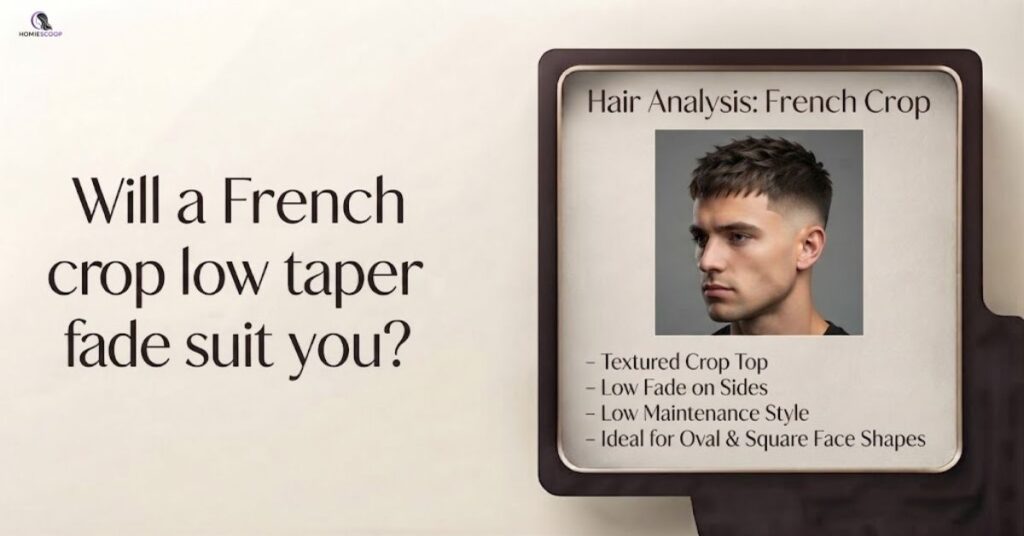
Suitability depends on hair texture, hair type, hair density, hairline shape, facial shape, and natural hair growth. There is no single fringe length or blend depth that works identically for everyone.
French crop suitability is easier to understand when the cut is treated as adjustable. A personalized haircut changes the top length, fringe length, texture, taper height, and side weight instead of forcing every person into the same template.
Suitability by hair type and density
Straight or fine hair
Straight hair gives the barber a clean canvas for a forward-styled crop. The challenge with fine hair is maintaining enough hair weight to prevent scalp showing through.
Fine hair and fine texture generally benefit from controlled separation rather than aggressive thinning. A lightweight powder or matte paste can provide texture without making the top look flat.
For French crop for straight hair and French crop for fine hair, the best French crop length is often the length that provides enough weight for the front line while still allowing forward styling.
Wavy or thick hair
Wavy hair already provides natural movement, so the cutting technique should work with that movement. A thick texture may need internal bulk removed without making the sides excessively narrow.
French crop for wavy hair can look particularly natural when the top texture follows the existing wave. French crop for thick hair may need more controlled weight distribution so the crown does not overwhelm the fringe.
The barber should consider hair thickness, hair weight, hair growth, and hair direction before deciding on the final top length.
Curly or coily hair
Curly hair changes shape considerably when dry. A French crop therefore requires haircut adaptation rather than simply copying a straight-hair haircut reference.
Leave enough top length for shrinkage and let the fringe follow the natural curl pattern. A very rigid straight-edged fringe can work in some cases, but it should be chosen intentionally rather than imposed on hair that naturally moves in another direction.
Face shape, forehead and hairline considerations
Face shape compatibility is mostly about proportion. A barber can adjust fringe length, top volume, side weight, and blend depth to influence how the haircut interacts with the forehead and facial features.
- Round face shapes can work with moderate top volume and controlled side weight.
- Oval face shapes offer considerable flexibility with a French crop hairstyle.
- Square facial shapes can support either a blunt fringe or a softer textured fringe.
- Longer face shapes can benefit from a forward fringe that visually interrupts vertical length.
- A wider forehead can be balanced by a suitable fringe across the forehead.
- A receding hairline may be visually softened by forward-styled hair, although no haircut reverses hair loss.
The important variables are facial proportions, forehead width, hairline shape, fringe length, and top texture rather than a rigid list of approved face shapes.
Cowlicks, crown thinning and sensitive skin
Natural hair growth can change the way the forward-styled top behaves. A strong cowlick may require extra top length, different hair direction, or a softer fringe.
Crown thinning also affects the choice of haircut. If scalp visibility is already noticeable, removing too much weight from the crown can make it more obvious. A personalized haircut should therefore consider hair density and natural texture before the clipper technique begins.
Sensitive skin around the neckline is another reason to discuss the shortest point. A skin-close taper or skin fade may not be comfortable for everyone. A natural taper or shadow finish can preserve the low-positioned fade effect while leaving slightly more hair at the scalp.
Read More: Low Taper Fade Middle Part: A Complete Guide to Styles and Upkeep
French crop low taper fade variations
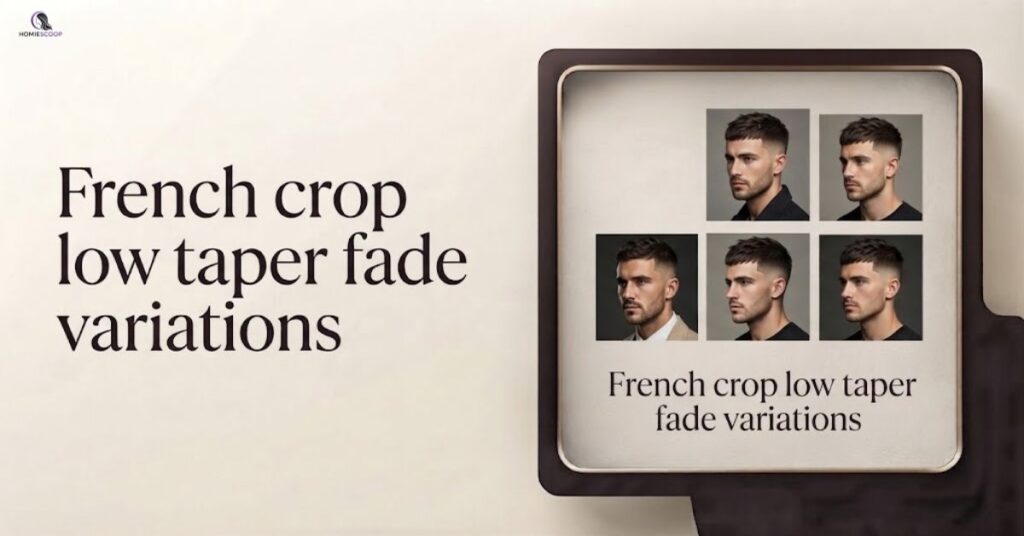
The main variables are the top length, fringe shape, texture, taper location, blend depth, and finish. Those variables create most of the practical French crop variations seen in barbershops.
Fringe and top variations
- A blunt fringe creates a stronger front line.
- A textured fringe creates separation and a softer edge.
- A short French crop keeps the overall hairstyle compact.
- A long French crop gives additional fringe coverage.
- A messy French crop uses irregular separation and forward movement.
- A textured French crop emphasizes visible texture across the top.
- A blunt French crop creates a cleaner, more graphic appearance.
- A short-to-medium crop gives a balanced everyday option.
- A forward-styled crop can be worn close to the forehead or slightly broken apart.
- A forward-styled top can be paired with either a natural finish or matte finish.
Variations for straight, wavy and curly hair
Straight hair generally requires more deliberate texture because it does not naturally separate as strongly. Wavy hair can rely on its natural texture, while curly hair needs the haircut technique to account for shrinkage.
French crop hair types therefore include straight hair, fine hair, wavy hair, thick hair, and curly hair, but the same hairstyle can require very different cutting technique for each.
For French crop for straight hair, keep enough top weight to prevent flat hair. For French crop for fine hair, use lightweight styling product rather than excessive heavy product. For French crop for thick hair, manage bulk. For French crop for wavy hair, preserve natural movement.
Natural, shadow and skin-close taper finishes
A natural taper leaves the greatest amount of hair around the blend. A soft taper gives a gradual blend with relatively low contrast. A skin-close finish removes the hair down toward bare skin and creates a sharper contrast.
A low taper haircut can therefore be customized from subtle to dramatic without changing the top. The taper location remains low, but the shortest point and blend depth can change.
A skin-close taper may look particularly sharp immediately after a fresh haircut, while a natural taper often provides a more forgiving natural grow-out.
French crop low taper fade comparisons

Comparing related names is useful because barber terminology can vary. A French crop with low taper, French crop with taper, French crop with fade, French crop taper fade, French crop low fade, and low taper French crop haircut can describe closely related looks.
Low taper vs low fade, mid fade and high fade
Low taper vs low fade is primarily a comparison of the blend shape and how far the transition extends. A low taper usually keeps the blend localized around the lower perimeter, while a low fade can create a more visible transition.
A mid taper begins higher, often around temple height. A high fade moves still higher and therefore creates more contrast between the top and sides.
| Option | Taper location | Typical contrast | Appearance |
| Low taper | Low around ears, temples and neckline | Low | Natural and controlled |
| Low fade | Low but broader | Moderate | Cleaner, more visible |
| Mid taper | Around temple height | Moderate | More structured |
| Mid fade | Higher side transition | Moderate-high | Stronger separation |
| High fade | High on the sides | High | Dramatic contrast |
This is why low taper vs low fade should be discussed with the barber rather than chosen from the name alone.
French crop vs textured crop, Caesar cut and crew cut
A French crop generally combines a forward fringe with visible texture. A textured crop overlaps heavily with it, but the emphasis may be more on movement than on a specific fringe shape.
A Caesar-inspired haircut normally has a shorter, more uniform fringe. A crew cut does not depend on a forward-directed fringe and instead commonly uses a shorter top shape.
French crop vs textured fringe is therefore a subtle comparison. Both can use forward movement, but a French crop usually makes the fringe a more deliberate structural element.
French crop vs Edgar is more noticeable when the front line becomes extremely graphic and the taper moves higher. The Edgar haircut generally has a stronger geometric quality.
| Cut | Fringe | Top texture | Overall character |
| French crop | Forward and defined | Visible | Versatile |
| Textured crop | Forward or flexible | High | Movement-focused |
| Caesar | Short and blunt | Lower | Structured |
| Edgar haircut | Strong and graphic | Variable | High-contrast |
What should you ask your barber for?
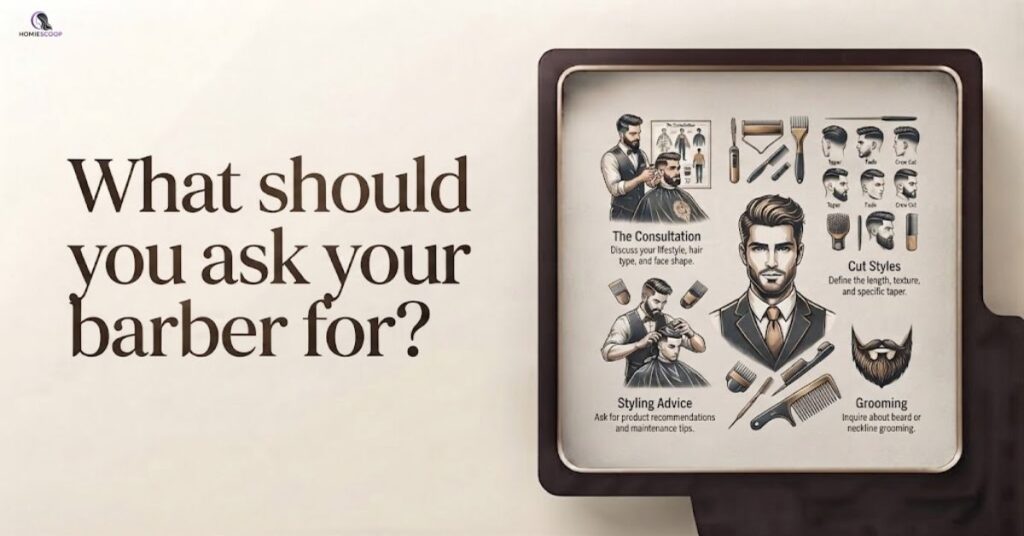
The phrase “French crop low taper fade” is a useful starting point, but it does not describe every technical decision. What to tell your barber should include top length, fringe length, taper location, blend depth, hairline finish, and neckline.
A good haircut consultation should also explain what you do not want. If you dislike a high fade, say that. If you want more length above the blend, say that. If you want the front line natural rather than sharp, explain it before the clipper starts.
The barber consultation checklist
Use this checklist when sitting in the barber chair:
- Top length: state how much length you want to retain.
- Fringe length: specify whether the fringe should sit above, at, or below the brow.
- Top texture: ask for visible texture, subtle texture, or a smoother finish.
- Taper location: explain that you want the taper low.
- Blend depth: say whether you want a shallow low blend or a deeper fade.
- Shortest point: specify whether you want a natural taper, shadow taper, or skin-close taper.
- Hairline: choose a natural hairline or sharper front line.
- Neckline: explain whether you prefer a natural neckline or clean neckline.
- Sideburns: specify whether the sideburns should connect naturally or be tapered.
- Ears: ask for clean around the ears without unnecessarily raising the taper.
- Weight: tell the barber whether you want enough weight on top.
- Reference: provide a haircut reference photo showing the front, side, and back.
A copyable barber script
“I want a French crop with a short-to-medium top styled forward. Keep enough weight on top, give me a textured fringe rather than making everything flat, and keep the taper low around the temples, sideburns and neckline. I want a soft taper with a gradual blend and no high fade. Keep the hairline natural unless the front needs a small cleanup.”
For straight hair, add that you want enough texture to prevent flat hair. For fine hair, ask the barber not to remove excessive weight. For thick hair, request controlled bulk. For wavy hair, ask the barber to work with the natural movement.
How to use reference photos without getting the wrong cut
A haircut reference photo is useful because haircut terminology is not perfectly standardized. Bring front, side, and back views whenever possible.
Point out exactly what you like: fringe length, front line, top length, taper height, sideburn shape, neckline, and contrast. This makes the haircut consultation more precise than simply showing one image and saying “make it like this.”
A haircut reference should be treated as inspiration rather than a guarantee. Hair density, hair texture, hair growth pattern, hair thickness, and facial proportions can make the same haircut appear different.
How to style a French crop low taper fade

French crop styling is intentionally straightforward. The basic process is forward styling: start with damp hair, establish the forward direction, build texture, and finish with a small amount of styling product.
Hair styling becomes easier when the haircut already has the correct top length and texture. A barber can create the foundation, while daily styling maintains the forward movement.
A five-minute everyday styling routine
- Start with clean, slightly damp hair.
- Use your fingers or a wide-tooth comb to establish the forward direction.
- Push the top forward from the crown toward the fringe.
- Use low heat if you need extra control.
- Apply a small amount of matte paste or hair paste.
- Add lightweight powder or styling powder if fine hair needs additional volume.
- Work the styling product through the top rather than placing everything on the fringe.
- Separate a few sections to create texture and movement.
- Shape the fringe across the forehead.
- Stop before the hair becomes coated or overly glossy.
For wavy hair, preserve the natural texture. For curly hair, avoid aggressively combing the hair into flat hair. For thick hair, concentrate product through areas that need separation.
Which product type should you use?
| Product | Best use | Finish |
| Matte paste | Controlled texture | Matte finish |
| Hair paste | Flexible separation | Natural finish |
| Lightweight powder | Fine hair and root volume | Matte finish |
| Styling powder | Extra lift and texture | Textured finish |
| Texturizing product | Visible separation | Natural or matte |
| Matte styling product | Everyday forward styling | Matte |
| Lightweight styling product | Fine or wavy hair | Natural |
| Styling aid | Flexible control | Depends on formula |
A matte paste works well when the top needs definition without shine. A lightweight powder can be useful when fine texture collapses easily. A texturizing product can support visible texture, while a lightweight styling product helps maintain natural movement.
Styling mistakes and weather adjustments
The most common problem is using too much product. Excess hair product can turn a textured top into a flat combed-down block.
Another mistake is forcing every hair type into the same forward direction. Natural hair direction matters. A cowlick may require a slightly different top styling approach, and curly hair often needs a styling aid that supports curl grouping rather than flattening it.
Humidity can reduce volume and increase separation problems. Dry weather can create static and flyaways. The solution is not automatically more product; adjust the styling product to the hair texture and weather.
Maintenance, grow-out and scalp care
French crop maintenance has two separate parts: keeping the top under control and maintaining the taper. A soft low taper generally grows out more naturally than a skin-close finish.
Haircut upkeep also depends on hair growth speed. Someone with rapid hair growth may notice the shortest point changing quickly, while slower growth can preserve the low blend for longer.
How often should it be trimmed?
Haircut frequency depends on how sharp you want the style. A skin-close taper, skin fade, or very defined low fade haircut usually shows regrowth sooner.
A natural taper can tolerate more growth. If the top still looks good but the neckline or sideburns becomes untidy, a touch-up can refresh the perimeter without completely changing the haircut.
A practical maintenance schedule should therefore follow your hair growth, desired contrast, and preferred appearance rather than an arbitrary calendar.
Keeping the cut presentable between visits
- Reset the fringe with a little water.
- Keep the clean neckline tidy.
- Maintain the clean hairline without repeatedly redrawing it.
- Avoid aggressively pushing the fringe backward.
- Use a small amount of styling product instead of rebuilding the entire top.
- Keep the area clean around the ears.
- Ask for a touch-up when the sideburns become noticeably bulky.
- Let the barber handle detailed blending if you are not experienced with clipper technique.
A sharp haircut does not require a permanently sharp line-up. A natural hairline and natural grow-out can provide a tidy appearance with less frequent maintenance.
Close-cut irritation and when to reconsider a skin finish
If a skin-close finish repeatedly causes discomfort, discuss a longer shortest point with your barber. A soft taper or natural taper can retain the basic shape while reducing how aggressively the clipper reaches the scalp.
The goal is a clean appearance, not maximum closeness at every part of the head. A barber can adjust blade position, guard lengths, and taper technique to produce a more comfortable localized taper.
French crop low taper fade straight hair
French crop low taper fade straight hair is easiest to customize when the top retains enough weight for the hair to move forward instead of separating into thin strands. Straight hair often benefits from deliberate top texture and a matte finish.
For fine straight hair, avoid excessive thinning because it can increase scalp visibility. A lightweight powder or matte paste can create separation without flattening the top, while a soft textured fringe can make the front line less rigid.
French crop low taper fade curly hair

French crop low taper fade curly hair requires attention to shrinkage, curl direction, hair density, and fringe length. The top should usually be assessed in its natural state so the final hairstyle does not become unexpectedly short after drying.
A curly French crop can use a textured fringe rather than a perfectly straight fringe. The low taper should remain controlled around the ears, temples, sideburns, and neckline while the textured top retains natural movement.
Messy French crop Low taper fade
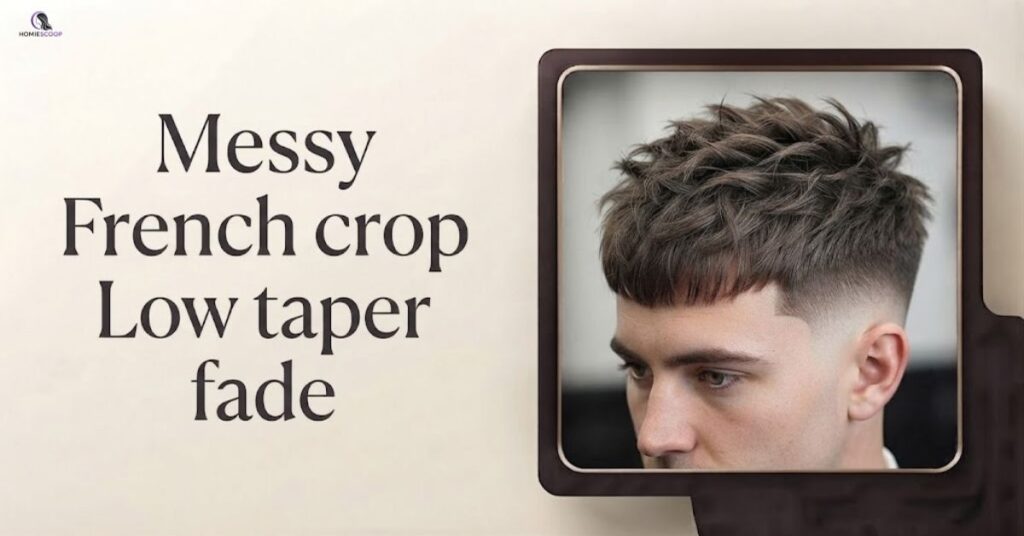
A messy French crop Low taper fade uses a deliberately irregular textured crop rather than a perfectly arranged forward-styled top. The fringe can remain forward while different sections create separation and movement.
This version works particularly well when the hair has natural texture. Styling should use a small amount of matte styling product or texturizing product, followed by finger separation instead of a rigid combed-down finish.
French crop low taper fade short hair
French crop low taper fade short hair keeps the entire haircut compact. The top length is reduced, but enough length should remain for a recognizable forward-directed fringe.
A short French crop can provide a tidy appearance with relatively simple top styling. The main decision is whether the front line should be blunt, straight-edged, or softened into a textured fringe.
Textured French crop Low Taper Fade
Textured French crop Low Taper Fade emphasizes separation throughout the top. Instead of creating a flat combed-down block, the haircut technique gives individual sections enough movement to remain visible.
A matte paste, lightweight powder, or styling powder can support the textured finish. The low taper remains secondary, keeping its blend depth and taper height low so the textured top remains the main feature.
French crop mid taper fade
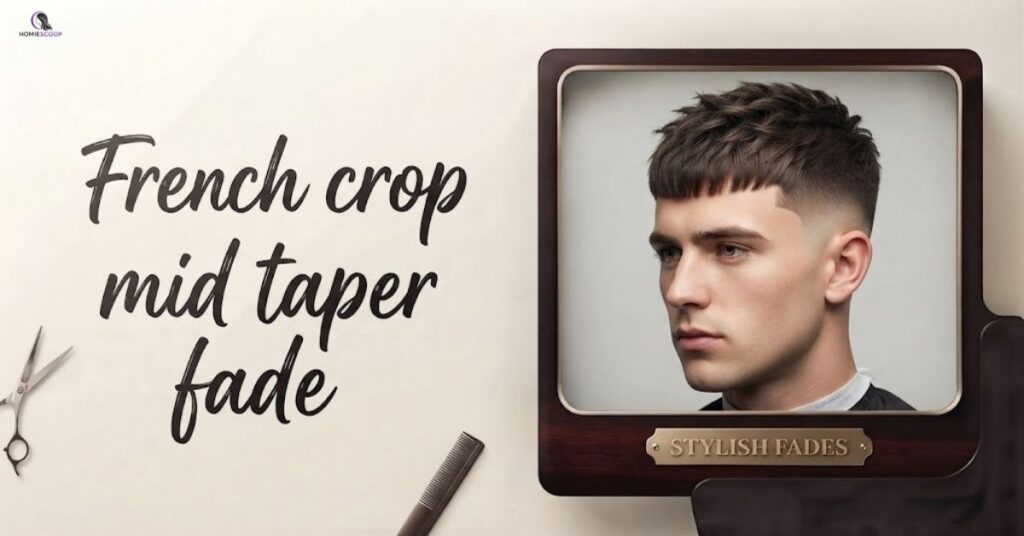
French crop mid taper fade moves the taper higher than a conventional low taper. The increased taper height produces greater contrast around the temples and sides while keeping the forward-styled crop on top.
This variation is useful for someone who wants a more noticeable tapered haircut. The barber should confirm the temple height and shortest point before beginning, because a mid taper can visually change the balance of the hairstyle.
Should you get this haircut?
A French crop is a practical option for someone who likes forward styling, a defined fringe, visible texture, and a short-to-medium crop. French crop suitability depends on how the top interacts with your hair type, hair density, hairline shape, facial shape, and natural hair growth.
The style can be adapted rather than accepted as a fixed package. A personalized haircut might use a softer taper, longer fringe, stronger top texture, more length above the blend, or a natural neckline depending on the person’s needs.
French crop maintenance is also relatively predictable when the taper is chosen deliberately. A natural taper can provide a natural grow-out, while a skin-close taper requires more frequent taper upkeep.
The best approach to choosing a haircut is to explain what you want your finished appearance to look like. If you want tidy without looking severe, ask for a soft low taper and controlled texture. If you want sharper contrast, discuss a deeper fade.
FAQ’s
Which fade is best for French crops?
A low taper fade is a common choice because it keeps the transition low and leaves more visual emphasis on the forward-styled top. A low fade can create slightly more contrast, while a mid taper or mid fade creates a higher transition around the temples.
Can I get a taper fade with a French crop?
Yes. A French crop with taper combines a forward-styled crop haircut with a tapered haircut around the temples, sideburns, ears, and neckline.
What is a gen z haircut?
“Gen Z haircut” is a broad trend label rather than one precise haircut. It can refer to styles that emphasize texture, personalization, visible fringe, modern tapering, and flexible styling.
Is a French crop attractive?
Attractiveness is subjective, so there is no universal answer. The hairstyle can create a clean appearance, casual look, formal look, or sharper appearance depending on the fringe, top texture, taper, and styling.
What haircuts impress girls?
There is no single haircut that universally impresses girls. Personal preference varies, and haircut choice is better based on your hair type, facial shape, lifestyle, styling habits, and desired overall appearance.
Conclusion
A French crop low taper fade gives you a forward-styled top, defined fringe, and controlled low blend without requiring the sides to dominate the overall hairstyle. The key is matching top length, fringe length, texture, taper location, and blend depth to your natural hair.
For the best result, use a clear haircut reference, explain what to tell your barber, and choose maintenance that fits your routine. Whether you prefer a natural taper, textured crop, blunt fringe, or skin-close finish, thoughtful haircut customization makes the final style easier to wear and maintain.
