


Choosing between a low and mid taper comes down to where the blend begins, how much contrast you want, your hair texture, face shape, and how frequently you want maintenance. The distinction is small in technique but noticeable in the finished shape.
This guide compares both cuts in practical terms, including curly hair, professional settings, styling, maintenance, face shape, and how to explain your preference to a barber.
The short version
The Lower Taper Fade vs Mid Taper Fade decision is mainly about fade height. A lower taper keeps the transition close to the ears and neckline, while a mid taper moves it upward toward the temple.
| Feature | Low taper fade | Mid taper fade |
| Fade position | Low around ears and neckline | Higher around the temple |
| Contrast | Subtle | More noticeable |
| Overall impression | Clean and understated | Sharper and more defined |
| Curly hair | Keeps more surrounding volume | Makes curls stand out |
| Round faces | Preserves side width | Can create a slimmer appearance |
| Maintenance | Usually easier to stretch | Usually needs more frequent touch-ups |
| Formal settings | Very adaptable | Depends more on workplace style |
For someone comparing the Lower Taper Fade vs Mid Taper Fade, the most useful question is not which haircut is universally better. Instead, consider how your hair naturally behaves and how prominent you want the fade to be.
What is a low taper fade?

A low taper keeps the shortened section concentrated around the ears, sideburns, and neckline. Most of the side remains relatively full, creating a gradual transition without dramatically changing the silhouette of the head.
That makes it useful when you want a polished haircut without making the fade the central feature. It can work particularly well with textured crops, longer tops, side parts, fringes, and hairstyles where maintaining natural volume matters.
The Lower Taper Fade vs Mid Taper Fade choice therefore becomes especially relevant for someone who wants subtle shaping rather than a highly visible transition.
Best low taper fade styles
- Low taper with a textured crop
- Low taper with a side part
- Low taper with a fringe
- Low taper with a beard
- Low taper with natural waves
- Low taper with a longer curly top
- Low taper with a slicked-back top
- Low taper with a classic crew cut
What is a mid taper fade?

A mid taper moves the transition higher along the sides, generally toward the temple. This exposes more of the fade and creates a stronger visual separation between the top and sides.
Compared with a low taper, the mid version can feel more contemporary because the change in length is easier to see. It can also frame thick, curly, coily, or wavy hair effectively.
When considering the Lower Taper Fade vs Mid Taper Fade, think of the mid option as a more visible version of the same basic taper concept rather than a completely different haircut.
Best mid taper fade styles
- Mid taper with a textured quiff
- Mid taper with curls
- Mid taper with waves
- Mid taper with a hard part
- Mid taper with a short textured top
- Mid taper with a beard
- Mid taper with a buzz cut
- Mid taper with coily hair
How the two look side by side
The easiest way to understand the Lower Taper Fade vs Mid Taper Fade difference is to look at the location of the blend rather than simply judging how short the sides are.
A low taper leaves more visual weight around the temples and upper sides. A mid taper removes more weight from that area, making the transition more apparent.
The difference can also affect your profile. A low taper generally preserves more of your original outline, while a mid taper creates a cleaner separation between the top and sides.
Which one looks more professional?

A low taper is often easier to adapt to conservative workplaces because the transition is less conspicuous. It can look neat with a side part, short crop, comb-over, or controlled textured style.
A mid taper can also look professional when it is cleanly blended and paired with an appropriate top style. The deciding factor is often the workplace’s grooming expectations rather than the fade category itself.
For the Lower Taper Fade vs Mid Taper Fade decision, someone working in a formal environment may prefer the subtler option simply because it requires less visual contrast.
Which fade suits your face shape?
Face shape should be considered alongside hair density and top length.
Long or oblong faces
A low taper can preserve some side fullness, which may help prevent an already long face from appearing visually longer.
Round faces
A mid taper can remove additional side bulk and draw attention upward. Combining it with controlled height on top can further change the overall proportions.
Square faces
Both can work. A low taper keeps the appearance softer, while a mid taper can emphasize naturally strong angles.
Oval faces
Oval faces are generally flexible with haircut proportions, so either option can be adapted according to personal preference.
The Lower Taper Fade vs Mid Taper Fade choice should therefore be based on the entire haircut rather than fade height alone.
Which one works better for your hair type?
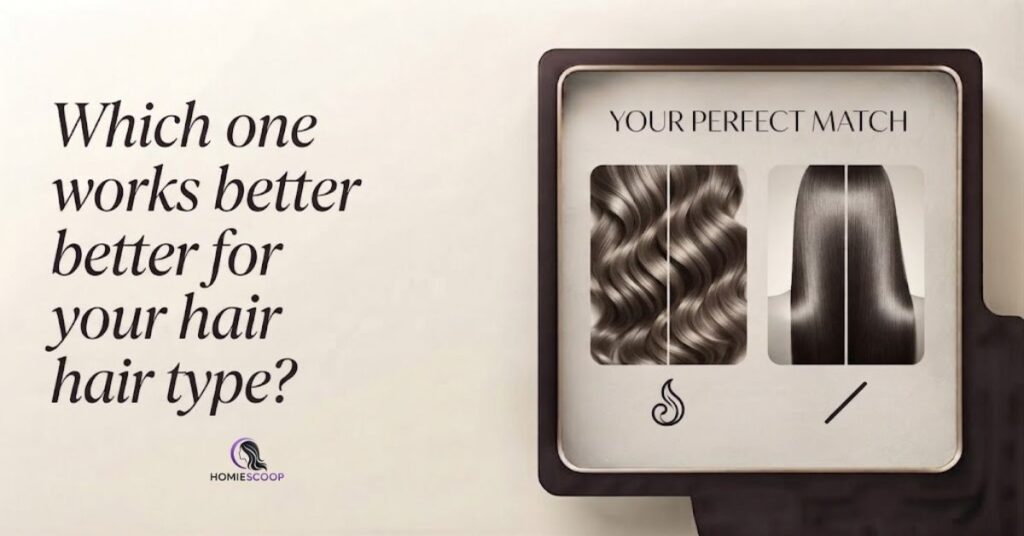
Hair texture changes how visible a taper becomes.
Straight hair can make a low taper look exceptionally clean because the transition is easy to see without requiring much styling. Thick straight hair may benefit from additional weight removal.
Wavy hair gives either taper a natural sense of movement. A low taper allows the texture to remain the dominant feature, while a mid taper creates stronger contrast.
Curly and coily hair can make a mid taper particularly striking because the shorter sides frame the texture above them. However, a low taper can be preferable when preserving fullness around the sides is important.
For the Lower Taper Fade vs Mid Taper Fade, curly hair does not automatically require one answer. The desired amount of contrast matters more than the curl pattern alone.
Low taper fade vs mid taper fade curly hair
For curly hair, the Lower Taper Fade vs Mid Taper Fade comparison becomes largely a question of framing. A low taper leaves more hair around the temples, creating a fuller transition into the curls.
A mid taper removes more side weight, which can make the curls on top appear more pronounced. This is useful when the goal is to make texture immediately noticeable.
If your curls are dense and you want a stronger outline, the mid option can provide more separation. If your curls already have substantial volume and you prefer a softer profile, the low option can preserve balance.
Read More: French crop low taper fade: how to choose, ask for, and style it
High taper fade
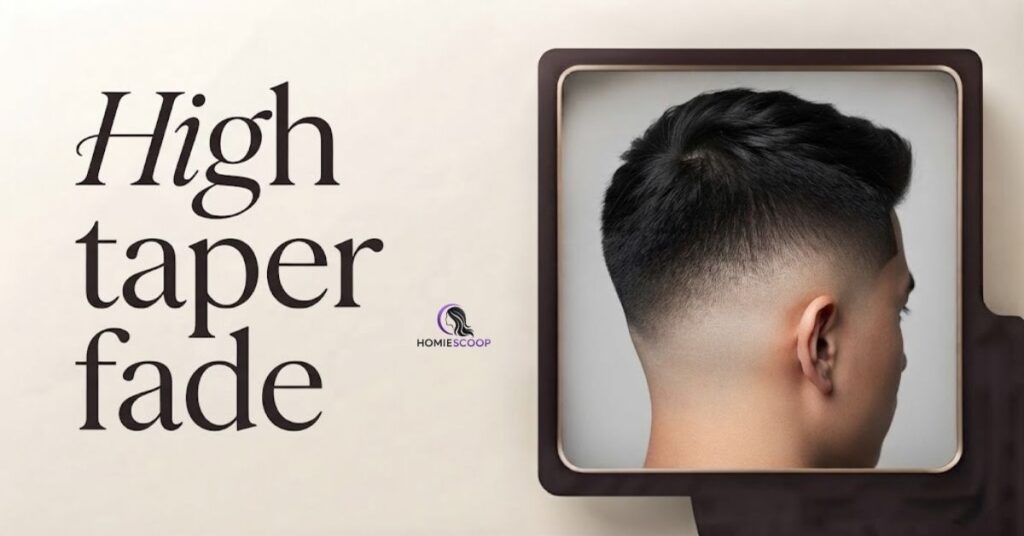
A high taper places the transition higher than both low and mid versions. It creates more visible contrast and changes more of the side silhouette.
This makes a high taper a useful comparison point when thinking about the Lower Taper Fade vs Mid Taper Fade. The three options can be viewed as a progression in fade height rather than unrelated styles.
Someone moving from a low taper to a mid taper will notice a moderate increase in contrast. Moving from a mid taper to a high taper produces an even more obvious change.
Mid taper fade vs mid fade
A mid taper and a mid fade are related but are not necessarily identical. A taper traditionally concentrates the shortest hair around specific areas such as the sideburns and neckline, while a fade can extend more broadly across the sides.
Barbers may also use these terms somewhat differently, so showing a reference photograph is useful.
This distinction matters in the Lower Taper Fade vs Mid Taper Fade discussion because the word “mid” describes placement, while “taper” describes the type and extent of the transition.
Low fade
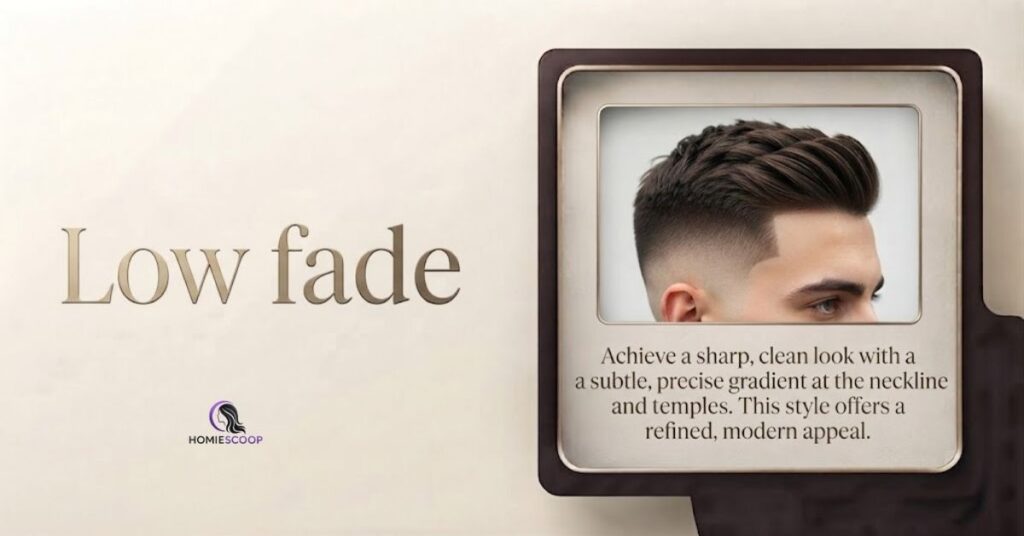
A low fade can resemble a low taper at first glance, but the amount of side hair removed may differ considerably. A traditional fade can take the sides shorter over a wider area.
A low taper generally gives you more freedom to retain natural side density. That makes it useful when you want a gradual, restrained change rather than a prominent skin or near-skin effect.
Mid taper fade vs high taper fade
A mid taper sits between a low taper and high taper in terms of height. The mid version exposes more of the side transition than a low taper while retaining more hair than a high taper.
The Lower Taper Fade vs Mid Taper Fade decision may therefore be easier when you imagine a scale: low for subtlety, mid for moderate contrast, and high for a more pronounced effect.
Low taper vs high taper
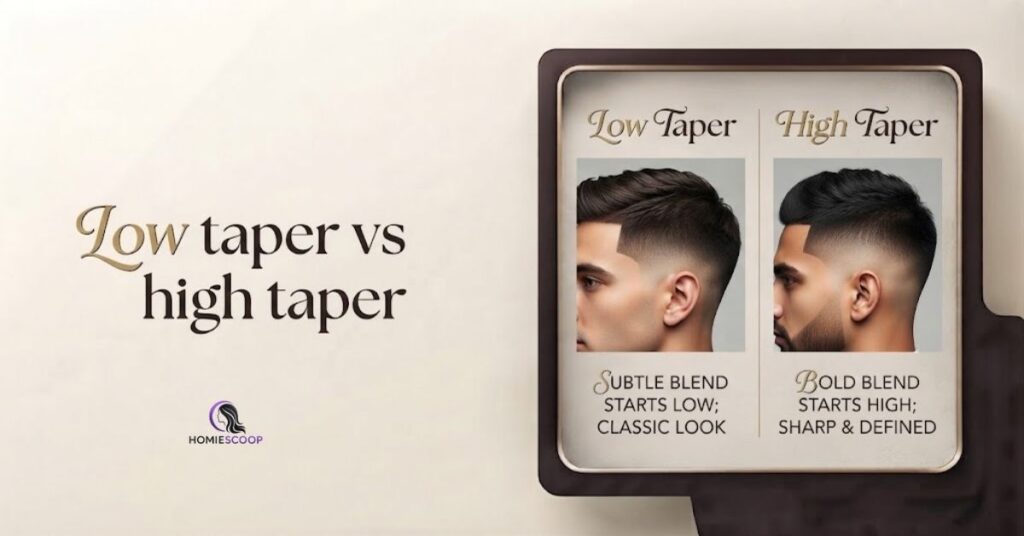
The low taper preserves substantially more of the natural side shape than a high taper. A high taper changes the silhouette more dramatically and usually makes the haircut appear bolder.
If you are uncertain about how much change you want, comparing the two extremes can clarify where a mid taper fits. The Lower Taper Fade vs Mid Taper Fade question then becomes a choice between restrained and moderately pronounced contrast.
Pairing each fade with popular top styles
The top should be planned together with the taper. A strong fade paired with a completely mismatched top can make the haircut look unbalanced.
- Textured crop: Either taper works; the mid option makes the texture more prominent.
- Fringe: A low taper keeps attention on the front.
- Buzz cut: A mid taper provides additional contrast.
- Quiff: Either can work, depending on desired side contrast.
- Curly top: A mid taper can frame curls strongly.
- Longer top: A low taper can create a smoother transition.
- Side part: A low taper provides a classic appearance.
- Beard: Both can connect naturally into facial hair.
The Lower Taper Fade vs Mid Taper Fade choice should therefore account for the top style rather than being selected independently.
Maintenance: which one lasts longer?
A low taper generally has a more forgiving grow-out because the transition begins lower on the head. Small amounts of regrowth around the neckline and ears may be less noticeable.
A mid taper can show regrowth sooner because the fade occupies a more visible part of the side profile. People who want an exceptionally crisp appearance may therefore schedule trims more frequently.
For the Lower Taper Fade vs Mid Taper Fade, maintenance is an important practical distinction. The haircut that looks best on day one is not necessarily the haircut that fits your schedule best.
A useful approach is to tell your barber how often you normally get haircuts. Someone who visits every two weeks has different options from someone who waits five or six weeks.
Everyday styling and products
A low taper often works with minimal styling. Depending on the top, you may need only a comb, curl cream, light pomade, styling cream, or leave-in product.
A mid taper creates stronger contrast, so shaping the top can become more important. Matte clay can add structure to straight or wavy hair, while curl cream can define curly hair without making it heavy.
Avoid using excessive product simply to compensate for a haircut that does not suit your natural texture. Good cutting technique should establish the basic shape before styling products are added.
The Lower Taper Fade vs Mid Taper Fade decision is ultimately about the relationship between the sides, top, texture, and daily routine.
Pros and cons at a glance
Low taper fade
Pros
- Subtle appearance
- Flexible for professional environments
- Preserves more side density
- Easy to combine with longer tops
- Often forgiving during grow-out
- Works well with natural texture
Cons
- Less dramatic contrast
- May not emphasize curls as strongly
- Can appear understated with a very short top
- May not provide enough slimming effect for some round faces
Mid taper fade
Pros
- More visible definition
- Strong contrast with textured tops
- Frames curls and waves effectively
- Removes more side bulk
- Works well with many contemporary styles
- Can complement hairstyles with height
Cons
- Regrowth may become visible sooner
- Often requires more frequent maintenance
- The fade is more noticeable if the blend is uneven
- Requires greater attention to overall proportions
When weighing the Lower Taper Fade vs Mid Taper Fade, these advantages and disadvantages are more useful than treating either haircut as universally superior.
How to ask your barber
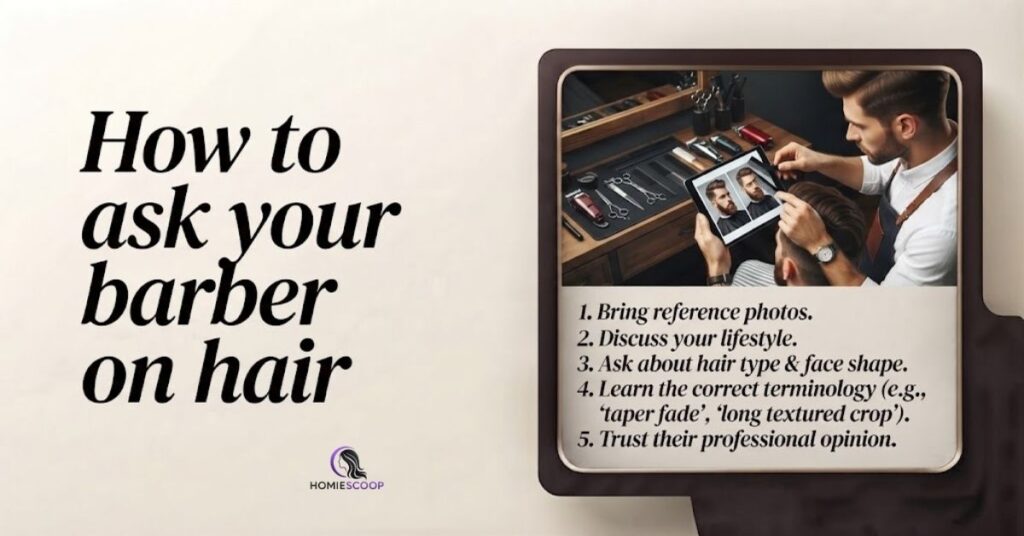
Clear wording can prevent a disappointing result. Instead of simply saying “taper fade,” identify the height and explain what you want preserved.
For a low taper, you could say:
- “I want a low taper around the ears and neckline. Please keep the sides fairly full and leave the top at its current length.”
For a mid taper, you could say:
- “I want a mid taper with the blend around the temple. Keep the top textured and make the transition clean but not excessively high.”
Also explain your preferred sideburn length, neckline shape, top length, and whether you want the shortest area taken down to skin.
For the Lower Taper Fade vs Mid Taper Fade, a photograph showing the side profile is often more useful than relying on terminology alone.
Common mistakes to avoid
- Choosing only from a front-facing photograph: The side profile reveals the actual taper height.
- Ignoring natural hair density: Thick hair may need weight removed, while fine hair may benefit from preserving fullness.
- Confusing a taper with a fade: Tell the barber how broadly you want the short section to extend.
- Requesting a skin finish without considering upkeep: Skin-level fading generally makes regrowth more noticeable.
- Ignoring the neckline: The back of the haircut contributes substantially to the finished appearance.
- Forgetting your top length: The fade must complement the amount of hair remaining above it.
- Copying another person’s haircut exactly: Texture, density, hairline, and head shape can produce different results.
- Changing fade height without discussing the change: A small difference in placement can noticeably alter the silhouette.
The Lower Taper Fade vs Mid Taper Fade decision becomes easier when these variables are considered together.
Final verdict: low taper fade or mid taper fade?
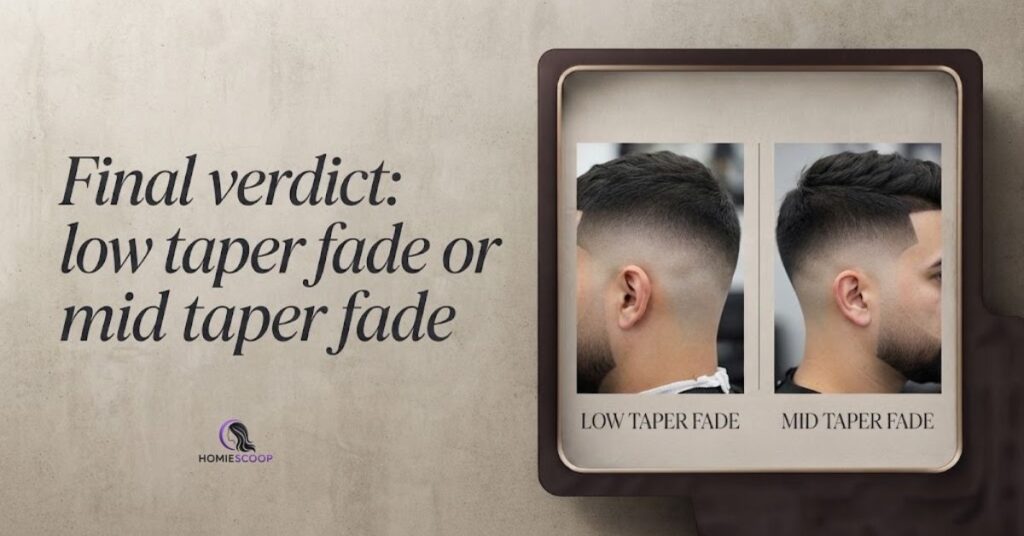
Both cuts can produce a clean result, but they create different visual effects. A low taper emphasizes subtlety and preserves more side fullness, while a mid taper creates greater contrast and makes the transition easier to notice.
For someone deciding between the Lower Taper Fade vs Mid Taper Fade, consider four things first: hair texture, face shape, preferred top style, and haircut frequency. Those factors provide a more useful starting point than trends alone.
Choose a low taper when you want:
- A restrained appearance
- More side fullness
- Easy grow-out
- A flexible professional haircut
- A softer transition into longer hair
Choose a mid taper when you want:
- More visible contrast
- Stronger framing around curls or waves
- Less bulk on the sides
- A sharper contemporary outline
- A fade that plays a larger role in the hairstyle
The Lower Taper Fade vs Mid Taper Fade choice can also be changed over time. Starting with a lower transition gives you the option of moving higher at a later appointment.
FAQs about low taper fade vs mid taper fade
Which is better, mid taper or low taper?
Neither is universally better. A low taper keeps the transition lower and generally preserves more side fullness, while a mid taper creates a more visible transition.
Is a low fade better than a mid fade?
A low fade and mid fade create different proportions. A low fade leaves more of the side area relatively full, while a mid fade moves the shorter section higher.
Are fades haram in Islam?
There is a genuine difference of scholarly opinion concerning certain fade styles. Some Islamic scholars discuss the concept of qaza, traditionally associated with shaving part of the head while leaving another part unshaved, and some apply that discussion to particular fade designs.
Are low taper and taper fade the same?
Not necessarily. “Taper” describes a gradual reduction in length, while “fade” can refer to a broader transition that may remove more hair from the sides.
Which fade is better?
There is no single answer for every person. Consider whether you want subtle or noticeable contrast, how much side density you want to retain, your hair texture, and how often you visit the barber.
Conclusion
The Lower Taper Fade vs Mid Taper Fade comparison is easiest when you focus on placement, contrast, texture, proportions, and upkeep. A lower transition generally creates a quieter shape, while a mid transition makes the sides more defined.
Before your next appointment, show your barber a side-profile reference and explain how much hair you want removed. That simple conversation can make the difference between receiving a haircut that merely resembles your idea and one that matches it closely.
