


A low taper fade mullet combines clean, controlled sides with extra length through the back. The result is a modern look that can feel neat from the front while showing more personality from the side and rear. The style can be adapted for straight, wavy, curly, thick, or fine hair.
The key is balance. A good cut should match your natural hair texture, facial proportions, preferred length, and daily styling routine. This guide covers styles, hair types, face shapes, barber instructions, styling, maintenance, and practical variations.
The quick version
- The taper stays low around the ears and neckline while the back keeps noticeably more length.
- A medium-length back is a useful starting point if you are trying a mullet for the first time.
- Straight hair benefits from layering and texture, while curly and wavy hair can use natural movement.
- Face shape matters mainly when deciding top volume, side width, fringe placement, and back length.
- Regular taper fade touch ups keep the outline clean without requiring a complete haircut every visit.
- The style can range from a classic mullet to a messy, textured, fluffy, slick, or fringe-focused version.
What is a low taper fade mullet?

A low taper fade mullet combines a low taper fade with the defining short-front and longer-back shape of a mullet haircut. The taper gradually reduces hair around the lower sides, ears, and neckline instead of taking the fade high toward the temples. The back remains longer, creating the signature contrast.
Unlike an extremely disconnected mullet, a low taper mullet usually has a smoother transition. The top can be kept textured, layered, curly, wavy, or slicked depending on the desired finish. This makes the taper mullet haircut adaptable rather than tied to one particular appearance.
The main features include a clean taper, longer back, textured top, and controlled sides. A modern taper mullet can therefore look relaxed without appearing completely unstructured. The final result depends heavily on the amount of hair left around the crown and longer back.
The features that define the cut
The defining feature is the difference between the shorter sides and longer back. The low taper fade remains close to the natural hairline, while the longer sections provide movement. Layered hair and choppy layers can prevent the back from looking heavy.
A good barber also considers natural hair texture, hair density, and hair volume before deciding how aggressively to remove weight. The goal is not simply to make the sides short; it is to create a balanced silhouette that works from the front, side, and back.
Article Information
| Feature | What to know |
| Basic shape | Shorter tapered sides with a longer back |
| Top | Can be textured, messy, slick, curly, or layered |
| Back | Usually noticeably longer than the sides |
| Best textures | Straight, wavy, curly, thick, and textured hair |
| Styling level | Low to moderate depending on length |
| Maintenance | Mainly focused on the taper and neckline |
| Face-shape adjustment | Change volume and length to balance proportions |
| Overall character | Contemporary, youthful, expressive, and versatile |
A low taper haircut can be adjusted according to personal style. Someone wanting a professional appearance may choose a cleaner taper and shorter back, while someone seeking a more expressive look can choose a long mullet with heavier layering.
The most important consideration is how the haircut behaves after washing. A style that looks excellent immediately after a barber appointment should still work with your natural hair texture and daily styling routine.
Why choose a low taper fade mullet over other mullet styles?
A low taper fade mullet gives you the character of a mullet haircut without requiring the sides to be dramatically shaved. Compared with a high fade, the low taper creates a softer transition around the lower head and can make the haircut easier to wear in different environments.
The low fade mullet also provides flexibility. You can keep the back short enough for a subtle appearance or gradually grow it into a longer mullet. This makes the cut useful for people who want to experiment without committing immediately to an extreme shape.
| Style | Main characteristic | Maintenance |
| Low taper mullet | Soft lower taper with longer back | Moderate |
| Mid taper fade | Higher transition with more contrast | Moderate |
| Low fade mullet | Low faded sides with mullet length | Moderate |
| Disconnected mullet | Strong separation between sections | Higher |
| Classic mullet | Traditional short-front, long-back shape | Moderate |
A taper fade mullet can also be easier to personalize than a fixed traditional shape. The barber can adjust the amount of texture, fringe, crown volume, and back length according to the client’s preferences.
Best low taper fade mullet styles and variations
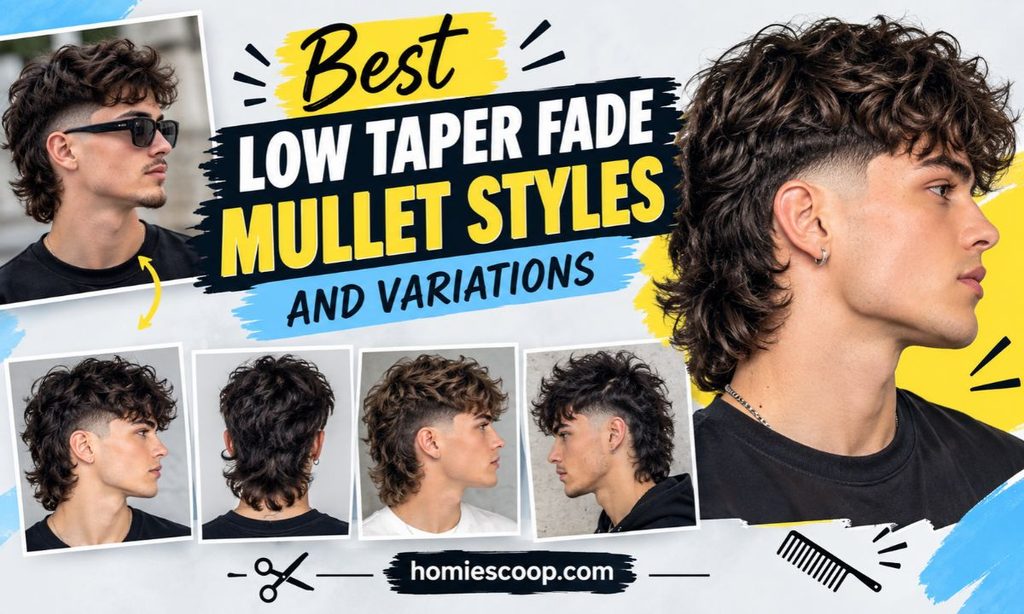
There are many low taper mullet haircut ideas because the basic structure can support several finishes. A textured mullet is ideal for people who want visible movement, while a short mullet works better for a subtle first attempt.
A messy mullet can emphasize natural movement, while a modern mullet style can use cleaner layering and a more controlled neckline. Other possibilities include a fluffy mullet, spiky mullet, fringe mullet, curtain mullet, and layered mullet.
The textured crop mullet
A textured crop combines a shorter textured top with a longer back. Choppy layers help separate the hair, while a textured top can make the style appear fuller. This version works especially well when the hair already has natural movement.
A low taper with mullet length keeps the lower sides tidy while the top remains expressive. For thick hair, controlled thinning can reduce unnecessary bulk without making the back appear too thin.
The curly mullet fade
A curly mullet uses natural curls to create volume through the crown and back. The low taper fade keeps the area around the ears and neckline controlled while the curly mullet remains full.
A low taper mullet for curly hair should account for shrinkage. Hair may appear considerably shorter after drying, so the barber needs to understand the client’s curl pattern before deciding the final length.
The slicked-back business mullet
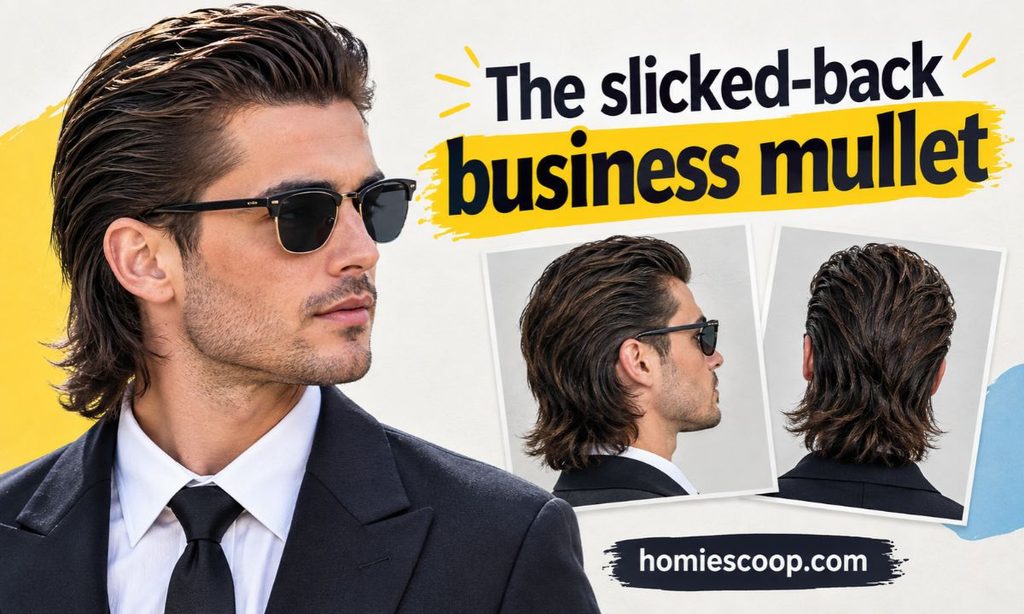
The slicked-back variation keeps the top longer and directs it backward. A clean taper makes the haircut appear more controlled from the front, while the longer back retains the mullet character.
A low taper fade mullet slick back works best when the hair has enough length to move backward without constantly falling forward. Matte pomade can create a controlled appearance without making the hair look excessively shiny.
The shaggy surfer mullet
The shaggy version focuses on movement rather than precision. A messy textured mullet can be created with layered hair, natural texture, and a small amount of sea salt spray.
A wavy mullet is especially suitable for this approach. The natural bends in wavy hair can create separation without requiring heavy styling products or excessive blow drying.
The wolf cut hybrid
A wolf-inspired version combines the layered character of a wolf cut with the longer-back structure of a modern mullet. Heavy layering can make the transition feel more continuous instead of creating one obvious shelf at the back.
This approach works well for medium-length hair and can be adjusted with a textured fringe. The result is a contemporary haircut that sits between a shag and a traditional mullet.
Short vs. long: which length is right for you?
A short mullet keeps the back relatively controlled and usually requires less daily styling. It can be a good choice for students, professionals, or anyone who wants a noticeable style without excessive length.
A long mullet creates more visual movement and gives the barber more room to build layers. However, a longer back requires more patience during growth and may need additional styling to prevent frizz or uneven-looking sections.
Medium length is often the easiest starting point. It provides enough length to establish the shape while still leaving room to decide whether you eventually want a short mullet or long mullet.
Low taper mullet straight hair

Straight hair gives the haircut a clean outline but can sometimes appear flat when the back becomes longer. Layering, texture, and controlled volume can help create movement without making the hair look overly messy.
A low taper mullet for straight hair often benefits from a textured top and carefully placed choppy layers. A lightweight texturizing spray can provide separation, while blow drying can add hair volume when needed.
Low taper fade mullet for straight, wavy, curly, and thick hair
Hair type strongly affects how the haircut looks after washing. A low taper mullet for wavy hair can rely heavily on natural bends, while a low taper mullet for curly hair may need careful length planning because curls contract when dry.
A low taper mullet for thick hair can handle stronger layering, while a low taper mullet for thin hair usually benefits from preserving length and avoiding excessive thinning. A fine hair mullet should focus on creating the appearance of density rather than removing too much bulk.
Straight hair
Straight hair tends to show the shape of every layer clearly. A straight hair mullet therefore benefits from clean transitions and carefully controlled texture.
A low taper mullet for straight hair can use blow drying and texturizing spray to create separation. Keeping the longer back layered prevents it from falling into one heavy block.
Wavy hair
Wavy hair naturally creates movement, making it suitable for a relaxed taper mullet haircut. The bends in the hair can make layered sections appear more defined without excessive product.
A low taper mullet for wavy hair usually works well with sea salt spray or a lightweight styling cream. The goal is to enhance natural texture rather than flatten it.
Curly and coily hair
Curly and coily textures can create strong volume around the crown and longer back. A low taper fade keeps the sides controlled while allowing the natural curl pattern to become the main feature.
A low taper mullet for curly hair should be cut with shrinkage in mind. A curl cream, light gel, or leave-in conditioner can support natural hair texture without making the curls stiff.
Thick and fine hair
Thick hair provides natural hair volume but can become bulky if too much length is left without layering. A coarse hair mullet may therefore need selective weight removal around the top and sides.
Fine or thin hair requires a different approach. A low taper mullet for thin hair should preserve useful length, while a fine hair mullet can use styling products and blow drying to create a fuller appearance.
Which face shapes suit a low taper fade mullet best?
A good face shape haircut balances the natural proportions of the face rather than trying to hide them. A barber can adjust top height, side volume, fringe length, and back length to create better visual balance.
For a round face, extra height can help create a longer appearance. A haircut for oval face shapes can usually tolerate more variations, while a haircut for square face shapes can use texture to soften strong angles.
- Round: Keep extra volume toward the top and avoid excessive width near the cheeks.
- Oval: Most variations work well because the proportions are naturally balanced.
- Square: Texture and movement can soften the stronger jawline.
- Diamond: Controlled side fullness can complement prominent cheekbones.
- Heart: Balanced side volume can reduce emphasis on the forehead.
- Oblong: Avoid excessive height and consider more horizontal movement.
Face-shape adjustments
A low taper mullet for round face shapes can use a textured top to add height without creating extra width. A low taper mullet for oval face shapes offers more freedom because the proportions already provide balance.
A low taper mullet for square face shapes can use soft texture around the front, while a low taper mullet for diamond face shapes can benefit from controlled fullness near the jaw. A low taper mullet for heart face shapes may work with balanced side texture, and a low taper mullet for oblong face shapes can avoid excessive top height.
The main goal is facial proportions. Instead of copying a particular haircut for round face, haircut for oval face, or haircut for square face, adjust the shape to the individual.
Low taper fade mullet textured fringe

A textured fringe gives the front of the haircut more character while the back maintains the longer mullet shape. It works particularly well when the hair already has natural movement.
The fringe can be short and choppy or longer and softer. A clean taper underneath keeps the sides organized, while the textured fringe adds a youthful hairstyle effect.
Mid taper fade
A mid taper fade starts higher than a low taper fade and creates more visible contrast around the sides. When combined with longer back length, it produces a stronger version of the taper mullet haircut.
The choice between a low taper fade and a mid taper fade depends on the amount of contrast desired. A low taper mullet generally keeps the transition lower, while a mid taper can make the sides appear more noticeably separated from the top.
Low Taper Fade Mullet With Beard
Adding facial hair can connect the haircut with the jawline. A clean taper around the sideburn area can transition into a beard more smoothly when the lengths are planned together.
A beard also changes facial proportions. For round faces, controlled beard length can add definition, while square faces may work well with a more natural beard outline. The haircut and beard should be treated as one overall shape.
Low taper fade mullet slick back
The slick-back variation uses longer top hair directed toward the rear. It creates a cleaner appearance while preserving the longer back that identifies the mullet.
A low taper fade mullet slick back can use hair clay, matte pomade, or styling wax depending on the desired finish. Blow drying the top backward before applying product can improve control and reduce the amount of product required.
Low taper Fade mullet Kids
For kids, the haircut should remain practical and comfortable. A shorter back, softer taper, and moderate top length can provide the mullet character without creating a style that requires extensive daily maintenance.
Parents can request a low taper fade with a controlled longer back and textured top. Avoiding excessive product is usually practical, especially when the child’s natural hair texture already provides enough movement.
Read More: Low Taper Fade vs Mid Taper Fade: Which One Is Right for You?
How to ask your barber for the perfect low taper fade mullet
Start by explaining that you want a low taper rather than simply asking for a fade. Tell the barber how much length you want on top and at the back, and explain whether you prefer a clean, messy, textured, or slick finish.
A useful request is: “I want a low taper around the ears and neckline, keep the top textured, leave the back longer, and layer it so the transition looks natural.” You can then explain whether you want a short, medium, or long finish.
Mention your hair type and styling habits. Someone with thick, wavy hair may need different layering from someone with fine, straight hair. This is also the best time to discuss hair density, hair volume, and natural hair texture.
How to style a low taper fade mullet at home, step by step
Start with clean, towel-dried hair. Apply a small amount of product evenly rather than placing too much product in one area. For a textured look, work from the roots toward the ends and use your fingers to separate the layers.
For a messy or wavy finish, sea salt spray or texturizing spray can increase movement. For a more controlled style, hair clay, styling wax, or matte pomade can provide hold without completely removing the natural texture.
Curly hair usually benefits from scrunching rather than combing. Blow drying with controlled heat can add volume to straight hair, while a diffuser can help maintain curls without excessive frizz.
How often should you trim and maintain it?
Mullet maintenance mainly depends on how sharp you want the taper to remain. The longer back can often grow for several weeks without losing its basic identity, while the taper gradually becomes softer as the hair grows.
Low taper fade maintenance usually involves a taper fade touch up before a complete haircut is necessary. Haircut frequency can be adjusted according to personal preference, growth rate, workplace expectations, and desired sharpness.
A practical routine includes:
- Clean the taper when it starts losing definition.
- Refresh the neckline before the shape becomes untidy.
- Trim damaged ends from the longer back when necessary.
- Maintain layers rather than removing excessive length.
- Use suitable hair styling products for your texture.
- Keep a consistent daily styling routine if the haircut requires volume or direction.
How to maintain a mullet
To understand how to maintain a mullet, focus on preserving the relationship between the shorter sides and longer back. Do not allow the back to become one heavy, shapeless section.
Regular barber maintenance keeps the taper clean, while occasional scissor work maintains the layered shape. A low-maintenance mullet can be especially convenient when the layers are designed around natural texture.
How to ask for a low taper fade mullet
When asking for the style, describe four things: taper position, top length, back length, and texture. Saying “low taper” gives the barber a clearer starting point than simply saying “fade.”
You can also explain the desired finish with terms such as modern mullet, low taper with mullet, textured mullet fade, or low taper mullet haircut. Showing front, side, and back references can further reduce misunderstandings.
Is a low taper fade mullet easy to maintain?
For many people, it can be relatively manageable. The taper needs periodic cleaning, but the longer back does not necessarily need frequent cutting unless you want to preserve a precise shape.
The easiest version is usually a medium-length, layered style that works with natural hair texture. Someone choosing a very long mullet, slick finish, or highly structured fringe may need more daily styling.
What face shape suits a mullet?
A mullet can be adapted to most face shapes because its proportions are adjustable. The important factors are facial proportions, top height, side width, fringe placement, and back length.
A barber can use face-framing layers and controlled volume to balance the face. Instead of following a single rule, consider whether your face needs additional height, width, or softness.
What hair type is best for a mullet?
There is no single best hair type. Straight hair can create sharp layers, wavy hair provides natural movement, curly hair supplies volume, and thick hair supports a fuller silhouette.
Fine hair can also work when the barber preserves density and uses appropriate styling. The right cut depends on natural hair texture, hair density, desired length, and styling ability.
Difference between taper fade and mullet
A taper fade describes how the sides and neckline gradually become shorter. A mullet describes the overall length relationship, especially the shorter front and sides with a longer back.
That means the two terms describe different parts of the haircut. A taper can be combined with a mullet to create a taper fade mullet, while other fade types can produce different mullet variations.
Low taper vs low fade mullet
A low taper generally focuses on a gradual transition around the natural edges, while a low fade can create a more visibly faded area depending on the barber’s technique.
The difference between the two becomes especially noticeable around the temples, sideburns, and neckline. Your barber can adjust the transition according to whether you want a subtle or more exposed appearance.
Barber guide for low taper fade mullet
A barber guide for low taper fade mullet planning should begin with the client’s hair texture and face shape. Next, establish the taper height and decide how much length should remain on the top and back.
The final stage is layering. Choppy layers can add movement, while softer layers can create a more polished finish. The best result comes from building the shape around the client’s natural hair rather than forcing the hair into an unsuitable reference style.
FAQ’s
Is a taper fade a mullet?
No. A taper fade describes the gradual shortening of hair around the sides and neckline, while a mullet is defined by its longer back. They can be combined into one haircut.
Is fade haram in Islam?
Islamic views on haircut styles can differ according to interpretation and scholarly opinion. Some scholars discuss the concept of qaza, which involves shaving part of the head while leaving other parts, so anyone concerned about religious requirements should consult a trusted qualified scholar.
What is the gen Z mullet?
The Gen Z mullet generally refers to modern versions with softer transitions, textured layers, and a less rigid silhouette than many traditional mullets. It is often combined with tapers, fringes, waves, or messy texture.
Is low taper fade best?
The suitability depends on personal preference, hair type, face shape, workplace requirements, and desired maintenance. A low taper provides a relatively subtle transition while leaving room for a longer back.
Is a burst fade like a mullet?
A burst fade can be paired with a mullet, but it is not itself a mullet. A burst fade curves around the ear, while the mullet is defined mainly by the longer back and contrasting front and sides.
Conclusion
A low taper fade mullet works because it combines a controlled taper with expressive length. Whether you choose straight, wavy, curly, thick, fine, short, or long hair, the haircut can be adjusted through layering, texture, fringe placement, and back length.
The best approach is to choose a shape that fits your natural hair and facial proportions instead of copying someone else’s exact cut. Communicate the taper height, top length, back length, and styling preference clearly, then maintain the edges regularly while allowing the longer sections to develop naturally.
